

When you’re over 65 and taking medication for high blood pressure, the goal is simple: keep your heart safe. But for many older adults, that goal becomes complicated by a silent side effect called orthostatic hypotension. It’s when your blood pressure drops too fast after standing up - leaving you dizzy, wobbly, or even falling. And it’s more common than most people realize. About 1 in 5 older adults with hypertension experience it. What’s shocking? The very drugs meant to protect your heart can sometimes be the reason you’re at risk.
What Is Orthostatic Hypotension - And Why Does It Matter?
Orthostatic hypotension isn’t just feeling lightheaded. It’s a measurable drop in blood pressure - at least 20 mm Hg systolic or 10 mm Hg diastolic - within three minutes of standing. That drop cuts off blood flow to your brain. You might feel dizzy, blurry vision, or nausea. In worst cases, you fall. Falls in older adults aren’t just bruises. They lead to fractures, hospital stays, loss of independence, and even death. And here’s the twist: many of those falls are tied directly to blood pressure medications.
It’s not a rare side effect. Studies show 3% to 26% of older adults on antihypertensives have this issue. The risk climbs with age. Why? Your body changes. Blood vessels stiffen. Baroreceptors - the sensors that tell your heart to pump harder when you stand - slow down. Your kidneys produce less renin. Your nervous system doesn’t respond as fast. All of this makes standing up risky, especially if you’re on the wrong meds.
Which Blood Pressure Medications Carry the Highest Risk?
Not all blood pressure drugs are equal when it comes to orthostatic hypotension. Some are far safer than others. Knowing which ones to watch for can make all the difference.
- Alpha blockers - like doxazosin or terazosin - are the biggest offenders. They can cause orthostatic hypotension in nearly 28% of older adults. They relax blood vessels too aggressively, especially when you stand up.
- Beta-blockers - such as metoprolol or atenolol - carry a 3.36x higher risk of sustained low blood pressure after standing. They slow your heart rate, which reduces your body’s ability to compensate when you rise.
- Diuretics - water pills like hydrochlorothiazide - reduce blood volume. Less fluid means less pressure to push blood upward. This risk is higher if you’re dehydrated or take them late in the day.
- Central sympatholytics - like clonidine - shut down your nervous system’s fight-or-flight response. That’s great for lowering BP, but terrible for standing up.
On the flip side, some drugs are surprisingly safe - even protective.
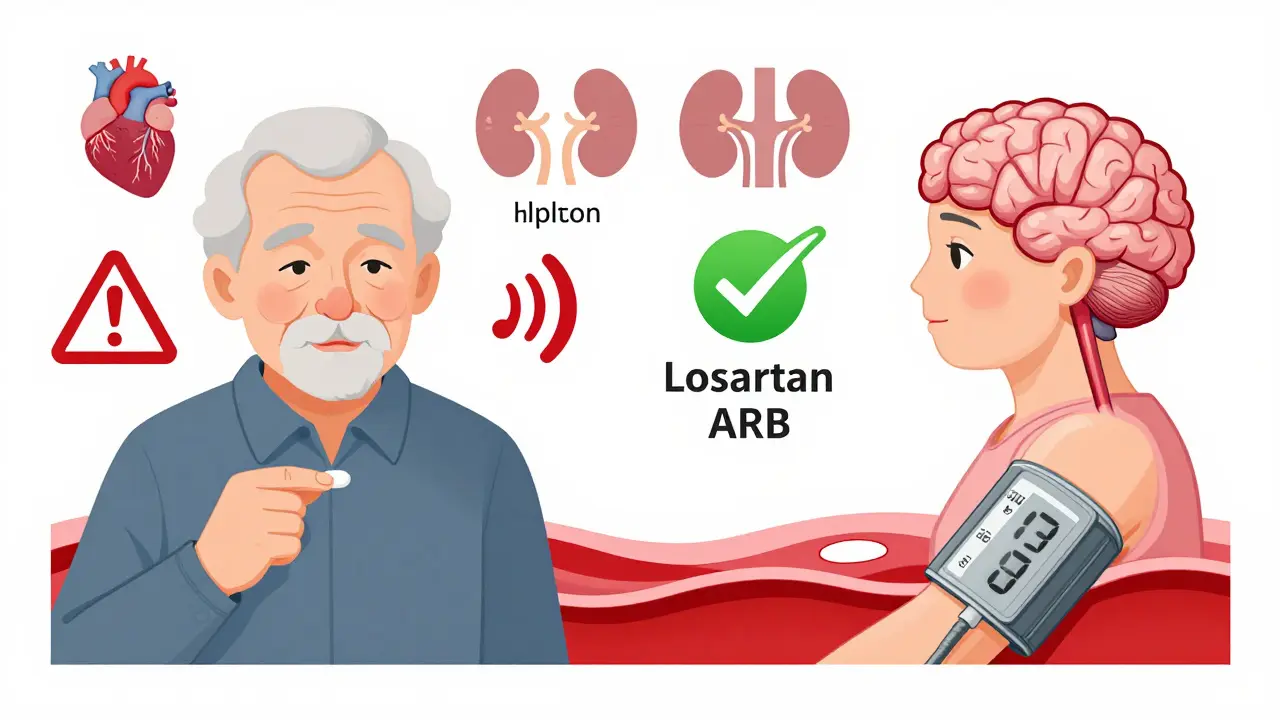
- ACE inhibitors (like lisinopril) and ARBs (like losartan) have the lowest risk. Studies show they reduce orthostatic hypotension episodes by 14-15% compared to other classes. They work on hormones, not just vessels, and help your body adjust better.
- Amlodipine and isradipine (calcium channel blockers) are much safer than older CCBs like diltiazem. Their slow, steady action avoids sudden drops. Isradipine, in particular, causes orthostatic hypotension in only 5.2% of older patients.
More Aggressive BP Control Doesn’t Increase Risk - It Reduces It
For years, doctors thought: "If an older person has dizziness, lower the dose." But new data turns that idea upside down.
The landmark SPRINT trial and nine other studies involving over 18,000 adults found something unexpected: people with more intensive blood pressure control - aiming for under 120 mm Hg - had 17% lower risk of orthostatic hypotension than those with standard targets (under 140 mm Hg). Why? Because uncontrolled high blood pressure damages the very systems that help you stand up. When you treat hypertension properly, you’re not just protecting your heart - you’re protecting your balance.
Dr. Harry Goldblatt from Case Western Reserve put it bluntly: "The danger isn’t the drop when you stand. It’s the high pressure when you’re lying down." Treating supine hypertension reduces strain on your heart and arteries. Lowering your meds to avoid dizziness might actually make things worse.
What to Do If You’re at Risk
Don’t panic. Don’t stop your meds. But do take action.
- Review every pill. Sit down with your doctor or pharmacist. Ask: "Which of my meds could be causing dizziness?" Remove alpha blockers, beta-blockers, or diuretics if they’re not essential.
- Switch to safer drugs. If you’re on an alpha blocker for prostate issues, ask about tamsulosin - it doesn’t cause orthostatic hypotension. If you’re on a beta-blocker for heart rhythm, see if an ARB could work instead.
- Time your doses. Take your blood pressure meds at least 3 hours before bedtime. This avoids nighttime dips that linger into morning. For drugs with short half-lives, split doses or use long-acting versions.
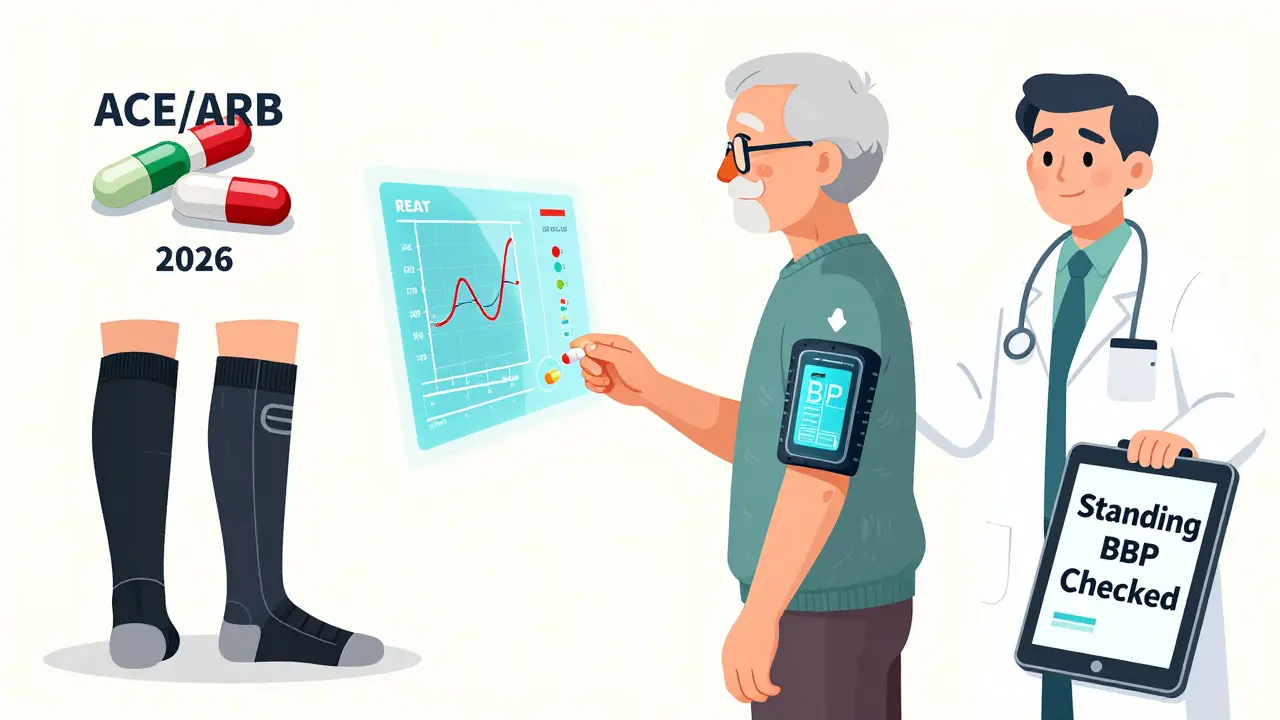
- Measure your BP standing. Don’t just check it sitting. Have your doctor check your blood pressure after you’ve been lying down for 5 minutes, then again after you stand. A drop of 20/10 or more means you’re at risk.
Non-Drug Strategies That Work
Medication changes aren’t the only solution. Simple habits can reduce dizziness and prevent falls.
- Stand up slowly. Sit on the edge of the bed for 30 seconds before standing. Pause again at the sink. Let your body adjust.
- Hydrate. Drink 1-2 glasses of water before getting up. Dehydration cuts blood volume and worsens drops.
- Wear compression socks. They help push blood back up from your legs. Studies show they reduce dizziness by up to 40% in older adults.
- Don’t skip meals. Blood pressure drops after eating. Wait 30 minutes after a big meal before standing.
- Use a cane or walker. If you’ve fallen before, don’t wait for the next one. A mobility aid gives you confidence and safety.
Most people see improvement in 2-4 weeks with these changes. No pills needed.
When Medication Is Still Needed
Some people need drugs to treat the dizziness itself. If lifestyle changes aren’t enough, options exist.
- Midodrine - a vasoconstrictor - tightens blood vessels. It’s taken 3 times a day, but can raise lying-down BP too much. Use with caution.
- Droxidopa - boosts norepinephrine - helps your body respond faster to standing. Often used for Parkinson’s-related OH.
- Fludrocortisone - a steroid - increases fluid retention. Risky for people with heart failure.
These aren’t first-line. They’re last-resort. And they come with side effects. Always try non-drug methods first.
What’s Changing in 2026?
The American Geriatrics Society updated its Beers Criteria in 2023 - and it’s clear now: alpha blockers and certain beta-blockers should be avoided in older adults with orthostatic hypotension. That’s influencing prescriptions nationwide.
ARCs and ACE inhibitors now make up 38% of new hypertension prescriptions for people over 65 - up from 32% in 2020. That shift is saving lives.
Researchers are even testing "smart" medications that only activate when you’re standing. Two are in Phase II trials. In five years, personalized BP treatment - based on your posture, activity, and risk - will be standard.
Final Takeaway
High blood pressure in older adults isn’t a problem to be solved with lower doses. It’s a condition to be managed with smarter choices. The safest way to protect your heart isn’t to stop your meds - it’s to choose the right ones. And to move with care.
If you’re dizzy when you stand, don’t assume it’s just aging. Talk to your doctor. Ask: "Could one of my meds be causing this?" "Is there a safer alternative?" "Have we checked my standing BP?" Your next step could be the one that keeps you upright - and independent - for years to come.
Can blood pressure medication cause falls in older adults?
Yes, certain blood pressure medications - especially alpha blockers, beta-blockers, and diuretics - can increase the risk of falls by causing orthostatic hypotension. This is a sudden drop in blood pressure when standing, leading to dizziness or fainting. Studies show that up to 28% of older adults on alpha blockers experience this, and it’s a leading cause of injury in seniors. However, not all BP meds carry this risk. ACE inhibitors and ARBs are much safer and may even reduce fall risk by improving overall cardiovascular function.
Should I stop my blood pressure medication if I feel dizzy when standing?
No, never stop or lower your dose without talking to your doctor. Stopping medication can cause dangerous spikes in blood pressure while lying down, increasing your risk of stroke or heart attack. Instead, ask your provider to check your standing blood pressure and review your entire medication list. Often, switching to a safer drug - like an ARB instead of an alpha blocker - can eliminate dizziness without losing blood pressure control.
Which blood pressure meds are safest for older adults with orthostatic hypotension?
ACE inhibitors (like lisinopril) and ARBs (like losartan) are the safest choices. They have the lowest risk of causing orthostatic hypotension and may even help prevent it. Among calcium channel blockers, amlodipine and isradipine are preferred due to their slow, steady action. Avoid alpha blockers (doxazosin), beta-blockers (metoprolol), and diuretics unless absolutely necessary. Always ask for a standing blood pressure test before and after any medication change.
Does taking blood pressure medication at night help prevent orthostatic hypotension?
Yes - for many older adults, taking blood pressure medication at least 3 hours before bedtime reduces morning dizziness. This avoids the "nocturnal dip," where BP falls too low overnight and doesn’t recover by morning. For drugs with short half-lives (like hydrochlorothiazide), evening dosing can prevent early-morning drops. Always confirm this plan with your doctor, as some medications - like diuretics - may cause nighttime bathroom trips that increase fall risk.
Can lifestyle changes really help with dizziness from blood pressure meds?
Absolutely. Simple habits like standing up slowly, drinking water before rising, wearing compression socks, and avoiding large meals before standing can reduce dizziness by up to 40%. Many patients see improvement within 2-4 weeks without changing any medication. These strategies work because they help your body adjust to posture changes - something your aging system struggles with. Combine them with safer meds for the best results.

8 Comments
Desiree LaPointe
Oh wow, another masterpiece of medical common sense disguised as a whitepaper. Let me get this straight - we’ve spent decades treating hypertension like it’s a rogue ninja, and now we’re told the real villain is the alpha blocker? Shocking. Like finding out your toaster is the reason your toast is burnt. Of course, the solution is to swap it for an ARB - because nothing says "I’m a geriatrician with a PhD in common sense" like prescribing lisinopril like it’s a vitamin. And don’t even get me started on compression socks. I wore mine to a wedding once. The bride asked if I was a medieval knight. I said yes. She gave me a free appetizer. Worth it.
Thomas Jensen
They’re lying to us. All of them. The FDA, the AMA, the damn pharmaceutical reps with their free pens - they’re all in on it. You think this "orthostatic hypotension" thing is natural? Nah. It’s a scam to sell more meds. They want you dizzy so you’ll buy the "safe" ones. And don’t tell me about that SPRINT trial - I read the footnotes. The funding came from a company that makes ARBs. They’re not protecting you. They’re protecting their stock price. I stopped my meds. Now I drink sea salt water. I feel better. And I’m not falling. Because I don’t stand up. I roll. Slow. Like a turtle with a vendetta.
matthew runcie
Been there. Dizzy after standing. Got my BP checked standing and sitting. Big drop. Switched from metoprolol to lisinopril. No more wobbles. Also started drinking water before getting up. And wearing socks. Not the fancy ones. Just the ones with the little dots. They work. No drama. Just better days.
shannon kozee
Standing BP check is non-negotiable. If your doctor doesn’t offer it, ask. Twice. And if they roll their eyes, find a new one. Simple. No fluff. No hype. Just facts. And yes - compression socks help. They’re not sexy, but neither is a hip fracture.
Shaun Wakashige
lol. i just take my meds at night and hope for the best 🤷♂️
Jackie Tucker
How quaint. We’ve reduced the human body’s autonomic regulation to a spreadsheet of drug classes and risk percentages. How very 21st century. You think this is medicine? No - it’s behavioral engineering disguised as pharmacology. We’ve turned the dignity of standing into a protocol. "Pause at the edge of the bed for 30 seconds." As if the soul can be calibrated like a thermostat. And yet - the real tragedy isn’t the drop in BP. It’s the quiet surrender to the idea that aging is a problem to be optimized. We don’t need safer pills. We need to stop treating elders like faulty machines. But of course - that wouldn’t sell.
trudale hampton
My dad switched from doxazosin to amlodipine and went from barely making it to the bathroom to walking the dog every morning. No drama. No hospital visits. Just better. The key? Talking to his pharmacist. She caught the interaction. Doctor didn’t even know. So yeah - ask. Always ask. And if you’re dizzy? Don’t rush. Sit. Breathe. Then stand. Slow. Like your body’s trying to catch up. It’s not weakness. It’s wisdom.
Paul Cuccurullo
It is with profound respect for the sanctity of human autonomy and the dignity of aging that I offer this reflection: the pursuit of cardiovascular health must never come at the cost of physical security. The data is unequivocal - intelligent pharmacotherapy, paired with intentional lifestyle adaptation, yields not merely clinical improvement, but profound quality-of-life enhancement. To dismiss these findings as mere medical jargon is to misunderstand the very essence of geriatric care: it is not about prolonging life, but about preserving its integrity. I urge every individual, every clinician, every caregiver - if you are experiencing postural dizziness, do not hesitate. Seek not merely a diagnosis, but a partnership. The path forward is clear. The time to act is now.