
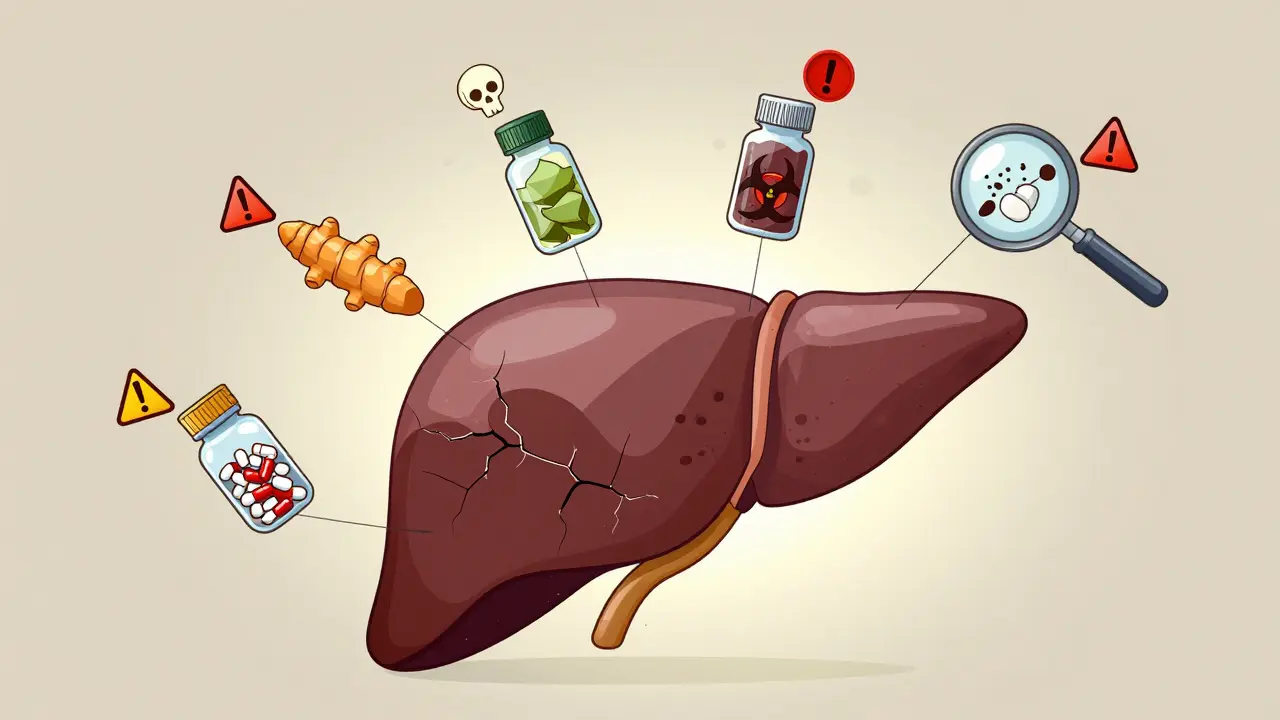
Every year, thousands of people take herbal supplements thinking they’re making a safe, natural choice for their health. But what if those same products are quietly damaging your liver? The truth is, herbal and supplement liver toxicity is no longer a rare side effect-it’s a growing crisis. You won’t find warning labels on most bottles. No doctor’s prescription is needed. And yet, these products are causing real, sometimes life-threatening liver injury.
Why Your Liver Can’t Handle These Supplements
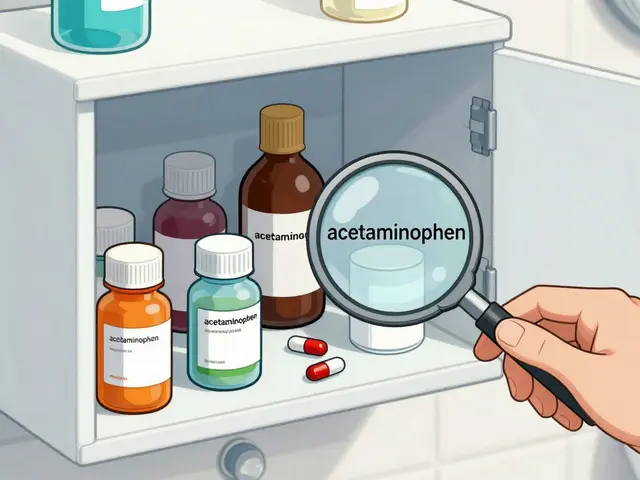
Your liver is your body’s main detox center. It breaks down everything you swallow-medications, alcohol, food, and yes, supplements. But unlike prescription drugs, herbal and dietary supplements don’t go through safety testing before they hit store shelves. The FDA doesn’t require clinical trials, toxicity studies, or even proof that what’s on the label is actually inside the bottle. This lack of oversight means you’re playing Russian roulette with your liver. One study found that up to 60% of herbal supplements are mislabeled or contaminated. Some contain heavy metals like lead, mercury, or arsenic. Others secretly include prescription drugs like sildenafil (the active ingredient in Viagra) or steroids. Even if the product is “pure,” your liver might still react badly to the botanicals inside.The Six Most Dangerous Supplements for Your Liver
Based on data from the NIH’s LiverTox database and multiple peer-reviewed studies, six supplements stand out as the biggest threats:- Turmeric or curcumin - Often marketed as an anti-inflammatory, high-dose turmeric supplements have been linked to dozens of hospitalizations. In one 2024 study, people taking more than 1,000 mg daily had the highest risk. Some products also contain lead-Consumer Reports found 30% of turmeric supplements exceeded California’s safety limits.
- Green tea extract - Not the tea you drink. This is concentrated capsules or powders. The compound EGCG, which gives green tea its antioxidant power, becomes toxic at high doses. Over 100 cases of liver injury have been tied to green tea extract, with symptoms appearing after weeks or months of use.
- Garcinia cambogia - Popular for weight loss, this supplement has been linked to acute liver failure. The FDA issued warnings in 2009 and again in 2023 after multiple hospitalizations. The active ingredient, hydroxycitric acid, overwhelms liver enzymes and triggers cell death.
- Black cohosh - Used for menopause symptoms, this herb has caused hepatitis in multiple documented cases. It’s especially risky for women over 50. The mechanism isn’t fully understood, but the liver damage looks identical to drug-induced injury.
- Red yeast rice - Marketed as a “natural” alternative to statins, it contains monacolin K, which is chemically identical to lovastatin. But unlike prescription statins, there’s no standardization. Doses vary wildly, and some products contain citrinin, a kidney and liver toxin.
- Ashwagandha - A trendy adaptogen for stress and sleep, ashwagandha has emerged as a new concern. Cases of liver injury are rising, especially with long-term use. The exact cause is unclear, but it’s likely due to how the liver metabolizes its alkaloids.
What the Symptoms Look Like (And When to Get Help)
Most people don’t realize their liver is under attack until it’s too late. Symptoms are often vague and easily mistaken for the flu or stress:- Fatigue (87% of cases)
- Abdominal pain or swelling (76%)
- Nausea or vomiting (68%)
- Dark urine (52%)
- Yellowing of skin or eyes (jaundice)
- Unexplained itching
Why Some People Are More at Risk
Not everyone who takes turmeric or green tea extract gets sick. But some people are genetically wired to react badly. Researchers have identified a gene variant-HLA-B*35:01-that increases susceptibility to herbal liver injury. People with this variant might develop liver damage even from low doses. Age matters too. Older adults metabolize toxins slower. Women, especially post-menopausal, are more vulnerable to herbs like black cohosh. People with pre-existing liver conditions-even mild fatty liver-are at higher risk. And if you’re taking other medications, the supplement can interact and overload your liver’s processing ability.The Fake “Natural” Label Trap
“Natural” doesn’t mean safe. In fact, it often means the opposite. Plants contain hundreds of active compounds. Some are beneficial. Others are poisonous. The dose makes the poison-and with supplements, you never know the dose. A 2017 study found that 5% to 12% of herbal products are complex multi-ingredient blends. That means you’re not just taking one herb-you’re taking five, seven, or ten, all mixed together. No one has tested these combinations for safety. One product might contain green tea extract, ashwagandha, and black cohosh-all three liver stressors-labeled as a “stress relief blend.” And then there’s contamination. In 18% of tested supplements, lead was found. In 22% of sexual enhancement products, hidden pharmaceuticals were detected. One popular weight-loss supplement, OxyELITE Pro®, was pulled from shelves after causing 50+ cases of liver failure. The culprit? Aegeline, a compound from the bael fruit, never tested in humans before being added to the product.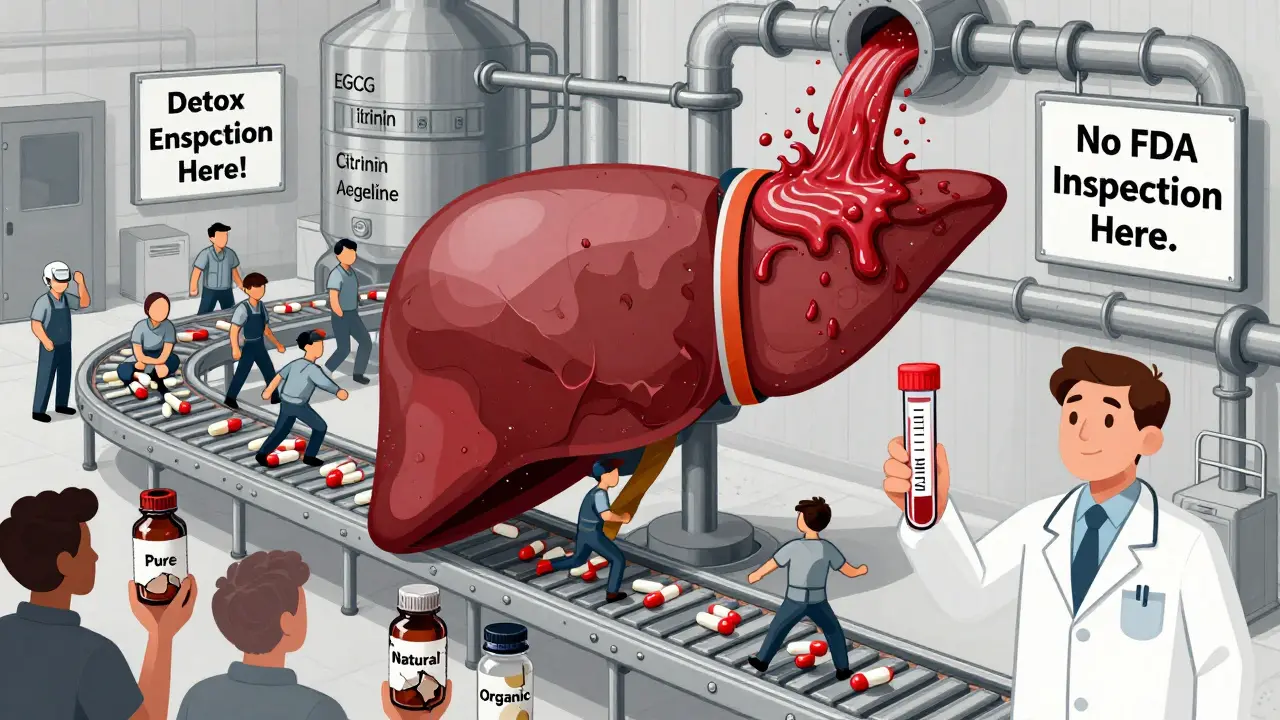
How Social Media Is Making It Worse
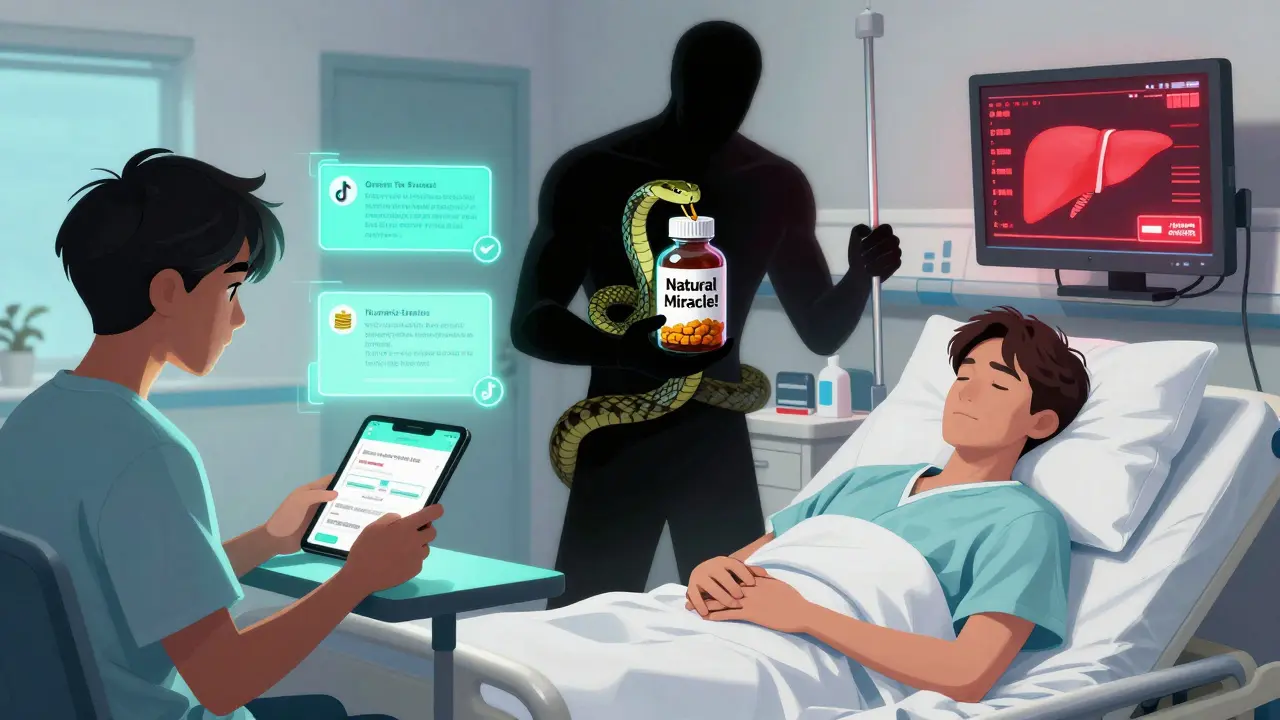
TikTok, Instagram, and YouTube are flooded with influencers pushing “miracle” supplements. “I lost 20 pounds with this green tea extract!” “Turmeric cured my joint pain!” These videos rarely mention liver risk. They don’t disclose that the product they’re selling is unregulated, untested, and potentially toxic. Younger adults-millennials and Gen Z-are the fastest-growing group buying these supplements. They trust influencers more than doctors. They think “natural” = harmless. But the data doesn’t lie: hospitalizations from supplement-induced liver injury are rising, especially among people under 40.What You Should Do Instead
If you want to support your liver health, skip the supplements. Focus on proven, safe methods:- Eat whole foods-vegetables, fruits, nuts, lean proteins
- Limit alcohol and avoid processed sugars
- Stay hydrated
- Exercise regularly
- Get tested for hepatitis and fatty liver if you’re at risk
What’s Being Done-and What’s Not
The American College of Gastroenterology now recommends that all doctors screen patients for supplement use when liver enzymes are high. That’s progress. But the FDA still doesn’t require safety testing before sale. Supplements are treated like food, not medicine. Some states are pushing for better labeling. California requires warning labels for lead in turmeric. New York is considering mandatory liver risk disclosures. But without federal action, the problem will keep growing. Until then, you’re the only one protecting your liver. Don’t assume a product is safe because it’s on the shelf. Don’t trust a label that says “pure” or “natural.” And never let a social media influencer decide what goes into your body.Can herbal supplements cause permanent liver damage?
Yes. In severe cases, herbal and supplement-induced liver injury can lead to permanent scarring (cirrhosis), liver failure, or the need for a transplant. Some patients recover fully after stopping the supplement, but others don’t. The damage depends on how long you took it, your genetics, and how early you caught it.
Is it safe to take turmeric if I don’t take high doses?
For most people, turmeric used in cooking is fine. But even low-dose supplements can be dangerous for those with genetic sensitivity or existing liver conditions. The risk isn’t just about quantity-it’s about individual biology. If you have any liver concerns, avoid turmeric supplements entirely.
Do all green tea supplements cause liver damage?
No. But concentrated extracts-especially those with high levels of EGCG-are the problem. Drinking 2-3 cups of brewed green tea daily is safe for nearly everyone. The danger comes from pills, powders, or liquid extracts that deliver 10-100 times more EGCG than tea. Always check the label for EGCG content and avoid anything over 800 mg per day.
Can I test my liver at home to check for damage?
Home tests can measure liver enzymes like ALT and AST, but they’re not reliable enough to rule out damage. False negatives are common. If you suspect liver injury from a supplement, see a doctor for a full panel-including bilirubin, albumin, and prothrombin time. Only a medical professional can interpret the results correctly.
Are organic or “clean label” supplements safer?
Not necessarily. Organic certification only means the plants were grown without synthetic pesticides. It says nothing about potency, contamination, or liver toxicity. A product can be organic and still contain heavy metals, hidden drugs, or dangerous herbal extracts. Labels like “clean,” “pure,” or “non-GMO” are marketing terms, not safety guarantees.
What should I do if I think a supplement damaged my liver?
Stop taking it immediately. Contact your doctor and bring the bottle with you. Report the reaction to the FDA’s MedWatch program. You can file a report online or by phone. These reports help regulators track dangerous products and issue warnings. Don’t wait-early action can prevent serious harm.
9 Comments
Ben McKibbin
Let’s be real-'natural' is the most dangerous label on the shelf. I used to buy turmeric capsules like they were vitamins, until my ALT spiked. No symptoms. No warning. Just a routine blood test that nearly sent me into a panic. Turns out, I had the HLA-B*35:01 variant. No one told me. No label warned me. Just a guy on YouTube saying 'this cured his arthritis.' I’m lucky I didn’t need a transplant.
Supplements aren’t food. They’re unregulated pharmaceuticals with marketing budgets bigger than their clinical data. And we’re treating them like candy because they don’t need a prescription. It’s insane.
Doctors need to start asking about supplements like they ask about alcohol. Not 'do you drink?' but 'what pills are you swallowing that aren’t on your med list?' Until then, we’re all just rolling dice with our livers.
Also, 'organic' doesn’t mean 'non-toxic.' I’ve seen organic ashwagandha with lead levels higher than old paint. Labeling is a joke. Regulation is a myth. We’re the only ones protecting ourselves now.
Rod Wheatley
Thank you so much for this post!!! Seriously, this is the kind of info that needs to be shouted from the rooftops!!!
I used to take green tea extract for 'fat burning'-I thought it was safe because it was 'natural' and 'antioxidant-rich'-but after 3 months, I was exhausted, my skin was yellowish, and I felt like I had the flu every single day. I didn’t connect the dots until my doctor asked me about supplements. I stopped immediately. My liver enzymes dropped back to normal in 6 weeks.
PLEASE, if you’re taking any of these-especially turmeric, green tea extract, or Garcinia-stop right now. Don’t wait for jaundice. Get your ALT and AST checked. It’s a simple blood test. Your future self will thank you.
Also, if you’re on any meds-statins, blood pressure pills, antidepressants-supplements can interact in ways you can’t imagine. Talk to your pharmacist. They’re the unsung heroes of this whole mess.
And to everyone on TikTok: stop selling your followers poison. You’re not helping. You’re endangering people. Please, please, please-do better.
Jarrod Flesch
Yeah man, I used to be one of those guys buying 'miracle' supplements from Instagram influencers 😅
Thought ashwagandha was just chill vibes in a capsule. Took it for 8 months. Started feeling weird-nauseous, tired, weird itching. Didn’t think much of it. Then I read this post. Stopped cold turkey. Got bloodwork. ALT was through the roof.
Now I just drink tea, eat veggies, and lift weights. No pills. No powders. No 'natural' crap. My liver feels better than it has in years.
Also, if you're into supplements, check out LiverTox.gov. It’s not flashy, but it’s real science. No influencers. Just data. 🤓
Stay safe out there, folks. Your liver’s been working 24/7 since you were born. Don’t make it cry.
Barbara Mahone
As someone who works in integrative medicine, I see this every week. Patients come in convinced that 'herbal' means 'harmless.' They’re shocked when I tell them their supplement caused hepatitis.
It’s not about fear-mongering. It’s about informed consent. If you wouldn’t inject it into your bloodstream, you shouldn’t swallow it in capsule form without proof of safety.
The FDA’s hands are tied because supplements are classified as food. That needs to change. Until then, we have to be our own watchdogs.
And yes-organic turmeric still contains lead. Soil contamination is real. Just because it’s grown without pesticides doesn’t mean it’s clean.
Kelly McRainey Moore
I took red yeast rice because my cholesterol was high and I didn’t want to take statins. I thought it was the 'natural' option. Turns out it’s basically lovastatin-but without the safety monitoring. I got sick, lost my hair, and my liver was fried. I didn’t know until I passed out in the shower.
Don’t be like me. Talk to your doctor. Even if you think you’re being 'natural,' you’re still putting chemicals into your body. And your body doesn’t care if it’s from a plant or a lab-it just cares if it can handle it.
Stephen Rock
Wow. Another doomsday post about supplements. How many people have actually died from this? Like, actual deaths. Not 'elevated enzymes.'
People are dying from sugar. From vaping. From sitting on their asses. But you’re worried about turmeric? Come on.
The real problem is people who think they can self-diagnose with Google and then self-treat with $20 bottles from GNC. That’s not the supplement’s fault. That’s the person’s fault.
Also, 'natural' doesn’t mean safe? Tell that to arsenic. Or botulinum. Or hemlock. All natural. All deadly. You’re not special. Your liver isn’t a superhero.
Stop being scared of everything. Eat real food. Move. Sleep. And stop reading fear porn disguised as science.
Amber Lane
Stop the supplements. Get tested. Talk to your doctor.
Ashok Sakra
Bro I took green tea extract for 3 months and I lost 15kg! My liver is fine! You are just scared because you don't know the truth! My cousin in India takes 10 capsules a day and he is 70 and still runs 5km! You are lying to scare people! I will keep taking it! My body is strong!
Andrew Rinaldi
It’s interesting how we’ve created this cultural dichotomy between 'natural' and 'synthetic' as if the origin of a compound determines its safety. But toxicity isn’t about origin-it’s about dose, metabolism, and individual biology.
Plants evolved toxins to deter predators. We’ve spent centuries learning how to use them medicinally-quinine, morphine, digitalis. But we’ve also spent centuries poisoning ourselves because we assumed 'plant = safe.'
The real issue isn’t just regulation. It’s epistemology. We trust anecdotes over data. We trust influencers over institutions. We trust marketing over mechanism.
Maybe the solution isn’t more laws. Maybe it’s better science education. Maybe it’s learning to sit with uncertainty instead of swallowing quick fixes.
Either way, your liver doesn’t care about your intentions. It only cares about what you put in it.