

Antihistamine Selector Tool
Key Features
Important Considerations
When your nose runs, your eyes itch, and sneezing won’t stop, you want relief - fast and without knocking you out. First-generation antihistamines like diphenhydramine (Benadryl) work, but they leave you groggy, slow, or worse - impaired behind the wheel or at your desk. That’s why millions turn to non-drowsy antihistamines. These aren’t just marketing buzzwords. They’re scientifically designed to block histamine without crossing into your brain, so you stay alert while your allergies get quiet.
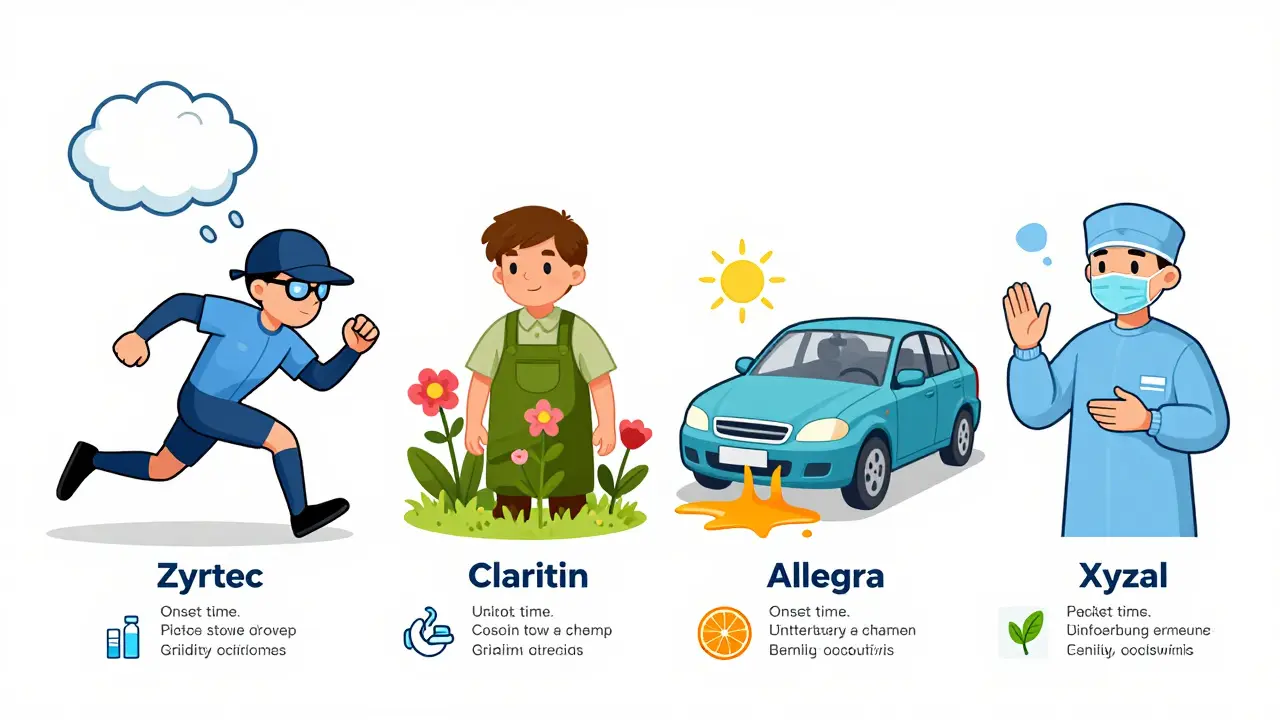
But not all non-drowsy options are the same. Zyrtec, Claritin, Allegra, and Xyzal all promise relief, yet they behave differently in your body. One might clear your sneezes in an hour. Another might take half a day. One could make you sleepy. Another might give you a stomach ache. And price? It can vary by more than 100% between brands and generics. So how do you pick the right one?
How Non-Drowsy Antihistamines Actually Work
Histamine is your body’s alarm system. When pollen, dust, or pet dander triggers your immune system, histamine floods your nasal passages, eyes, and skin. That’s what causes the runny nose, itchy eyes, and sneezing. First-gen antihistamines like Benadryl block histamine everywhere - including your brain. That’s why they make you sleepy. Second- and third-gen antihistamines were engineered to stay out of your brain. They’re less lipid-soluble, meaning they can’t easily slip through the blood-brain barrier. The result? Relief without the fog.
These medications are built to last. Most offer 24-hour coverage with just one daily dose. That’s why they’re popular among working adults, students, and drivers. The U.S. Centers for Disease Control estimates 81 million Americans suffer from seasonal allergies each year. That’s roughly one in four people. For many, non-drowsy options aren’t a luxury - they’re a necessity.
The Top Four Non-Drowsy Antihistamines Compared
| Medication | Active Ingredient | Onset of Action | Peak Effect | Duration | Drowsiness Risk | Key Limitation |
|---|---|---|---|---|---|---|
| Zyrtec | Cetirizine | Rapid (within 1 hour) | 1 hour | 24 hours | 10-15% | None |
| Claritin | Loratadine | 1-3 hours | 8-12 hours | 24 hours | 5-7% | Weakest for congestion |
| Allegra | Fexofenadine | 1 hour | 2-3 hours | 12-24 hours | <5% | Avoid grapefruit, orange, apple juice |
| Xyzal | Levocetirizine | Rapid (within 1 hour) | 1 hour | 24 hours | 8-12% | Higher cost |
Let’s break down what this means in real life. If you need fast relief - say, you’re stuck outside during high pollen season - Zyrtec or Xyzal will act within an hour. Claritin? It takes longer. You’ll need to take it daily, even before symptoms hit, to get the full effect. Allegra sits in the middle: fast onset, minimal drowsiness, but with a hidden catch. If you drink orange juice with it, your body absorbs barely half the dose. Always take Allegra with water.
Which One Works Best?
There’s no universal winner. Studies show Xyzal delivers slightly stronger symptom relief than others, especially for nasal congestion. But that doesn’t mean it’s better for everyone. Clinical data from the Mayo Clinic shows that while Xyzal has a slight edge, individual response varies wildly. One person might swear by Zyrtec. Another might feel nothing from it but get perfect relief from Claritin. That’s because your body’s receptors, metabolism, and sensitivity to histamine are unique.
Claritin is often called the weakest. That’s not a myth. A 2023 analysis from Dartmouth Health found Claritin performed only slightly better than placebo for nasal congestion. But it’s still effective for sneezing and runny nose. And with generic loratadine selling for under $10 for 90 tablets, it’s the most budget-friendly option. If your main issue is mild seasonal itching and sneezing - and you’re cost-conscious - Claritin still holds value.
Allegra stands out for safety. It’s the only one that barely crosses the blood-brain barrier. That’s why it’s recommended for pilots, truck drivers, and people on night shifts. Its drowsiness rate is under 5%, the lowest of all four. But again - if you’re a juice lover, you’ll need to adjust your habits.
Cost, Generics, and Savings
Brand names like Zyrtec, Claritin, and Allegra cost more. But generics? They’re nearly identical. Cetirizine (Zyrtec’s generic) is the same molecule. Loratadine (Claritin’s generic) is identical. Fexofenadine (Allegra’s generic) works the same way. The only difference? Price.
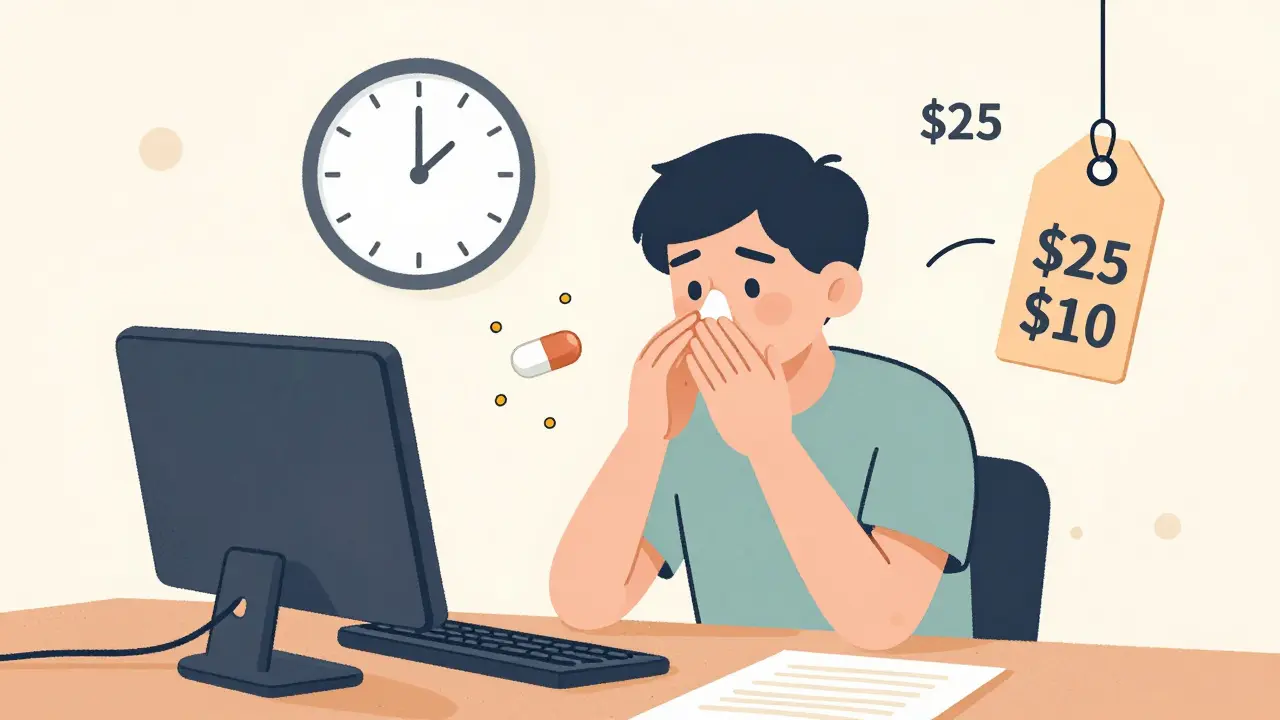
At Walmart in 2020, generic cetirizine was $10 for 90 tablets. Brand Zyrtec? Around $25. Claritin brand was $16. Allegra brand was $20. That’s a 150% price gap between the cheapest and most expensive. With generics, you’re paying 60-70% less. And most pharmacies offer discount programs. GoodRx, for example, can cut prices by up to 80% on brand-name pills. Always check before you buy.
When to Consider Other Options
Antihistamines are great - but they’re not magic. They’re best for sneezing, runny nose, and itching. They don’t do much for nasal congestion. That’s where nasal corticosteroids like Flonase or Nasacort come in. These sprays target inflammation directly in your nasal lining. They take days to work, but once they do, they’re far more effective for stuffy noses than any antihistamine.
For people with year-round allergies, combining a nasal spray with a daily antihistamine is often the most effective strategy. The Mayo Clinic recommends this approach for persistent symptoms. Also, if you’re using antihistamines every day for months, talk to a doctor. Long-term use is generally safe, but your symptoms might be better managed with allergy shots or environmental controls - like HEPA filters, washing bedding weekly, or keeping windows closed during pollen season.
Practical Tips for Daily Use
- If you take Zyrtec and feel drowsy, switch to taking it at night. Many users find this solves the problem without losing effectiveness.
- Never take Allegra with grapefruit, orange, or apple juice. Water is the only safe option.
- Claritin needs consistent daily use. Don’t wait until symptoms hit - take it every day during allergy season.
- Start with generics. They’re just as effective and often 70% cheaper.
- Try one for a full week before deciding it doesn’t work. Your body may need time to adjust.
- If one doesn’t help, try another. There’s no shame in switching. Most people need to test two or three before finding their match.
What About Combination Products?
Products like Zyrtec-D, Claritin-D, and Allegra-D add pseudoephedrine - a decongestant - to help with nasal stuffiness. They work faster for congestion. But they come with trade-offs: increased heart rate, elevated blood pressure, insomnia, and jitteriness. If you have high blood pressure, heart issues, or trouble sleeping, avoid these. Stick to plain antihistamines unless your doctor says otherwise.
Final Thoughts
There’s no single best non-drowsy antihistamine. The right one for you depends on your symptoms, your body, your budget, and your habits. Need fast relief? Zyrtec or Xyzal. Want the least drowsiness? Allegra. On a tight budget? Generic loratadine. Just remember: what works for your coworker might do nothing for you. Trial and error isn’t a flaw - it’s normal. And if your allergies are still wrecking your days after trying these, it might be time to look beyond antihistamines entirely. Nasal sprays, allergen avoidance, and even immunotherapy can be game-changers. But for now, knowing the real differences between these four options puts you one step ahead of the marketing noise.


9 Comments
Aaron Pace
I swear by Zyrtec 🤙 but only if I take it at night. If I take it in the morning I’m out like a light. My dog doesn’t even need antihistamines anymore - he’s got better allergies than me. 😅
Joey Pearson
You got this! Start with generic loratadine - it’s cheap, effective, and you’ll thank yourself later. No need to overpay for brand names. Your body will thank you too 💪
Roland Silber
Important note: Allegra’s interaction with citrus juice isn’t just a warning - it’s a pharmacokinetic disaster. The flavonoids in orange juice inhibit OATP1A2 transporters, slashing bioavailability by up to 60%. Water isn’t just safer - it’s scientifically necessary. Don’t risk it.
Patrick Jackson
I tried all four. Zyrtec made me feel like I’d been hit by a truck of sleepy angels. Claritin? Barely did anything. Xyzal was like a magic wand… until I saw the price tag. Then I found generics. And man - it was like discovering the internet all over again. 🤯
Pranay Roy
These drugs are just a cover. Big Pharma doesn’t want you cured - they want you dependent. The real solution? Stop eating processed food, detox your liver, and move to a desert. No pollen there. Also, 5G causes allergies. Just saying.
Joe Prism
In India, we use neem leaves and turmeric paste. Works better than anything in a bottle. But hey - if you’re in the US, go with generics. It’s the same chemistry, just less marketing.
Bridget Verwey
Oh so Claritin’s the 'weakest'? Cool. So what’s the 'strongest'? The one that doesn’t make you feel like a zombie? Because I’m pretty sure that’s the one you’re supposed to use. 🙄
Andrew Poulin
Stop overthinking this. Take the cheapest generic. If it doesn’t work, try another. Done. No need for a PhD in histamine receptors. Just move on.
Weston Potgieter
Zyrtec is overrated. Xyzal? Overpriced. Claritin? Useless. Allegra? Only if you hate juice. The real answer? Skip all of them. Just move to Antarctica. Or start crying. Either way, you’ll feel better.