
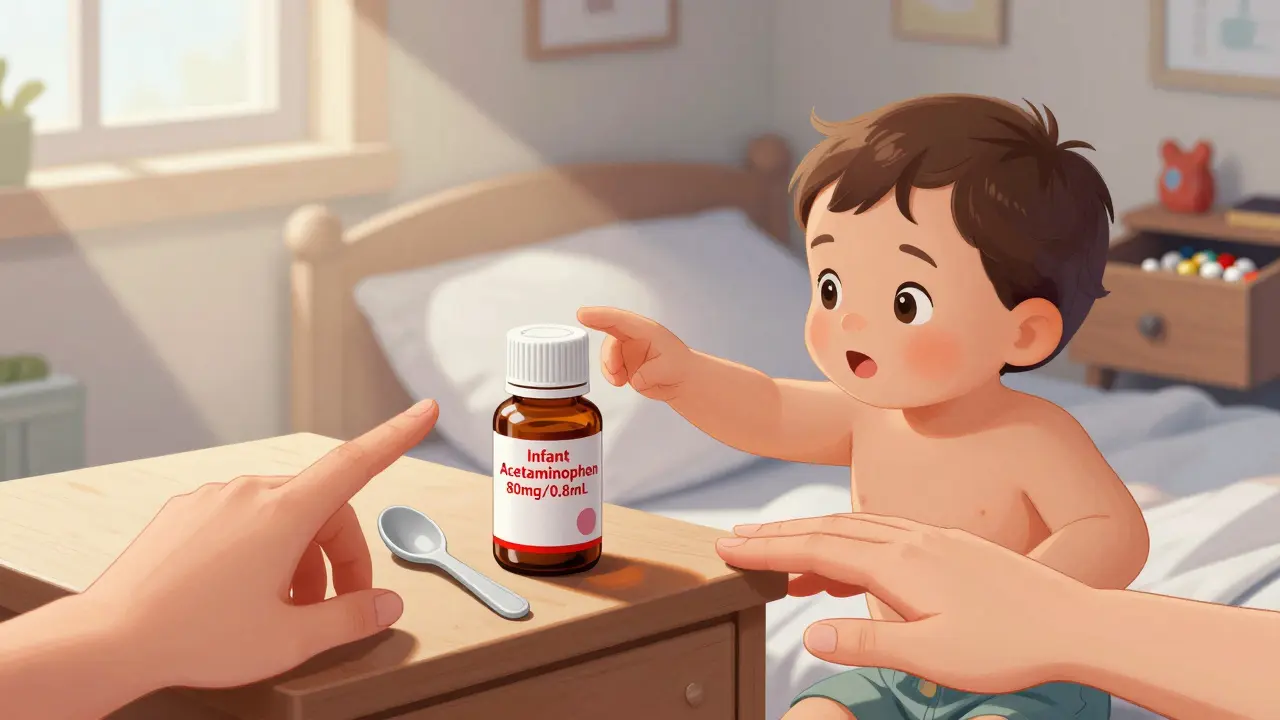
Every year, tens of thousands of young children end up in emergency rooms because they got into medicine they weren’t supposed to. It’s not because parents are careless-it’s because medicine is everywhere, and kids are curious. A bottle left on the nightstand. A teaspoon used to measure liquid medicine. A child-resistant cap that wasn’t clicked shut. These aren’t rare mistakes. They’re common, preventable, and often deadly.
Why This Happens More Than You Think
Children under five are at the highest risk. At this age, they explore the world by touching, grabbing, and tasting. If it’s within reach, they’ll try it. And medicine? It often looks like candy. Bright colors, sweet flavors, small bottles. The CDC reports that in 2010, emergency departments saw over 76,000 cases of young children accidentally taking medicine. That’s one every seven minutes. The biggest culprits? Liquid acetaminophen and diphenhydramine. Together, they account for nearly half of all pediatric medication overdoses. Why? Because parents often don’t realize there are different concentrations-infant drops versus children’s liquid-and they mix them up. One study found that 42.6% of dosing errors happened because caregivers used the wrong formula. Another 78.3% of cases involved using kitchen spoons instead of the dosing cup or syringe that came with the medicine.What ‘Child-Resistant’ Really Means
Many parents think if a cap is labeled “child-resistant,” their child can’t open it. That’s not true. The Consumer Product Safety Commission found that 10% of kids can open these caps by the time they’re 3.5 years old. That’s not a failure of the cap-it’s a failure of assumption. Child-resistant doesn’t mean child-proof. It means it’s harder for a child to open, not impossible. That’s why the CDC’s PROTECT Initiative, launched in 2008, focuses on three things: better packaging, clearer dosing, and smarter storage. And it’s working. Between 2010 and 2020, emergency visits for pediatric medication overdoses dropped by 25%. But there’s still a long way to go.The Three Rules of Safe Storage
There’s no magic solution. Prevention comes down to three simple, non-negotiable habits:- Keep it locked. Store all medications-prescription, OTC, vitamins-in a locked cabinet. Not just up high. Not just out of sight. Locked. Even if you think you’ll only be gone for a minute. That’s when it happens.
- Keep it at least 4 feet off the ground. Toddlers climb. They pull chairs to countertops. They stand on couches. A cabinet on the floor is not safe. A shelf above the fridge? Still risky. Aim for 4 feet or higher, behind a lock.
- Put it back immediately. Never leave medicine on a nightstand, kitchen counter, or bathroom sink. Even for a second. One parent on Reddit shared how their 2-year-old got into blood pressure pills because they were left on the nightstand after a doctor’s visit. That child survived. Others haven’t.
Dosing: Don’t Guess, Don’t Use Kitchen Spoons
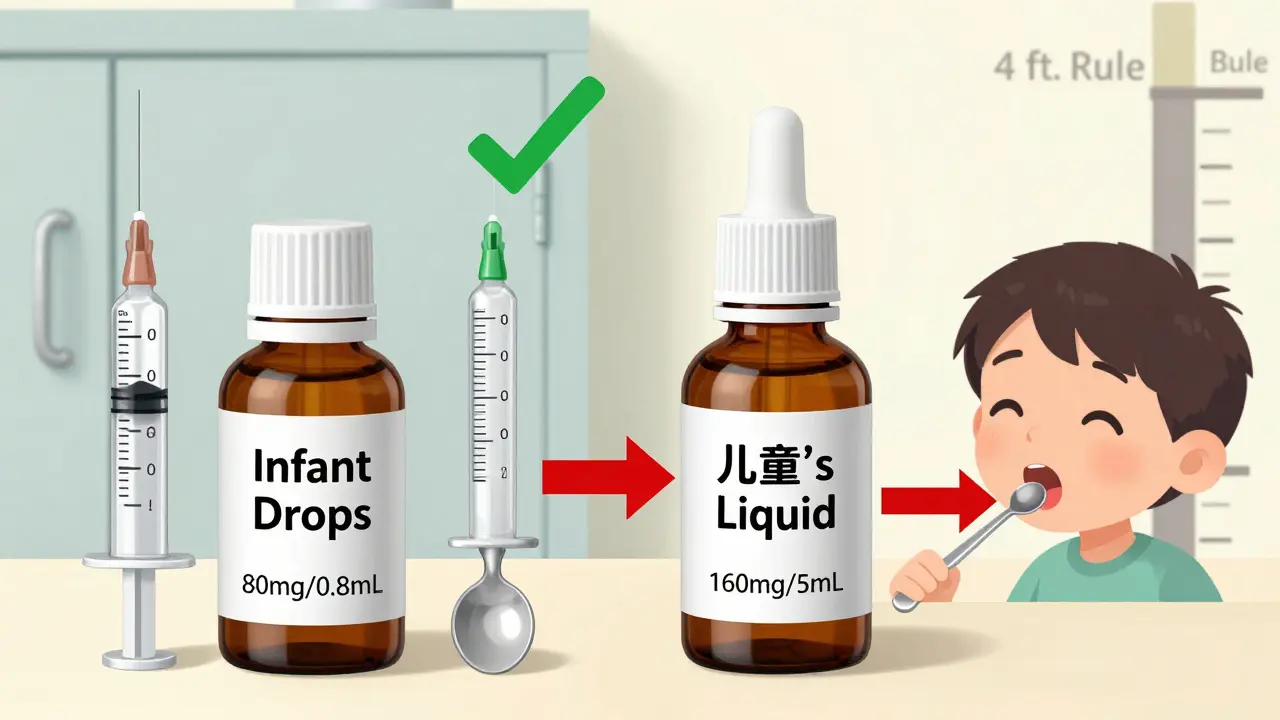
Using a kitchen spoon to measure medicine is one of the most dangerous habits. A tablespoon isn’t 15 mL. A teaspoon isn’t 5 mL. And they vary by brand. That’s why the FDA and CDC now require all liquid medications to list doses in milliliters (mL), not teaspoons or tablespoons. Over 95% of manufacturers comply now. But caregivers still don’t always use the right tool. Always use the dosing device that comes with the medicine-whether it’s a syringe, cup, or dropper. And never, ever swap devices between different medicines. Each one is calibrated for its own formula. Also, check the concentration. Infant acetaminophen is 80 mg per 0.8 mL. Children’s acetaminophen is 160 mg per 5 mL. They’re not interchangeable. Confusing them can lead to a fivefold overdose. If you’re unsure, ask your pharmacist. Write it down. Keep it next to the medicine.What to Do If Your Child Gets Into Medicine
If you suspect your child swallowed medicine they shouldn’t have, don’t wait for symptoms. Don’t call your pediatrician first. Don’t Google it. Call poison control immediately: 1-800-222-1222. It’s free, available 24/7, and staffed by experts who know exactly what to do. If the medicine is an opioid (like oxycodone, hydrocodone, or fentanyl) and your child is unresponsive, not breathing, or turning blue, give naloxone if you have it. The CDC and AAP now recommend that families with opioid prescriptions keep naloxone on hand. It’s safe for children. It’s available as a nasal spray or injection. You don’t need a prescription in most states. If you don’t have naloxone, call 911 immediately. Start rescue breathing if you’re trained. Every minute counts.What’s Being Done-and What’s Still Missing
The PROTECT Initiative has made real progress. Flow restrictors (small plastic inserts that slow liquid flow) are now required on many liquid medications. But not all. Only 60% of liquid opioids have them. The FDA plans to require them on all by 2025. The Up and Away campaign, which teaches safe storage, has reached millions. But only 32% of households store meds in locked cabinets. Only 58% use child-resistant caps correctly. Why? Cost, convenience, and confusion. New tech like smart pill dispensers (Hero Health, AdhereIT) can help. But they cost hundreds of dollars. Most families can’t afford them. And they’re not covered by insurance. The biggest gap? Education. Only 63% of pediatricians talk about safe storage during well-child visits. That’s not enough. Parents need to hear this not once, but repeatedly-from doctors, nurses, pharmacists, even from other parents.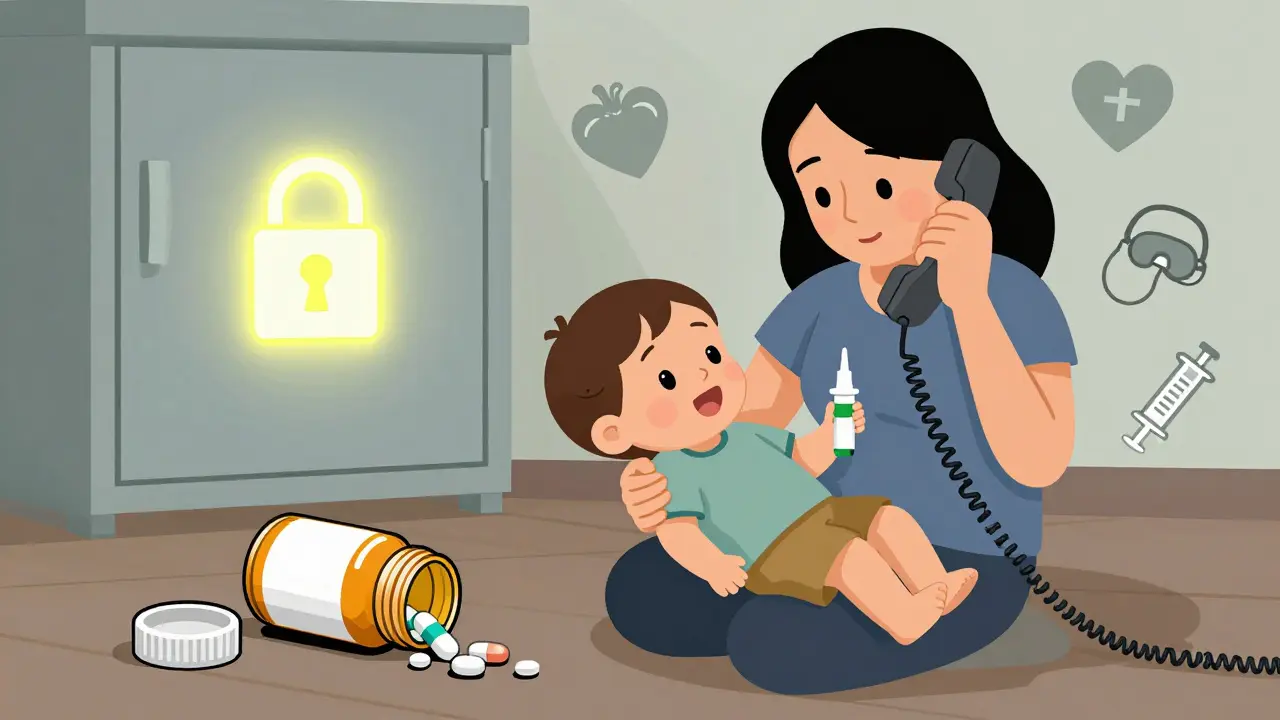
What You Can Do Today
You don’t need to wait for a law or a new device. Start now:- Lock your medicine cabinet. Use a childproof lock if needed.
- Throw away old or unused meds. Use a take-back program or follow FDA disposal guidelines (mix with coffee grounds or cat litter, seal in a bag, throw in trash).
- Use only the dosing tool that came with the medicine. Never use a spoon.
- Write down the concentration of each medicine you keep at home. Keep the list on the fridge.
- Save 1-800-222-1222 in your phone. Put it on the fridge. Tell babysitters and grandparents.
- If your child is prescribed an opioid, ask for naloxone. Keep it in your purse, your car, your nightstand.
Real Stories, Real Lessons
One grandmother shared on Grandparents.com how her 18-month-old granddaughter tried to open a child-resistant cap. She couldn’t twist it all the way. The grandmother heard the clink, turned around, and caught her just in time. That cap worked. Because it was properly closed. Another parent on Reddit wrote about their 3-year-old swallowing half a bottle of melatonin. They thought it was harmless. The child vomited, got sleepy, and was fine. But the next day, they learned melatonin can cause low blood pressure and seizures in kids. They now keep all meds locked-and they tell every parent they know. These aren’t rare stories. They’re the norm. And they’re preventable.Final Thought: It’s Not About Blame
This isn’t about being a perfect parent. It’s about being prepared. You’re not failing if your child gets into medicine. You’re human. But you can change the outcome by locking it up, measuring it right, and knowing what to do next. The tools exist. The guidance is clear. The only thing missing is action.What should I do if my child swallows medicine they shouldn’t have?
Call poison control immediately at 1-800-222-1222. Do not wait for symptoms. If the medicine is an opioid and your child is unresponsive or not breathing, give naloxone if you have it, then call 911. Never try to make your child vomit unless instructed by a professional.
Are child-resistant caps enough to keep kids safe?
No. Child-resistant caps reduce access but don’t prevent it. Studies show 10% of children can open them by age 3.5. Always store medicine in a locked cabinet, out of sight and reach. Caps are a backup, not a solution.
Can I use a kitchen spoon to measure liquid medicine?
Never. Kitchen spoons vary in size and are not accurate. Always use the dosing syringe, cup, or dropper that came with the medicine. If you lost it, ask your pharmacy for a new one-they’re usually free.
What’s the difference between infant and children’s acetaminophen?
Infant drops are 80 mg per 0.8 mL. Children’s liquid is 160 mg per 5 mL. They’re not interchangeable. Giving infant drops using the children’s dosing tool can lead to a 5x overdose. Always check the concentration on the label and use the correct tool.
Should I keep naloxone at home if my child isn’t on opioids?
Yes. Opioids are found in many homes-prescribed for injuries, surgeries, or chronic pain. Even if your child isn’t on them, someone else’s medication could be accessible. Naloxone is safe, easy to use, and can save a life. Ask your pharmacist for it. No prescription is needed in most places.
How do I safely dispose of old medications?
Use a drug take-back program if available (many pharmacies and police stations offer them). If not, mix pills with coffee grounds or cat litter, seal them in a plastic bag, and throw them in the trash. Never flush them down the toilet unless the label says it’s safe.

11 Comments
nina nakamura
Stop pretending this is about parenting. This is about laziness. You think locking up medicine is hard? Try holding a job, paying rent, and not letting your kid turn your living room into a pharmacy. Every single one of these cases is preventable. No excuses. No sympathy. Just lock it up or accept the consequences.
Lara Tobin
I just read this and started crying. My niece did this last year. She got into my sister’s anxiety meds. She’s fine now, but I’ll never forget the sound of her mom screaming. Please, please lock your stuff up. I’m begging you. 😭
Keasha Trawick
Let’s be real - the system is rigged. Child-resistant caps? More like ‘child-resist-some-of-the-time-if-you’re-lucky’ caps. And don’t get me started on the fact that half the meds in my house are labeled in milliliters but come with a plastic spoon that holds 3.7 mL. Who designed that? A toddler? The FDA says ‘use the dosing tool’ but doesn’t mandate that the tool actually match the label. That’s not safety - that’s performance art.
And why are smart dispensers $300? That’s a joke. My cousin’s kid got into melatonin because the ‘childproof’ bottle was on the counter next to the cereal. We need universal, affordable, idiot-proof solutions - not guilt trips.
Also, why is naloxone still not in every public school? If we’re serious about saving lives, we stop treating this like a moral failure and start treating it like the public health crisis it is.
And yes - I’m that mom who keeps naloxone in her purse, her car, and her diaper bag. Because I’m not waiting for the system to catch up.
sharon soila
Thank you for writing this with such clarity and care. I’m a nurse, and I see this too often. Parents aren’t careless - they’re exhausted. The real tragedy isn’t the mistake - it’s that we don’t make prevention easy. Lock boxes should be free. Dosing tools should be mandatory. And every pharmacy should hand out naloxone like gum at a wedding. We know what works. Let’s just do it.
Alvin Montanez
It’s not just about locking up medicine - it’s about the culture of complacency. We’ve normalized the idea that ‘it won’t happen to me’ until it does. And then we blame the parent. But the system has failed us. We have no national standard for pediatric medication storage. No mandatory education in pediatric visits. No subsidies for smart dispensers. No federal funding for public awareness campaigns that actually reach low-income families. We treat this like a personal failing when it’s a systemic collapse. And until we fix that, we’re just rearranging deck chairs on the Titanic.
Jamie Clark
Let’s cut the fluff. You think a locked cabinet is enough? Tell that to the kid who climbed the bookshelf and opened the cabinet with a butter knife. Or the one who got into the medicine because Grandma ‘forgot’ to lock it while babysitting. Safety isn’t about rules - it’s about layers. Lock it. Hide it. Use a cap that actually clicks. Use the right syringe. Write the concentration on the bottle. Teach everyone who touches your kid. And if you’re still not doing all of it - you’re not trying hard enough. This isn’t parenting. It’s survival.
Hamza Laassili
Y’all are overthinking this. Just lock the damn stuff. No one cares about your ‘systemic issues.’ I’m a single dad. I work two jobs. I don’t have time for fancy dispensers or ‘educational campaigns.’ I got a $10 lockbox from Walmart. I put everything in it. I put it on the top shelf. Done. If you can’t do that, you shouldn’t have kids. Simple. No excuses. America’s falling apart because people want hand-holding instead of action.
Donna Hammond
I’m a pharmacist, and I’ve handed out over 200 free dosing syringes in the last year. Most parents don’t know they’re free. Most don’t know they can ask. I keep them in a drawer behind the counter. I hand them out with every liquid prescription - no questions asked. I even tape a note to the bottle: ‘Use this. Not a spoon.’ It’s small. It’s cheap. It’s effective. We can fix this - one syringe at a time.
And if you’re worried about cost - ask. We’re here to help. Not judge.
Sheldon Bird
My daughter once got into my ibuprofen. She was fine, but I still have nightmares. Since then, I keep everything in a locked box under the sink. I use the syringe. I write the concentration on the bottle. I even made a little chart for my mom and sister. I’m not perfect - but I’m trying. And I’m telling everyone I know. We can do this. Together. 💪❤️
Tommy Watson
ok so i read this and like… i just left my wife’s blood pressure pills on the counter for like 2 mins while i grabbed a snack and my 2yo was right there and i just… like… oh god. im gonna go lock everything rn. ty for the scare. 🙏
Richard Ayres
This is one of the most important public health messages I’ve read in years. It’s not about blame. It’s about responsibility - and community. We need to normalize asking, ‘Do you have your meds locked?’ We need to teach this in parenting classes. We need to fund these solutions. And we need to stop treating every accident as a failure of character. It’s a failure of support. Let’s build better systems - not better parents.