

When you take a medication like warfarin, levothyroxine, or digoxin, even a tiny change in how much of the drug enters your bloodstream can be dangerous. These are narrow therapeutic index drugs - medicines where the difference between a safe dose and a harmful one is razor-thin. That’s why regulators don’t treat them like regular generic drugs. The rules for proving they work the same as the brand-name version are much stricter. And for good reason.
What Makes a Drug a Narrow Therapeutic Index (NTI) Drug?
An NTI drug has a very small window between the dose that works and the dose that causes harm. The FDA defines this using a therapeutic index of 3 or less - meaning the toxic dose is only three times higher than the effective dose. For comparison, most common drugs have therapeutic indexes of 10, 20, or even higher.
Some of the most well-known NTI drugs include:
- Warfarin (blood thinner)
- Levothyroxine (thyroid hormone)
- Digoxin (heart medication)
- Phenytoin (anti-seizure)
- Tacrolimus (organ transplant rejection prevention)
- Lithium (bipolar disorder)
- Carbamazepine (seizures and nerve pain)
These aren’t obscure drugs. They’re used by millions. In the U.S. alone, NTI drugs account for about $45 billion in annual sales. If a generic version is even slightly different in how it’s absorbed or processed, patients could suffer seizures, blood clots, organ rejection, or even death.
Why Standard Bioequivalence Rules Aren’t Enough
For most generic drugs, regulators accept bioequivalence if the generic’s blood levels fall within 80% to 125% of the brand-name drug. That’s called the 80-125% rule. It works fine for drugs where a 20% variation won’t hurt.
But for NTI drugs? That gap is too wide. A 20% drop in warfarin could mean a blood clot. A 20% spike could cause dangerous bleeding. That’s why regulators had to rethink the rules.
Early on, doctors noticed problems when switching patients from brand to generic versions of phenytoin or digoxin. Some patients had seizures. Others had toxic side effects. Therapeutic drug monitoring - checking blood levels regularly - became common. But that’s not a fix. It’s a band-aid. The real solution? Make sure the generic is nearly identical from the start.
How Different Regulators Handle NTI Drugs
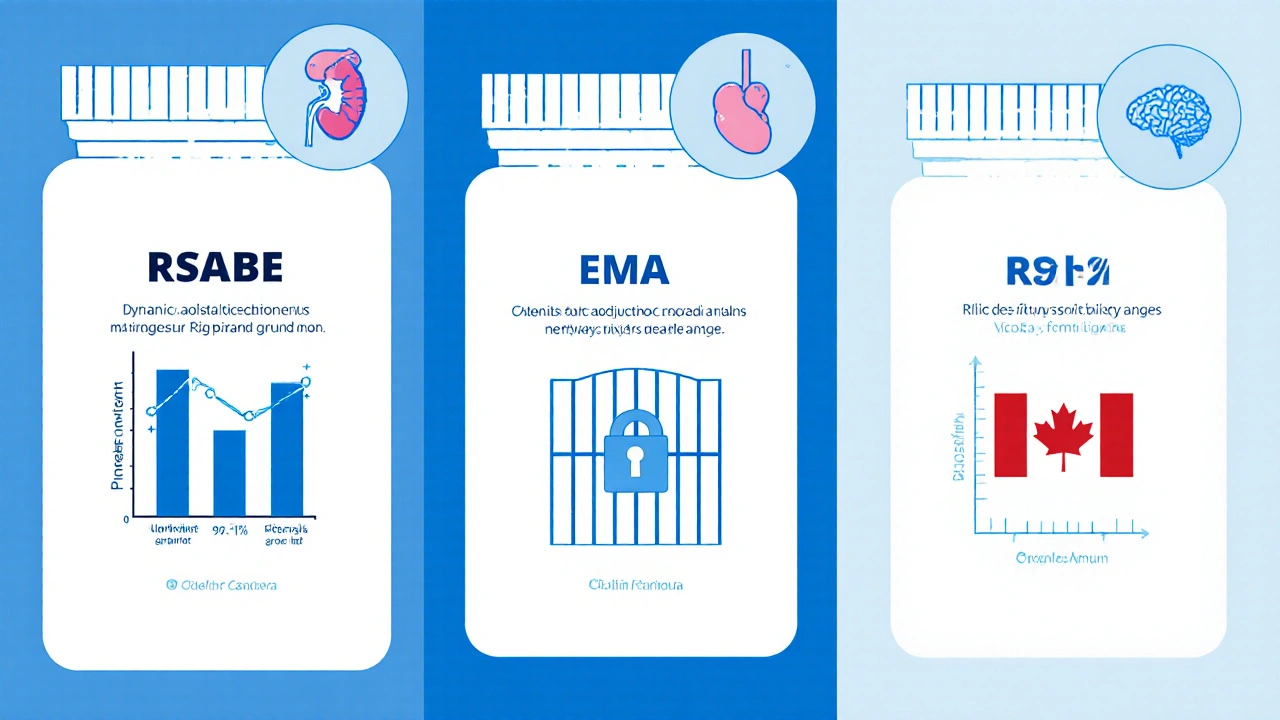
Not all countries use the same rules. The FDA, EMA, and Health Canada each have their own approach - and the differences matter.
U.S. FDA: The Most Complex System
The FDA’s current approach for NTI drugs requires three things:
- Reference-scaled average bioequivalence (RSABE): The acceptable range for blood levels adjusts based on how much the brand-name drug varies from person to person. If the brand varies a lot, the generic can vary a bit more too. If the brand is very consistent, the generic must be even more so.
- Variability comparison: The generic can’t be more variable than the brand. If the brand’s blood levels jump around a lot, the generic can too. But if the brand is steady, the generic must be steadier. This is checked using a statistical test that compares within-subject variability.
- Unscaled average bioequivalence: Even after RSABE, the generic must still stay within the 80-125% range. This acts as a final safety net.
This system is scientifically strong. It’s based on real data from thousands of patient studies. But it’s also expensive. A typical bioequivalence study for a regular generic costs $300,000-$700,000. For an NTI drug, it’s $500,000-$1 million. Why? Because studies need more participants - usually 36 to 54 people - and more complex designs, like a four-period crossover.
Europe (EMA): Fixed Tighter Limits
The European Medicines Agency doesn’t use scaling. Instead, they use a fixed range of 90-111% for NTI drugs. Simpler. Easier to test. But less flexible. If a brand drug has high variability, the EMA still forces the generic to meet the same tight limits - even if the brand itself varies that much.
Canada (Health Canada): Middle Ground
Health Canada uses 90.0-112.0% for the area under the curve (AUC) of critical NTI drugs. It’s tighter than the standard, but not as complex as the FDA’s method.
Real-World Evidence Shows It Works
Some critics argue these strict rules are overkill. They say generics are safe enough, and the cost of testing drives up prices. But real-world data tells a different story.
A 2017 study in the American Journal of Transplantation followed kidney transplant patients switched from brand to generic tacrolimus. Those using generics that met the FDA’s NTI bioequivalence standards had no increase in rejection rates or side effects. Another study in Circulation: Cardiovascular Quality and Outcomes found no difference in bleeding or clotting events between brand and generic warfarin when patients were monitored properly.
These aren’t lab results. These are real patients. Real outcomes. The stricter rules aren’t just theory - they’re keeping people alive.
Why Generic NTI Drugs Are Still Hard to Get
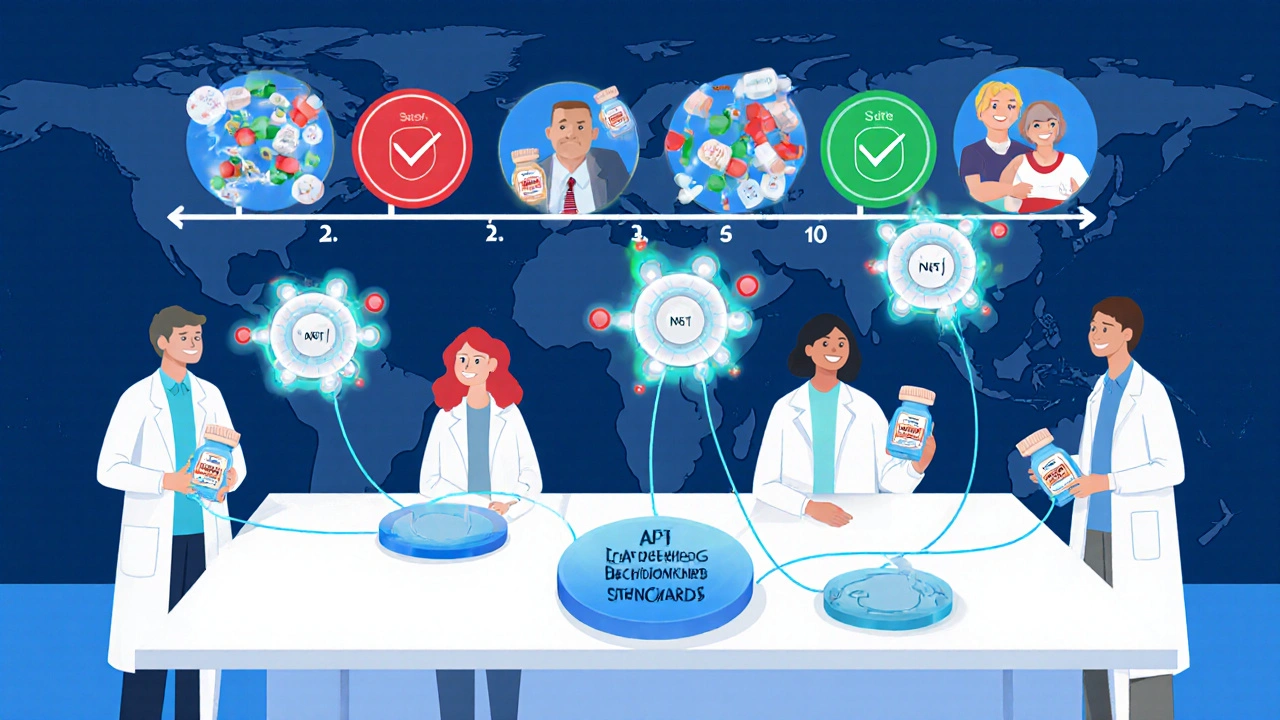
Despite the need, generic NTI drugs make up only about 68% of the market - compared to 90% for other generics. Why?
- Cost of development: The high price of studies deters small manufacturers.
- Uncertainty: The FDA doesn’t publish a full list of NTI drugs. Manufacturers have to guess which ones need special testing.
- Prescriber hesitation: Many doctors still prefer brand-name versions out of habit or fear.
That’s changing. The FDA is working on a more systematic way to classify NTI drugs using quantitative calculations - not just case-by-case reviews. They plan to finalize their guidance on RSABE by mid-2024. And they’re talking with EMA and Health Canada about aligning standards.
If global harmonization happens, generic manufacturers could save 15-20% on development costs. That could mean more competition, lower prices, and better access.
The Bottom Line: Safety Over Speed
Narrow therapeutic index drugs aren’t like buying a different brand of aspirin. They’re like flying a plane with no margin for error. One wrong turn, one small miscalculation - and the consequences are catastrophic.
Stricter bioequivalence rules aren’t about stopping generics. They’re about making sure generics are truly safe. The FDA’s approach may be complex and costly, but it’s grounded in science. It’s not about protecting profits. It’s about protecting lives.
As more generic NTI drugs enter the market under these rules, the fear around switching will fade. The data already shows: when the standards are met, the outcomes are the same. The challenge now is making those standards easier to meet - without lowering the bar.
What drugs are considered narrow therapeutic index (NTI) drugs?
Common NTI drugs include warfarin, levothyroxine, digoxin, phenytoin, tacrolimus, lithium, carbamazepine, and sirolimus. These drugs have a very small difference between the effective dose and the toxic dose. The FDA doesn’t maintain a complete official list, but has issued specific bioequivalence guidance for 15 NTI drugs as of 2023, including these key examples.
Why are bioequivalence requirements stricter for NTI drugs?
Because even small differences in blood levels can cause serious harm - like bleeding with warfarin, seizures with phenytoin, or organ rejection with tacrolimus. Standard 80-125% bioequivalence limits are too wide for these drugs. Tighter limits reduce the risk of therapeutic failure or toxicity.
How does the FDA’s approach differ from the EMA’s?
The FDA uses reference-scaled average bioequivalence (RSABE), which adjusts limits based on how variable the brand drug is, plus a variability comparison and a final 80-125% check. The EMA uses a fixed 90-111% range regardless of variability. The FDA’s method is more scientifically tailored but more complex and expensive to test.
Are generic NTI drugs safe to use?
Yes - if they meet the stricter bioequivalence standards. Real-world studies show no increase in adverse events or treatment failures when generic versions of warfarin, tacrolimus, and levothyroxine meet FDA or EMA NTI requirements. The safety concerns come from older generics that didn’t meet these rules, not from properly tested ones.
Why are NTI generic drugs more expensive to develop?
Because studies require more participants (36-54 vs. 24-36), longer study designs (like 4-period crossovers), and more complex statistical analysis. Costs range from $500,000 to $1 million per drug - nearly double that of standard generics. This discourages some manufacturers from entering the market.
Will NTI drug regulations become more consistent worldwide?
Yes. The FDA is actively working with the EMA and Health Canada to align classification and testing methods. Experts predict global harmonization by 2026, which could reduce development costs by 15-20% and make more generic NTI drugs available at lower prices without compromising safety.


9 Comments
Tina Dinh
This is literally life-saving info 🙌 I had a cousin on warfarin who got hospitalized after a generic switch-no one warned them. Glad someone’s fighting for the right rules.
Bernie Terrien
The FDA’s RSABE? More like RSB-Regulatory Sadism Bureaucracy. $1M per drug? That’s not science-it’s a cartel. Small pharma gets crushed while Big Brand pockets the cash.
Peter Lubem Ause
I’ve seen this firsthand in Lagos-patients on tacrolimus after transplant are often given unregulated generics because of cost. The consequences are devastating. What we need isn’t just stricter rules-it’s global enforcement. This isn’t a regulatory debate-it’s a human rights issue. People die because supply chains are broken, not because science is flawed.
linda wood
So let me get this straight… we’re okay with patients getting seizures because ‘the brand is expensive’? 🤔 Oh wait, no-we’re not okay with that at all. We’re just okay with the system being broken. Classic.
LINDA PUSPITASARI
I’m a pharmacist and I’ve seen the difference between compliant and non-compliant generics in NTI drugs-like night and day. One patient on levothyroxine went from TSH 2.1 to 12.8 after a switch. No symptoms at first… then fatigue, weight gain, depression. Took 3 months to stabilize. Don’t let anyone tell you this isn’t real. 💊😭
jamie sigler
I mean… it’s not like anyone’s dying from a 10% difference in blood levels. Right?
Joy Aniekwe
Oh sweetie. You really think the FDA is doing this for patients? The same FDA that approved OxyContin? The same FDA that lets pharmaceutical companies write their own guidelines? This is theater. They want to keep generics expensive so Big Pharma keeps raking in cash. It’s not safety-it’s profit in a lab coat.
Geoff Heredia
EVERYTHING about this is a lie. The real reason they’re making it harder? The FDA and EMA are in cahoots with the brand-name manufacturers. The ‘studies’? Fabricated. The ‘data’? Cooked. They’re keeping generics out so they can charge $1,200 a pill for warfarin. I’ve seen the emails. It’s all documented. Wake up.
Subhash Singh
The proposed harmonization between regulatory agencies is a scientifically sound and pragmatically necessary step toward global public health equity. The differential regulatory burdens currently imposed on manufacturers of narrow therapeutic index drugs create market distortions that disproportionately affect low- and middle-income countries. A unified, evidence-based framework, grounded in pharmacokinetic variability and clinical outcomes, would enhance accessibility without compromising safety. This is not merely regulatory alignment-it is a moral imperative.