
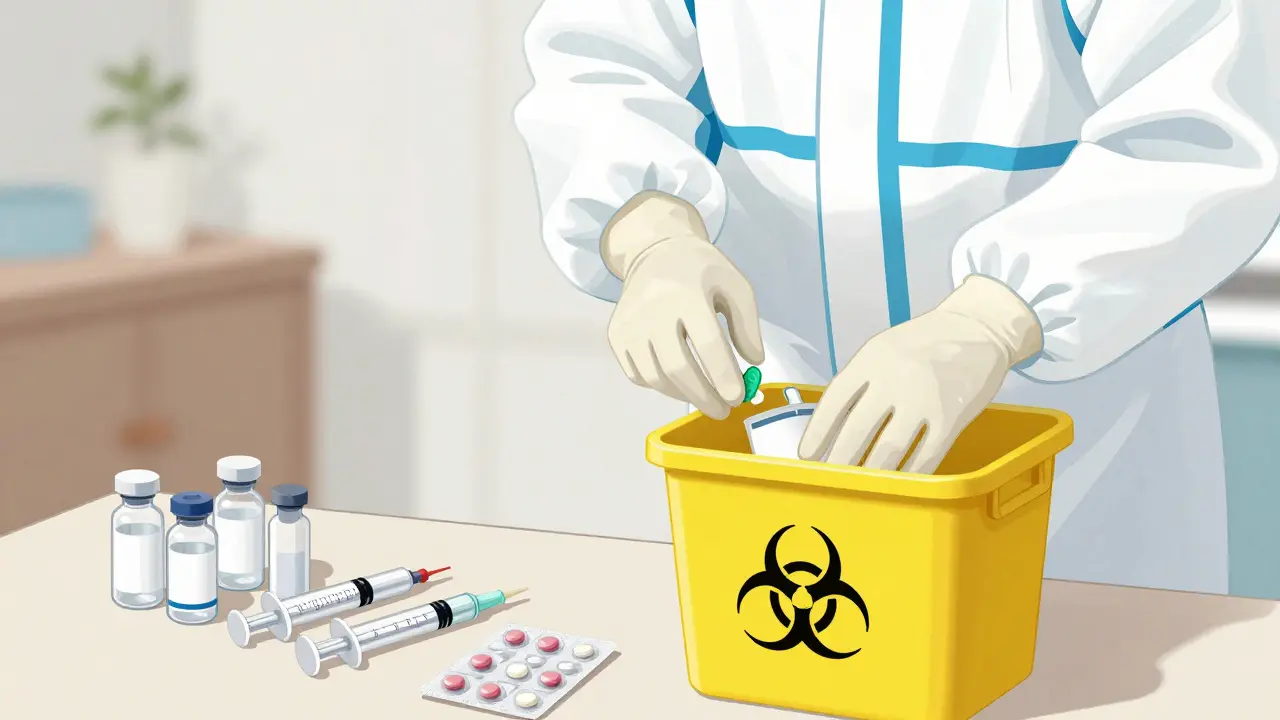
Most people think throwing old medicine in the trash is fine. With regular painkillers or antibiotics, the risk is low enough that we usually just toss them out. But chemotherapy changes the rules entirely. These aren’t just medicines; they are cytotoxic drugs designed to kill fast-growing cells. Because of this, even a tiny amount left on a pill wrapper or in a syringe can pose serious health risks to you, your family, and the environment.
If you or a loved one are receiving Chemotherapy treatment at home, the way you handle the waste is just as critical as the treatment itself. We are seeing more cancer care happening outside hospital walls. In fact, reports show a 37% increase in home-based cancer treatments since 2019. This means families are suddenly responsible for managing waste that used to be handled by clinical staff. Getting this wrong can lead to accidental exposure or contaminate local water supplies.
Understanding the Risk of Cytotoxic Drugs
Before talking about bags and bins, you need to understand what you are disposing of. Standard disposal methods don’t work for cancer drugs because of their potency. Cytotoxic agents can cause DNA damage, reproductive harm, and other health effects even at very low levels. Dr. Jane Smith from MD Anderson Cancer Center notes that these agents require 100-fold more stringent handling than conventional medications due to these properties.
The danger isn’t just immediate poisoning. These drugs can remain active in bodily fluids for days after administration. The American Cancer Society guidelines warn that residual chemotherapy drugs can remain in urine, feces, vomit, or sweat for 3 to 7 days after treatment. This creates a unique window of time during which toilet flushes or laundry needs special handling. Ignoring this timeline puts everyone in the household at risk.
The Golden Rules of Timing and Protection
Safety begins with protection before you even touch a bag. You cannot handle chemotherapy waste with bare hands. You need disposable nitrile gloves that meet specific thickness requirements. The Cancer Institute of New Jersey guidelines specify gloves that are at least 0.07mm thick. Most standard latex gloves are too thin and can tear easily. You also need long sleeves and a dedicated gown to prevent skin contact.
You must follow the “72-Hour Rule” for biological waste. For three full days after your last dose, any body waste containing the drug must be treated carefully. This includes flushing toilets. Some experts recommend keeping the lid down when flushing and scrubbing the rim twice a week during this period. Sweat is another factor. If you sweat significantly during the treatment window, you may need to shower to remove residue before changing clothes.
Step-by-Step Disposal Protocol
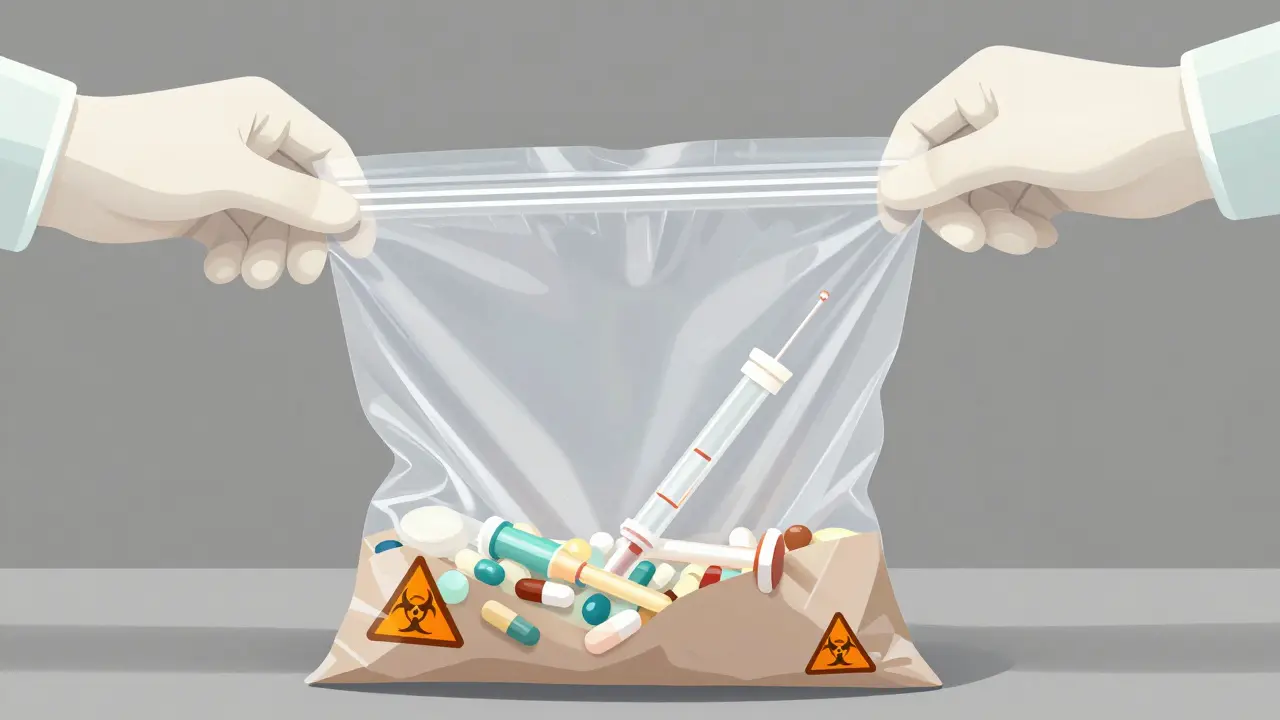
Once you have gathered the empty vials, used tubing, syringes, or pill bottles, do not mix them with regular household trash yet. You need a two-layer containment system known as double-bagging. Here is the exact process:
- Gather all contaminated materials (gloves, wrappers, IV bags).
- Place everything into a first leak-proof plastic bag. Zip-ties work best here, not just tying knots, as heat seals or heavy-duty ties minimize leaks.
- Put this sealed inner bag into a second identical plastic bag.
- Seal the outer bag tightly. Label it clearly as “Hazardous Pharmaceutical Waste.”
- Store this package in a designated area until you can take it to a collection site.
For solid pills, never crush them. Crushing releases dust particles that can linger in the air or settle on surfaces. Oral chemotherapy pills must go into the bag whole. If you have transdermal patches, fold them so the adhesive sides touch each other before placing them in the container to prevent skin contact later.
| Waste Type | Required Prep | Container Type |
|---|---|---|
| Oral Pills | Do not crush; keep blister packs intact | Leak-proof bag inside waste bin |
| Liquid Meds | Absorb into inert material (cat litter/sand) | Double-bagged zip-lock |
| Patches | Fold sticky side to sticky side | Yellow sharps or hazardous waste box |
| IV Components | No prep needed beyond tubing | Red biohazard bag or yellow bin |
Where Can You Take the Waste?
Once double-bagged, where does the waste actually go? You might look for community take-back events, but these can be tricky. Only about 12% of standard community take-back events accept chemotherapy waste due to liability concerns regarding law enforcement presence and handling requirements documented by EPA guidelines.
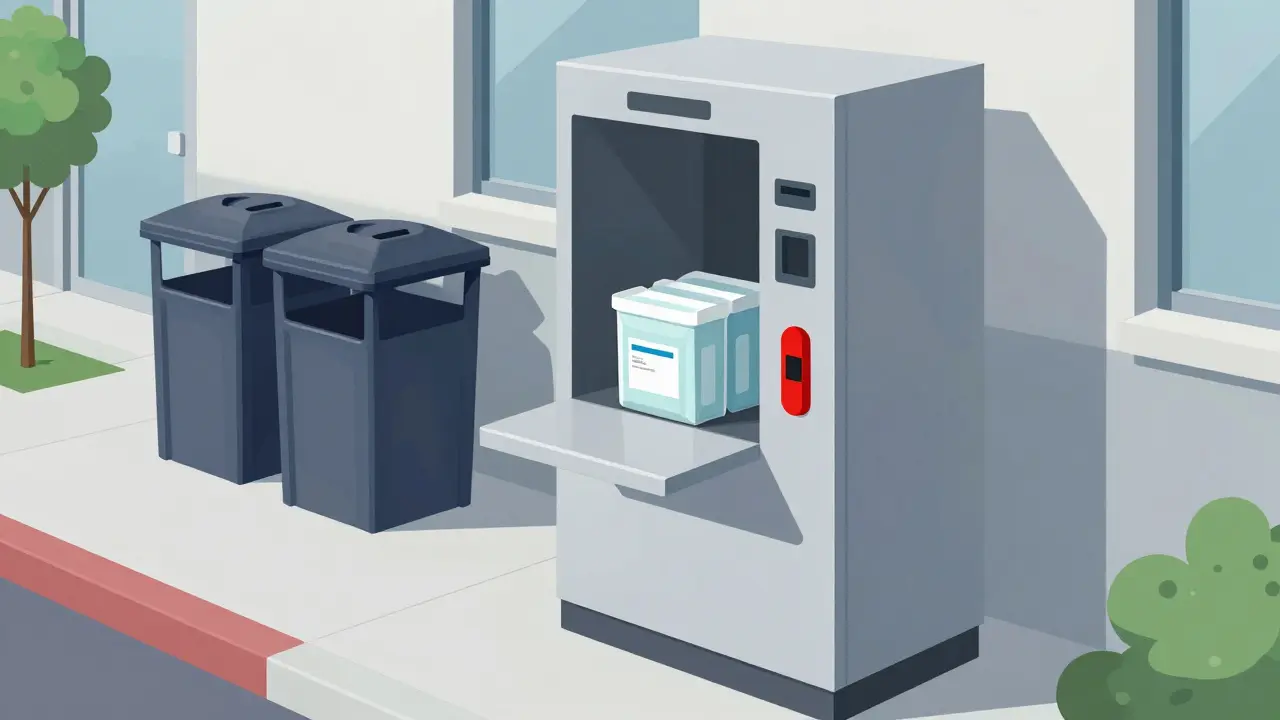
Specialized kiosks offer a better solution. Companies like Stericycle operate MedDrop medication collection kiosks. These units accept many types of medication, but acceptance rates for cancer drugs sit around 63%, compared to 98% for regular meds. You need to verify beforehand if the specific unit accepts the type of agent you have.
Another option is mail-back programs. Surveys show that 28% of US pharmacies offer specific envelopes for hazardous drugs. This requires calling ahead. Using the regular pharmacy drop-box meant for general waste is prohibited for cytotoxic agents. Always ask your provider if they supply yellow plastic containers specifically for hazardous pharmaceutical waste. Many oncology clinics provide these for free.
Accidents Happen: Spill Cleanup
Despite our best efforts, spills happen. A dropped pill or a leaking syringe requires an immediate, thorough response. You must have a spill kit ready. The Cancer Institute of New Jersey outlines a 15-step procedure that involves wearing a gown, mask, face shield, and double gloves during cleanup.
If you spill a solid object like a pill, use sticky tape or wet paper towels to pick it up. Wipe the area, then wash it with soap and water. Put the cleaning materials directly into a double-bagged hazardous waste container. Never pour chemicals down the sink to clean a spill. Dedicated cloths and mops should be kept solely for hazardous waste and washed separately from regular laundry.
Environmental Impact of Improper Disposal
We often ignore the environmental cost of throwing drugs in the trash or flushing them. Testing found detectable levels of cyclophosphamide-a common chemo drug-in 67% of waterways. Even though filtration plants try to remove contaminants, many hazardous compounds pass through and accumulate in ecosystems. Flushing is absolutely prohibited for these agents, regardless of any general lists suggesting certain meds can be flushed.
This contamination drives the need for specialized incineration. Hospitals incinerate their waste at extremely high temperatures to destroy the molecular structure of the drugs. By double-bagging and taking waste to authorized facilities, you help reduce the load on municipal systems that aren’t equipped to handle these chemicals.
Can I dispose of leftover oral chemotherapy in my kitchen bin?
No. Oral chemotherapy pills must not be placed in standard kitchen trash. They require a specialized hazardous waste container (yellow bin) or double-bagging in leak-proof plastic before being taken to a collection kiosk that accepts toxic drugs.
How long do I need to wait before handling waste normally?
Precautions extend for at least 48 to 72 hours after treatment. During this window, active compounds may be present in bodily fluids. Avoid handling urine, feces, or vomit without gloves, and follow toilet hygiene protocols strictly.
Is there a difference between flushing chemo and opioids?
Yes. While the FDA flush list permits flushing specific opioids to prevent child access, no chemotherapy medication should ever be flushed. Flushing chemo contaminates water systems and is banned under EPA standards.
Do I need special bags for disposal?
Standard zip-top bags are not sufficient. You need bags meeting ASTM D1735 standards with a thickness of at least 1.5 mil. Most healthcare providers supply compliant disposal bags for home use.
What happens if I get a small spill on my floor?
Wear gloves immediately. Cover the spill with absorbent material like cat litter or paper towels. Dispose of the cleanup kit in a double-bagged hazardous waste container. Wash the area thoroughly afterward.
13 Comments
Shawn Sauve
I read up on the nitrile gloves part and honestly found it super helpful for my brother. :) He was doing treatments at home last year and we almost messed up with regular latex. We switched to the thicker stuff right away. It really does make handling the bags safer. Glad you posted this info here! :)
walker texaxsranger
Big Pharma does not want you knowing how potent these cytotoxic agents remain after metabolism. They want you flushing everything down the drain quietly. Waterways are becoming toxic soup because of lax disposal regulations everywhere. Bioaccumulation in local ecosystems is a silent killer nobody talks about properly. Cytotoxic load remains active in urine for days without filtration. Municipal treatment plants cannot break down complex organic compounds designed to kill cells anyway. You are essentially poisoning your neighbors every time you flush blindly. The industry benefits from ignorance regarding half-life dynamics of these drugs. Most patients never receive the full hazard communication protocols required by law actually. Standard trash collection crews wear paper masks that offer zero protection against vaporization. They think double bagging solves contamination risks completely which is false. Incineration temperatures need verification before assuming destruction occurred effectively. Government guidelines lag behind scientific reality by decades constantly. Follow the chemistry instead of trusting standard advice blindly. This threat model requires immediate structural change in household waste management systems.
Eva Maes
Your take on bioaccumulation is dangerously reductive without considering enzymatic degradation rates. The narrative about systemic poisoning lacks nuance regarding modern filtration technology upgrades recently implemented. While vigilance is necessary framing this as inevitable doom ignores existing safeguards. We need pragmatic solutions rather than apocalyptic predictions that panic caregivers unnecessarily. The chemical properties require specific neutralization steps that standard facilities already employ. Dismissing established protocols because of fear creates more risk than calculated adherence to guidelines. Your rhetoric suggests a level of malice that isn't supported by current epidemiological data points.
Rachael Hammond
I think its important we all look at the deeper meaning of waste and care. Safety isnt just rules but showing respect for life around us. My mom used oral meds and we learned fast about the 72 hour rule. Cant believe how many people ignore the body fluids part completely. It feels weird to scrub the toilet twice a week but necessary though. We protect ourselves and the earth this way i guess. Everyone wants the cure but forgets the cleanup comes after. Thanks for sharing this truth everyone needs to hear today.
Tommy Nguyen
Good point on the mindset aspect you brought up there.
Rohan Kumar
Yeah sure just pretend normal trash cans work miracles 🙄 Like who actually follows all those rules honestly 🤷♂️ Its probably all fear mongering by the suits anyway 😈 Just throw it in the bin if you ask me 🤡 Who cares about the water right 🤦♂️
Kameron Hacker
The negligence surrounding hazardous pharmaceutical waste demands immediate rectification across all households. One cannot underestimate the lethality inherent in cytotoxic spillage scenarios involving children. Families must adopt rigorous containment strategies to ensure public safety standards are met consistently. Failure to utilize nitrile gloves constitutes a violation of basic occupational health principles. The integrity of municipal water supplies relies heavily upon individual compliance with disposal mandates. Ignorance is not a defense when dealing with materials capable of inducing DNA damage. Protocols regarding triple containment should become mandatory legislation for oncology therapy recipients. The environmental cost of improper incineration practices far exceeds the inconvenience of proper disposal procedures. Regulatory bodies often fail to enforce existing statutes regarding cytotoxic transport and storage. Patients bear the responsibility of understanding their own biological excretion timelines accurately. A single breach in protocol can contaminate an entire drainage system permanently. Medical providers must supply adequate documentation and training resources proactively. Community education programs currently lack sufficient funding to address this growing crisis effectively. The financial burden falls disproportionately on families who navigate this process alone. Systemic change requires unwavering commitment from both private citizens and government institutions alike.
Paul Vanderheiden
You bring up so many strong points regarding the legislative gaps we face here today. Its true we need better support from our local officials to make this easier for families. Many folks get overwhelmed by the amount of paperwork and specialized equipment they need to buy. Im glad to see people talking openly about this scary situation though. We can find ways to help each other organize drop off events in neighborhoods. Every little bit helps keep our environment clean and safe for everyone involved. Stay positive and remember you are doing great work protecting your loved ones!
Jordan Marx
We need to integrate comprehensive waste management hierarchies into homecare training modules immediately. Understanding the pharmacokinetics of chemotherapy agents is critical for preventing downstream contamination events. Proper segregation of biological excreta ensures no residual toxicity persists in communal sanitation infrastructure. Utilizing ASTM compliant plastic substrates prevents micro-leaks during transit phases significantly. Personnel engagement levels rise dramatically when protocols are standardized across diverse patient demographics. Risk mitigation strategies should encompass both acute exposure scenarios and chronic environmental impacts thoroughly. The bioavailability of these drugs in household dust samples remains poorly understood by laypeople unfortunately. Implementing clear visual markers on containment bins reduces cross-contamination incidents drastically. Interdisciplinary collaboration between pharmacists and environmental engineers yields superior disposal outcomes consistently. Education campaigns focusing on molecular stability enhance patient comprehension of retention times effectively. Without proper decontamination measures the ecological footprint expands uncontrollably over time sadly. Training staff on emergency response kits minimizes injury severity during accidental spillage incidents quickly. Continuous monitoring of local watershed quality provides necessary feedback loops for policy adjustments too. We must normalize the concept of hazardous home waste as part of routine therapy planning now. Collective adherence to these safety parameters protects vulnerable populations from invisible threats best.
kendra 0712
This is such an incredible breakdown of the technical aspects involved!!!! I totally agree that education is key!!! So many people dont realize the molecular structure issues until its too late!! Your point about watershed monitoring is spot on!! We need more research like this shared publicly!! It gives me hope for safer homes everywhere!! Keep pushing for those changes!!! Thank you for this insight!!!!
Sophie Hallam
Respect for the safety guidelines provided here reflects a mature approach to medical responsibilities. The community benefits greatly when individuals prioritize collective welfare over convenience factors. Maintaining boundaries with hazardous materials ensures everyone stays protected from potential harm.
Sabrina Herciu
Many patients overlook the specific thickness requirements for nitrile gloves during preparation phases. It is crucial to note that standard latex barriers provide insufficient protection against penetration by concentrated agents. Always verify the supplier specifications match the recommended ASTM standards prior to use. Incorrect barrier selection increases the likelihood of transdermal exposure significantly during handling operations. Please ensure you wash hands thoroughly after removing any protective gear immediately. Containment vessels must be labeled clearly to avoid accidental mishandling by others later. Regular inventory checks prevent expired materials from accumulating in storage areas dangerously. Consult your oncology nurse for approved disposal location lists near your residence specifically. Documentation of disposal activities helps track compliance with safety regulations over time. Storing waste securely away from pets and children is non-negotiable for household safety. Emergency contact numbers should be accessible at all times during the cleaning process. Spill kits require replacement once opened regardless of usage frequency to maintain efficacy. Never mix different types of waste streams together as reactions could occur unexpectedly. Following these detailed steps will minimize risks associated with therapeutic agent removal. Thank you for taking the time to read through these critical safety notes.
Austin Oguche
Appreciate the detailed overview on glove specifications and labeling requirements here. These precise instructions are vital for anyone managing cytotoxic therapies domestically. Cultural understanding of medical waste varies globally but safety standards remain universal here. We should encourage local communities to share these resources freely among neighbors affected. Clear communication prevents accidents that cause unnecessary anxiety and potential harm.