
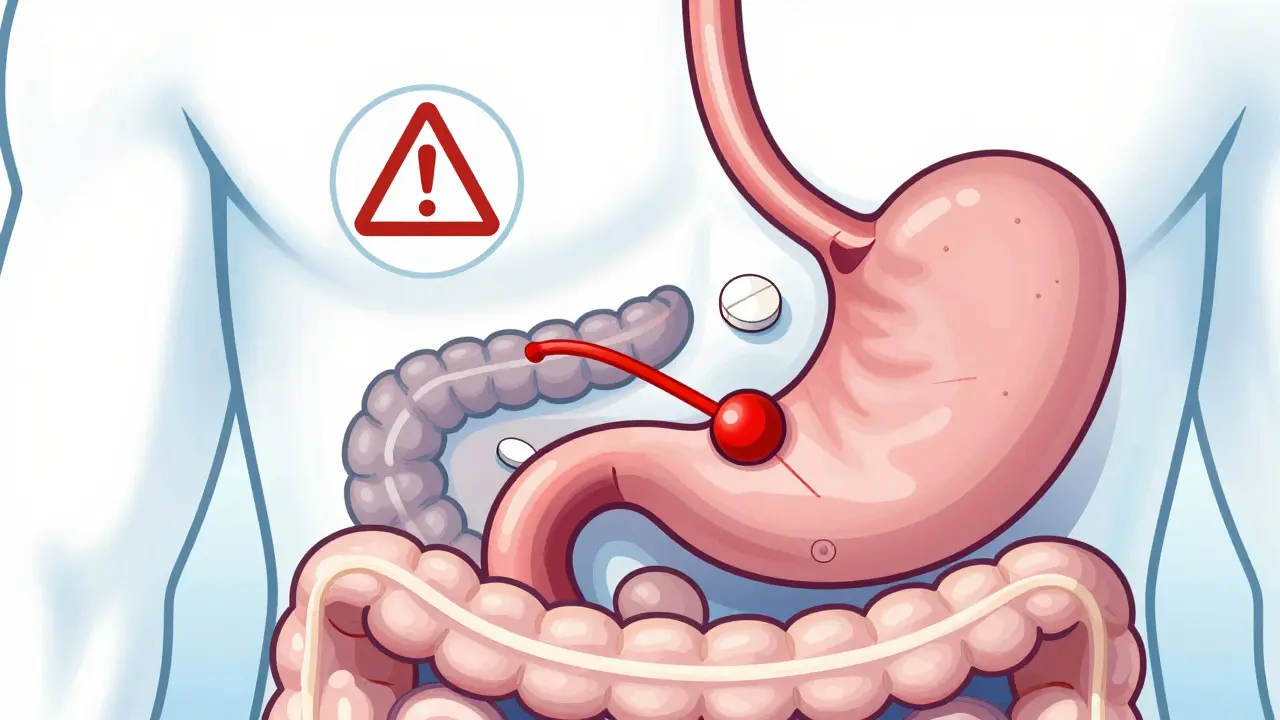
Many people take calcium and iron supplements without realizing they could be making their prescriptions less effective-or even useless. If you’re on antibiotics, thyroid medication, or heartburn pills, your daily multivitamin or calcium tablet might be working against you. This isn’t theoretical. It’s happening every day in kitchens, pharmacies, and doctor’s offices across the UK and beyond.
How Calcium Blocks Antibiotics
Calcium doesn’t just build bones. It also binds to certain antibiotics in your gut, forming a hard, insoluble compound that your body can’t absorb. This is called chelation. When calcium meets tetracycline or fluoroquinolone antibiotics like ciprofloxacin, the result is a chemical handshake that traps the drug. Studies show calcium carbonate can reduce ciprofloxacin absorption by up to 40%. That means if you take a calcium supplement two hours before your antibiotic, you might not get enough of the drug into your bloodstream to kill the infection.That’s not a small risk. Tetracyclines and fluoroquinolones are commonly prescribed for pneumonia, urinary tract infections, and skin infections. If the antibiotic doesn’t work because of calcium interference, the infection could worsen-or become resistant. The fix? Don’t take calcium supplements within 2 to 6 hours of these antibiotics. For safety, many pharmacists recommend a 6-hour gap, especially if you’re taking high-dose calcium or have a serious infection.
Iron and Antibiotics: A Similar Problem
Iron supplements-especially ferrous fumarate, ferrous sulfate, and ferrous gluconate-do the same thing. They bind tightly to tetracycline, doxycycline, and minocycline, blocking absorption just like calcium does. The difference? Iron doesn’t affect fluoroquinolones as strongly, but it still interferes with tetracyclines. The standard advice is to take iron at least 2 hours before or 4 hours after these antibiotics. That’s a tight window, especially if you’re taking your antibiotic twice a day.Parents of kids with acne or chronic infections often struggle with this. If your child needs iron for anemia and antibiotics for a persistent cough, timing becomes a daily puzzle. Skipping the iron? That risks worsening anemia. Skipping the antibiotic? That risks a spreading infection. The solution isn’t to stop one or the other-it’s to space them out properly.
Calcium and Thyroid Medication: A Silent Saboteur
Levothyroxine, the most common treatment for hypothyroidism, is one of the most sensitive medications to mineral interference. Calcium, even from a single antacid tablet, can cut levothyroxine absorption by half. That’s not just a minor dip in effectiveness-it can push someone from a stable thyroid level into hypothyroid symptoms again: fatigue, weight gain, cold intolerance, brain fog.Research from the South Medical Journal showed that taking calcium within four hours of levothyroxine significantly lowered thyroid hormone levels in patients. The fix? Take your thyroid pill first thing in the morning on an empty stomach, wait four full hours, then take your calcium supplement. If you take your thyroid pill at night, wait at least four hours before eating calcium-rich foods or supplements. Many people don’t realize their evening yogurt or bedtime calcium tablet is sabotaging their thyroid treatment.
Iron and Heartburn Medications: The pH Trap
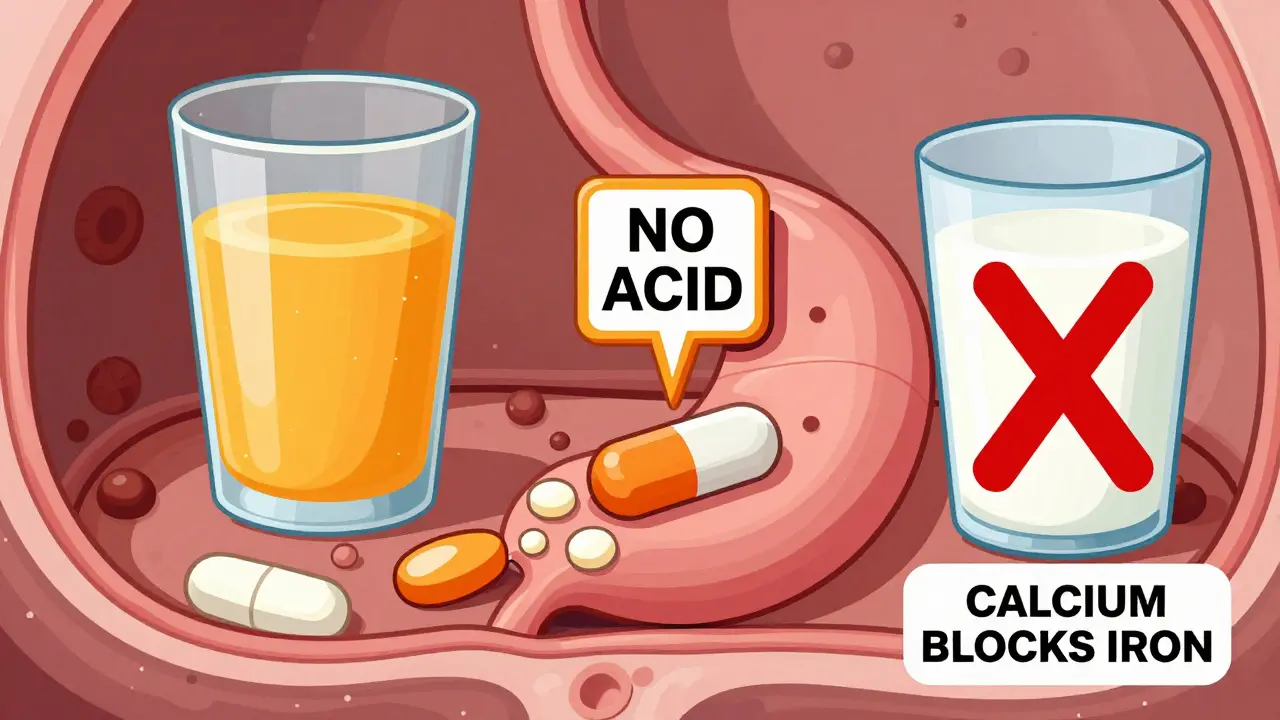
Iron needs stomach acid to be absorbed. That’s why it’s often recommended to take it with orange juice-the vitamin C helps, but the mild acid helps even more. Now, what happens when you take a proton pump inhibitor (PPI) like omeprazole or pantoprazole? These drugs shut down stomach acid production. No acid? Iron doesn’t dissolve properly. It passes through your gut unused.The same goes for H2 blockers like famotidine. Even antacids like Tums-which contain calcium carbonate-can neutralize stomach acid and block iron absorption. The result? You’re taking your iron supplement, but your body isn’t using it. Your anemia doesn’t improve. Your doctor might increase your dose, thinking you’re not compliant. But the real issue? Timing.
The solution? Take your iron supplement at least 2 hours before your heartburn medication. If you take omeprazole in the morning, take your iron the night before. Or, if you take your iron in the morning, wait until after lunch to take your PPI. It’s not ideal, but it’s far better than doubling your iron dose and risking side effects like nausea or constipation.
Why Milk Doesn’t Help Iron (But Calcium Does)
You’ve probably heard to take iron with vitamin C. But you’ve also heard people say, “Just take it with milk.” Don’t. Milk is full of calcium-and calcium binds to iron just like it does to antibiotics. That’s why HealthyChildren.org warns against giving iron supplements with milk to children with anemia. The calcium in milk blocks iron absorption, turning a helpful supplement into a wasted pill.Same goes for dairy-based calcium supplements. If you’re taking iron and you reach for a cheese stick or a glass of milk, you’re undoing the benefit. Stick to orange juice, strawberries, or a vitamin C tablet instead. If you need calcium, take it at a different time of day. Separation isn’t just helpful-it’s essential.
What About Other Minerals?
Magnesium, zinc, and aluminum (found in some antacids) also interfere with antibiotics and thyroid meds. Magnesium in laxatives can reduce ciprofloxacin absorption. Zinc supplements can bind to tetracyclines. Aluminum in antacids can block levothyroxine. The pattern is clear: most mineral supplements-especially those with divalent or trivalent cations-can interfere with drugs that need to be absorbed in the upper intestine.That’s why pharmacists now routinely ask patients: “Are you taking any calcium, iron, or antacids?” If you’re on more than three medications, you’re likely taking one of these. And if you’re not telling your pharmacist, you’re putting your treatment at risk.
Practical Tips for Daily Life
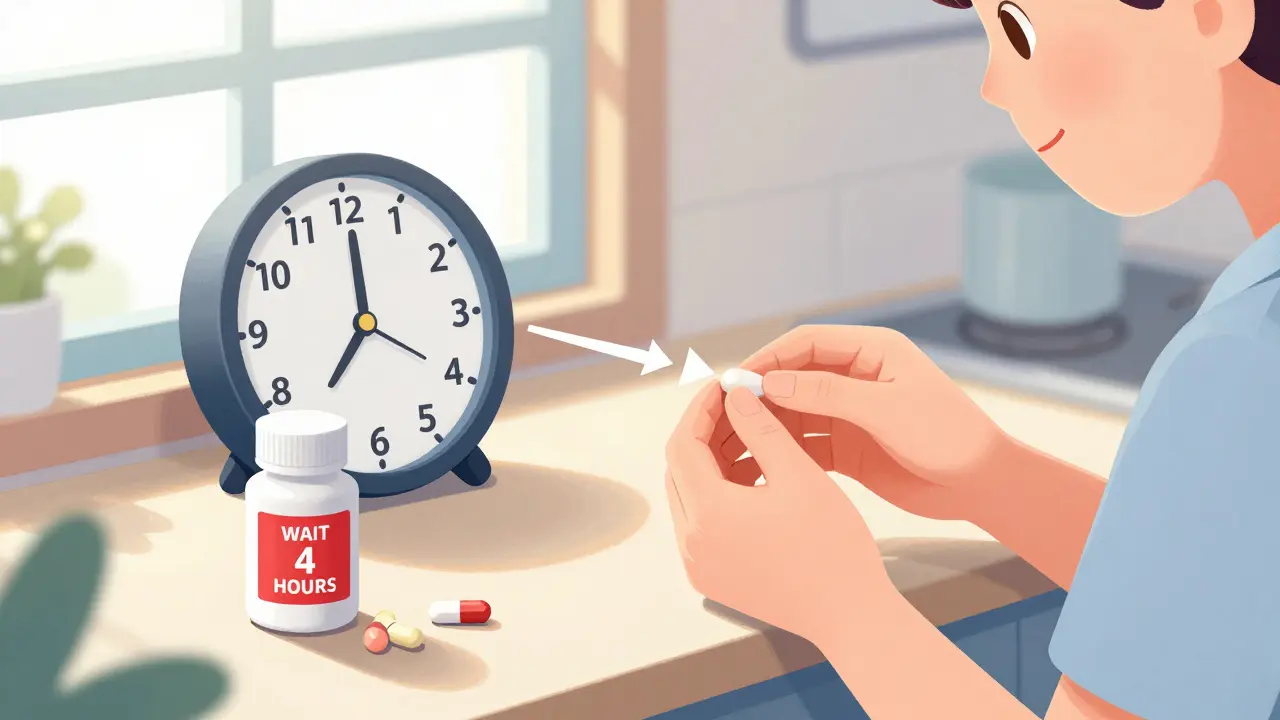
Here’s how to make this manageable:- Thyroid meds (levothyroxine): Take on empty stomach, wait 4 hours before calcium, iron, or multivitamins.
- Antibiotics (tetracyclines, ciprofloxacin): Take 2 hours before or 4 hours after calcium, iron, or antacids.
- Iron supplements: Take 2 hours before PPIs, H2 blockers, or antacids. Take with orange juice, not milk.
- Calcium supplements: Avoid within 6 hours of antibiotics or thyroid meds. Take with dinner, not breakfast.
- Multivitamins: Most contain iron or calcium. Take them at night if you’re on levothyroxine or antibiotics in the morning.
Use a pill organizer with time slots. Set phone alarms. Write it down. This isn’t about being perfect-it’s about being consistent enough to make a difference.
When to Talk to Your Doctor or Pharmacist
If you’re taking any of these medications and supplements together, don’t guess. Ask:- “Does my calcium supplement interfere with my antibiotic?”
- “Should I take my iron before or after my heartburn pill?”
- “Is my thyroid level stable, or could this be a mineral interaction?”
The NHS and U.S. Pharmacist both stress that patients often don’t mention supplements to their doctors. They think, “It’s just a vitamin.” But supplements are drugs too. And they interact.
Pharmacists in the UK now routinely screen for mineral supplement use during medication reviews. If you’re on multiple prescriptions, ask for a free medicines use review (MUR). It takes 10 minutes. It could prevent weeks of ineffective treatment.
The Bigger Picture
Sixty-seven percent of women and 25% of men take calcium supplements. That’s millions of people. Many are taking them daily, often with no idea they’re affecting how their other meds work. The same goes for iron-especially in older adults, women with heavy periods, and children with anemia.These aren’t rare edge cases. They’re everyday clinical problems. And they’re preventable. With a little planning, you can take your supplements and your prescriptions safely. You don’t have to give anything up. You just need to know when to take what.
Medication safety isn’t about memorizing complex science. It’s about simple timing. One pill at a time. One gap at a time. That’s all it takes to make sure your treatment actually works.


8 Comments
SRI GUNTORO
So people just take calcium like it’s candy and wonder why their antibiotics don’t work? This isn’t rocket science. You wouldn’t pour bleach into your coffee and then complain it tastes bad. Stop treating your body like a science experiment you didn’t design.
And don’t even get me started on moms giving their kids iron with milk. That’s not negligence, that’s negligence with a side of denial.
Pharmacists aren’t asking for fun. They’re trying to keep you from poisoning yourself with good intentions.
Anna Lou Chen
What we’re witnessing here is the epistemological collapse of pharmacological autonomy in late-stage consumer capitalism. The body, once a site of biosemiotic negotiation, is now reduced to a passive receptor of corporate-formulated temporal protocols.
The calcium-antibiotic chelation isn’t merely a biochemical event-it’s a metaphor for the alienation of embodied agency. We’ve outsourced our physiological sovereignty to pill organizers and alarm apps, mistaking temporal discipline for health.
And yet-the paradox: the very mechanisms designed to optimize bioavailability (PPIs, supplements) are the ones that induce iatrogenic dysregulation. The system isn’t broken. It’s working exactly as designed-to keep you compliant, dependent, and dosed.
Mindee Coulter
I just started levothyroxine last month and was taking my multivitamin at breakfast. I had no idea. Now I take my thyroid pill right when I wake up, wait 4 hours, then eat and take everything else. My energy is already better.
Also, I stopped giving my kid iron with milk. Orange juice all the way. No more fussing about timing. Just set a phone alarm for each thing. Life changed.
Thanks for the post. This is the kind of info you wish you’d known sooner.
John Rose
This is one of those things that seems obvious once you know it, but no one ever tells you. I’ve been on doxycycline for acne and was taking my iron for low ferritin at the same time-no wonder my levels never improved.
I switched to taking iron at bedtime and my doctor was shocked at how fast my numbers bounced back. Simple fix, huge difference.
Also, if you’re on PPIs and iron, try switching to an H2 blocker like famotidine. Less interference, still helps with heartburn. Just talk to your doc first.
Ambrose Curtis
yo i had no idea calcium and thyroid med dont play nice. i was taking my calcium at night with my levothyroxine cause i forgot to take it in the morning. felt like a zombie for 6 months. switched to taking calcium with dinner and boom-my brain fog lifted.
also, dont trust those "one-a-day" multivitamins if you’re on antibiotics. they got iron and calcium in em. just take them at night. set a reminder. your future self will thank you.
ps: if you’re on cipro and take tums for heartburn? congrats you just paid $40 for a placebo.
pps: my pharmacist told me this. i thought she was overreacting. she wasnt.
Robert Cardoso
Let’s be clear: this isn’t "information." This is basic pharmacokinetics taught in undergrad pharmacy school. The fact that the general public is this ignorant is a failure of education, not a gap in medical literature.
Studies show 83% of patients on levothyroxine don’t know about calcium interference. 72% of those on fluoroquinolones take calcium within 4 hours. These aren’t edge cases. They’re systemic failures.
And yet, no one holds supplement manufacturers accountable for not putting warnings on bottles. No one blames the FDA for allowing calcium supplements to be sold without interaction labels. This isn’t patient negligence. It’s institutional negligence dressed up as personal responsibility.
matthew martin
Man, this post hit different. I used to think "just take your pills at the same time every day" was the golden rule. Turns out, timing isn’t just about consistency-it’s about chemistry.
I’ve got a 12-year-old with iron-deficiency anemia and chronic ear infections. We used to give her iron with her antibiotics because it was easier. Now? We’ve got a little color-coded chart taped to the fridge. Iron at 7 PM, antibiotics at 7 AM. Orange juice with iron. No dairy for 4 hours before or after.
She’s got color in her cheeks again. And she doesn’t cry every time she sees a pill.
Small changes. Big wins. Thanks for making this feel doable.
Jeffrey Carroll
Thank you for writing this. I’ve been managing hypothyroidism for 12 years and only learned about calcium interference last year. My TSH had been creeping up despite consistent dosing. My endocrinologist asked if I took calcium with my pill-I didn’t even think to mention it.
After switching to a 4-hour gap, my levels normalized within 6 weeks. No dosage change. Just timing.
If you’re on thyroid medication and still feel tired, cold, or foggy-ask your doctor about mineral interactions. It’s not your fault. It’s just unspoken.