Tyramine Food Checker
Check Your Food for Tyramine
Enter any food or ingredient to see if it contains tyramine and its risk level for MAOI users.
Results
Search for foods to see tyramine information
When you're taking an MAOI for depression, the warning about cheese is everywhere. But if you think that’s the only food you need to avoid, you’re at risk. The truth is, tyramine hides in places no one tells you about-sauces, pickles, even your favorite takeout. And the consequences aren’t just uncomfortable. They can be life-threatening.
What Exactly Is Tyramine, and Why Does It Matter?
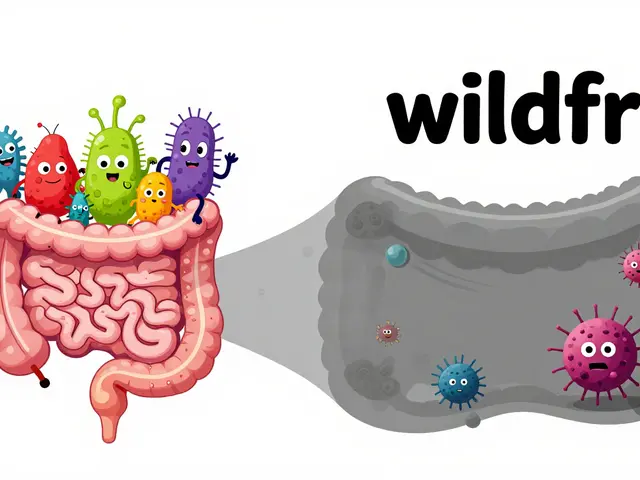
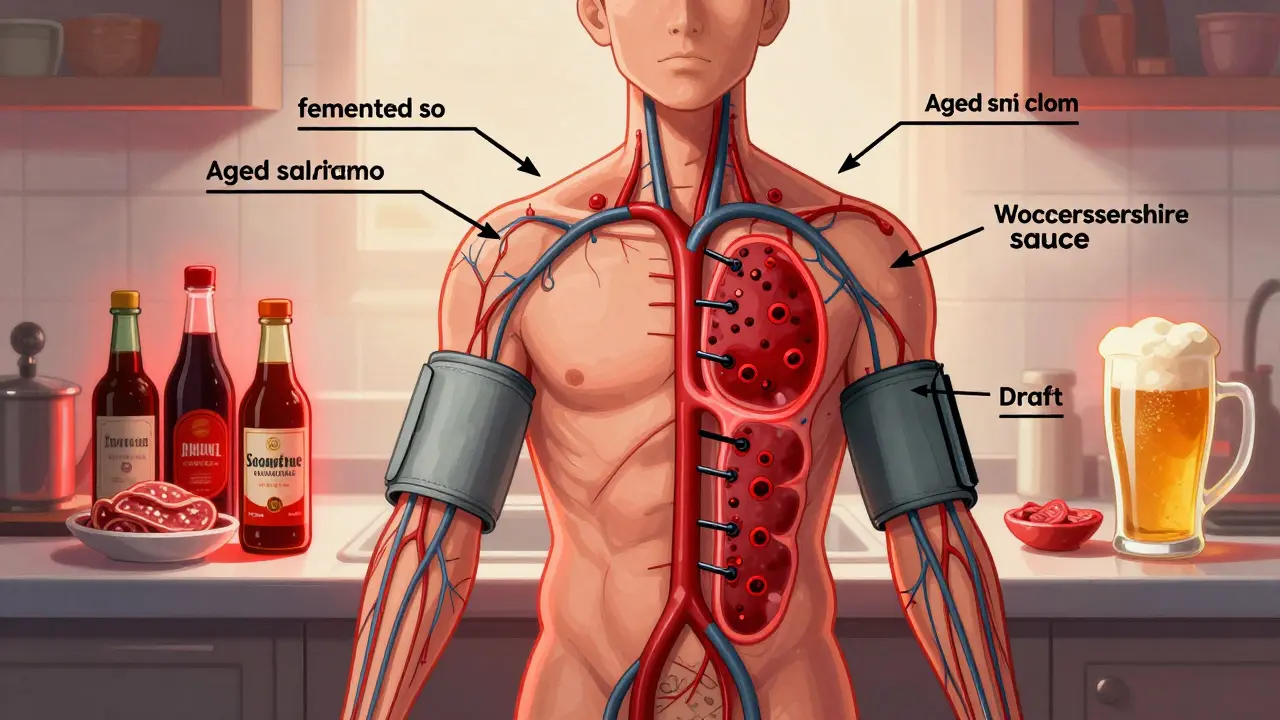
Tyramine is a naturally occurring compound formed when proteins in food break down over time. It’s not toxic on its own. But when you’re on an MAOI, your body can’t break it down properly. That’s because MAOIs block the enzyme monoamine oxidase, which normally clears excess tyramine from your bloodstream. Without that cleanup, tyramine builds up and forces your body to release massive amounts of norepinephrine. Your blood pressure spikes-sometimes above 180 mmHg. That’s a hypertensive crisis. Symptoms include pounding headache, blurred vision, chest pain, nausea, and in worst cases, stroke or heart attack.It’s Not Just Cheese
Aged cheeses like cheddar, blue, and parmesan are the classic culprits. But they’re only the tip of the iceberg. Here’s what else can trigger a reaction:- Dry-aged salami: 95-115 mg/kg tyramine
- Pepperoni: 80-100 mg/kg
- Smoked fish: 75-90 mg/kg
- Miso paste: 60-85 mg/kg
- Soy sauce: 45-70 mg/kg
- Sauerkraut: 50-75 mg/kg
- Kimchi: 40-65 mg/kg
- Worcestershire sauce: 25-45 mg/kg
- Fish sauce: 35-55 mg/kg
- Marmite or yeast extract: 40-60 mg/kg
- Tomato paste: 20-35 mg/kg
- Draft beer: 15-30 mg/L
- Sherry or vermouth: 35-75 mg/L
These numbers aren’t guesses. They come from food science labs, USDA databases, and peer-reviewed studies. And they’re not just for “old-fashioned” foods. Modern manufacturing has cut tyramine levels by about 30% in some commercial products-but it’s still enough to cause trouble in sensitive individuals.
Why Restaurant Meals Are a Minefield
You might think you’re safe eating at a “healthy” restaurant. But hidden tyramine is everywhere. A bowl of miso soup? Common in Japanese cuisine. A stir-fry with soy sauce? Almost guaranteed. Even a Caesar salad with Worcestershire dressing can push you over the edge. A 2023 investigation found that 7 out of 10 popular chain restaurants couldn’t tell you whether their menu items contained soy sauce, fish sauce, or Worcestershire. Staff often don’t know. Managers don’t track it. And if you don’t ask specifically-really ask-you’re rolling the dice. One Reddit user, NeurotransmitterNancy, ended up in the ER after eating miso soup at a local bistro. Her blood pressure hit 210/115 in under an hour. She had no idea it was dangerous. No one at the restaurant knew either.What About Fruits, Vegetables, and Leftovers?
It’s not just fermented foods. Overripe bananas, avocados, and figs can contain dangerous levels of tyramine. So can spoiled or improperly stored food. Tyramine forms as proteins break down-even in the fridge. One study showed tofu’s tyramine levels jumped from 5 mg/kg to 25 mg/kg after just 72 hours in standard refrigeration. That means leftovers you thought were fine? They might not be. If it’s been sitting for more than two days, especially if it’s protein-rich, treat it like a hazard.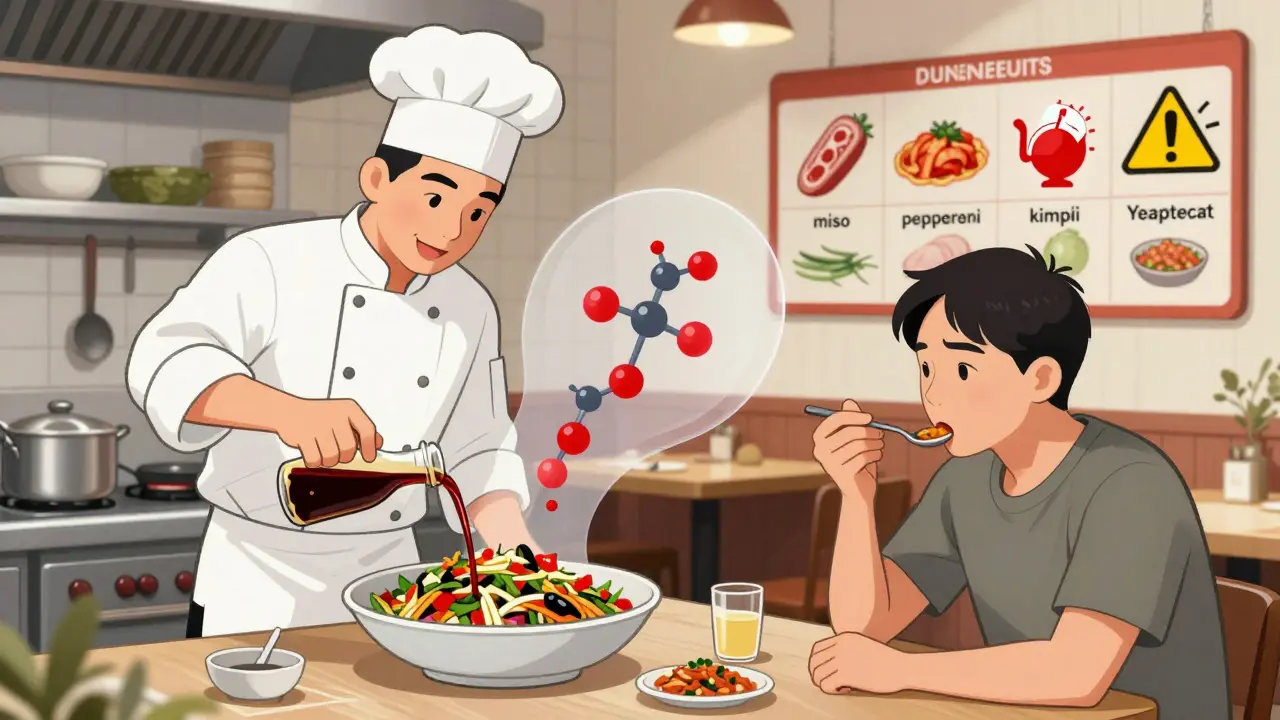
Alcohol Isn’t Safe Either
Draft beer is riskier than bottled. Why? Because it’s exposed to air longer during dispensing, allowing more tyramine to form. Red wine? Moderate risk. Sherry and vermouth? High. Even a small glass can trigger a reaction. Some patients think “one drink won’t hurt.” But with MAOIs, there’s no safe threshold. Your sensitivity isn’t predictable. One person might sip sherry without issue. Another could crash from half a glass. The only safe rule? Avoid it all.What About Soy Products?
There’s disagreement among experts. Some say avoid all fermented soy-miso, tempeh, soy sauce. Others say small amounts of soy sauce (like a tablespoon) may be okay for some people. But here’s the problem: you won’t know if you’re one of those people until it’s too late. A 2022 survey of 347 MAOI users found that 32% of their dietary slip-ups involved fermented condiments. Soy sauce was the most common. That’s not a coincidence. It’s cheap, common, and sneaky. Stick to the safest advice: avoid it. If you’re desperate to flavor food, try fresh herbs, citrus, vinegar, or salt. There are plenty of alternatives that won’t kill you.How to Survive Social Situations
Dietary restrictions don’t mean giving up your life. But they do mean planning.- Call restaurants ahead. Ask: “Does this dish contain soy sauce, fish sauce, miso, Worcestershire, or aged meats?” Don’t say “Is this healthy?” Say the exact names.
- Carry a medical alert card. Emergency rooms report that 87% of doctors prefer patients bring these cards during a crisis. They’re small. They’re clear. They save time-and lives.
- Bring your own food to gatherings. No shame in it. Most people understand when you explain you’re on a medication that can’t mix with certain foods.
- Use apps and online communities. The MAOI Support Network on Facebook has over 12,000 members who share real-time updates on safe restaurants and recipes.
One woman in Bristol told me she stopped going to brunch with friends for six months because she couldn’t risk the hollandaise sauce (made with eggs and butter-safe) but didn’t know if the smoked salmon was cured or smoked with added preservatives. She started bringing her own smoked trout, marinated in lemon and dill. Now she goes every week.

How Long Do You Need to Stay on This Diet?
Not just while you’re on the medication. You need to stay off high-tyramine foods for at least 14 days after stopping your MAOI. Why? The enzyme doesn’t bounce back overnight. Your body still can’t process tyramine properly for weeks. Many patients stop their meds because they feel better-then eat a slice of blue cheese or a bowl of pho with fish sauce. Boom. Hypertensive crisis. It’s not rare. It’s predictable.What’s New? Are There Any Alternatives?
Good news: research is moving forward. In 2023, the FDA approved a new enzyme supplement called TyraZyme, which helps break down tyramine before it enters your bloodstream. Early trials showed a 58% reduction in absorption. But experts warn: it’s not a license to eat whatever you want. It’s a backup, not a replacement for diet control. Also, newer MAOIs like the selegiline patch (Emsam) allow small amounts of tyramine-up to 10 grams per day at higher doses. That’s a big improvement. But it’s not for everyone. Only certain patients qualify. And even then, you still need to monitor what you eat. There’s also emerging research into genetic testing. Some people naturally have higher monoamine oxidase activity. They might tolerate more tyramine. But this is still experimental. Don’t assume you’re one of them.What Should You Do Right Now?
If you’re on an MAOI:- Make a list of all the foods above. Put it on your fridge.
- Check every label. Look for “fermented,” “aged,” “cured,” “smoked,” “yeast extract,” “soy sauce,” “miso,” “fish sauce,” “Worcestershire.”
- Ask your pharmacist for a printed MAOI diet guide. Mayo Clinic’s is highly rated. Smaller clinics often still use outdated 2010 pamphlets-don’t trust those.
- Book a session with a registered dietitian who specializes in psychiatric nutrition. It’s not a luxury. It’s essential.
- Carry your emergency card. Print one from the MAOI Support Network website. Keep it in your wallet.
Yes, it’s hard. Yes, it’s restrictive. But 78% of people on MAOIs say the improvement in their depression is worth it. You’re not alone. Thousands are doing this. And with the right tools, you can live well-without risking your life.
Can I eat a little bit of cheese if I’m on an MAOI?
No. Even small amounts of aged cheese can trigger a dangerous blood pressure spike. There’s no safe threshold. The risk isn’t worth it-even a bite of blue cheese or feta can cause a hypertensive crisis. Avoid all aged, fermented, or mold-ripened cheeses.
Is soy sauce always dangerous on MAOIs?
Yes, it’s considered high-risk. Soy sauce contains 45-70 mg/kg of tyramine. Even a tablespoon can be enough to trigger a reaction in sensitive individuals. While some doctors say tiny amounts may be tolerated, there’s no reliable way to know if you’re one of them. The safest approach is complete avoidance.
What if I accidentally eat something with tyramine?
Monitor for symptoms: severe headache, chest pain, rapid heartbeat, blurred vision, nausea, or sweating. If any appear, seek emergency care immediately. Do not wait. Call 999 or go to the nearest ER. Bring your MAOI medication card. Time is critical.
Can I drink alcohol at all while on MAOIs?
Avoid all alcohol. Draft beer, red wine, sherry, and vermouth contain tyramine and can interact dangerously with MAOIs. Even small amounts can raise blood pressure. Some newer patches allow limited intake, but oral MAOIs require complete abstinence. When in doubt, skip it.
How long after stopping MAOIs can I eat these foods again?
Wait at least 14 days after your last dose. Your body needs time to rebuild its ability to break down tyramine. Jumping back into fermented or aged foods too soon can still trigger a crisis. Don’t assume you’re safe just because you stopped the pill.
Are there any safe fermented foods I can eat?
Yes-but only if they’re fresh and unaged. Yogurt made with live cultures (not fermented for weeks), fresh kimchi (eaten within 3 days of making), and unaged tofu are generally safe. Avoid anything labeled “aged,” “fermented,” or “cured.” When in doubt, choose fresh over fermented.
Why don’t doctors warn patients more clearly?
Many primary care doctors aren’t trained in MAOI dietary risks. A 2022 study found only 43.7% could name three non-cheese tyramine sources. That’s why patients often learn the hard way. Always ask your psychiatrist or a psychiatric pharmacist for a detailed diet plan. Don’t rely on general advice.
Can I use TyraZyme to eat whatever I want?
No. TyraZyme reduces tyramine absorption by about 58%, but it’s not a cure-all. It’s meant as a safety net-not permission to eat high-tyramine foods. Long-term safety data isn’t complete yet. Stick to the diet. Use supplements only if your doctor recommends them.