The goal here isn't to doubt your pharmacist, but to empower yourself. Even the best systems can have glitches. Whether you are managing one lifelong medication or a complex regimen of ten different pills, knowing exactly how to audit your label ensures you get the right treatment in the right dose every single time.
The Essential Elements of a Prescription Label
Before you can verify a label, you need to know what should actually be on it. Federal regulations, specifically those from the FDA (Food and Drug Administration), mandate that specific information must be present for a label to be legal and safe.
A standard label is more than just a sticker; it's a legal document. At a minimum, you should see your full legal name, the prescription number (a unique ID for that specific order), and the medication name. You'll often see two names: the brand name and the generic version. For example, if you're taking Lipitor, you might also see Atorvastatin on the label.
Beyond the names, the label must list the strength (like 500 mg or 10 mg), the dosage form (whether it's a tablet, capsule, or liquid), and the quantity dispensed. You should also find clear directions for use, the prescriber's name, and the pharmacy's contact details. If you see a 10- or 11-digit National Drug Code (NDC), that's a unique identifier used to track the specific drug across the supply chain.
Step-by-Step Guide to Verifying Your Medication
Verifying your medication doesn't require a medical degree, but it does require a systematic approach. To avoid "glancing over" an error, follow this specific sequence every time you pick up a prescription.
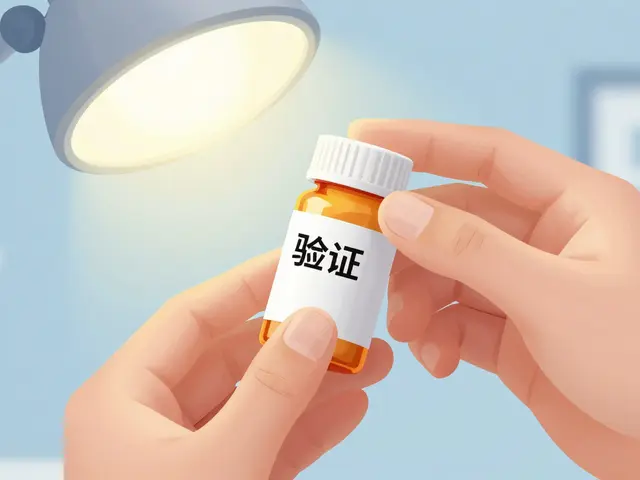
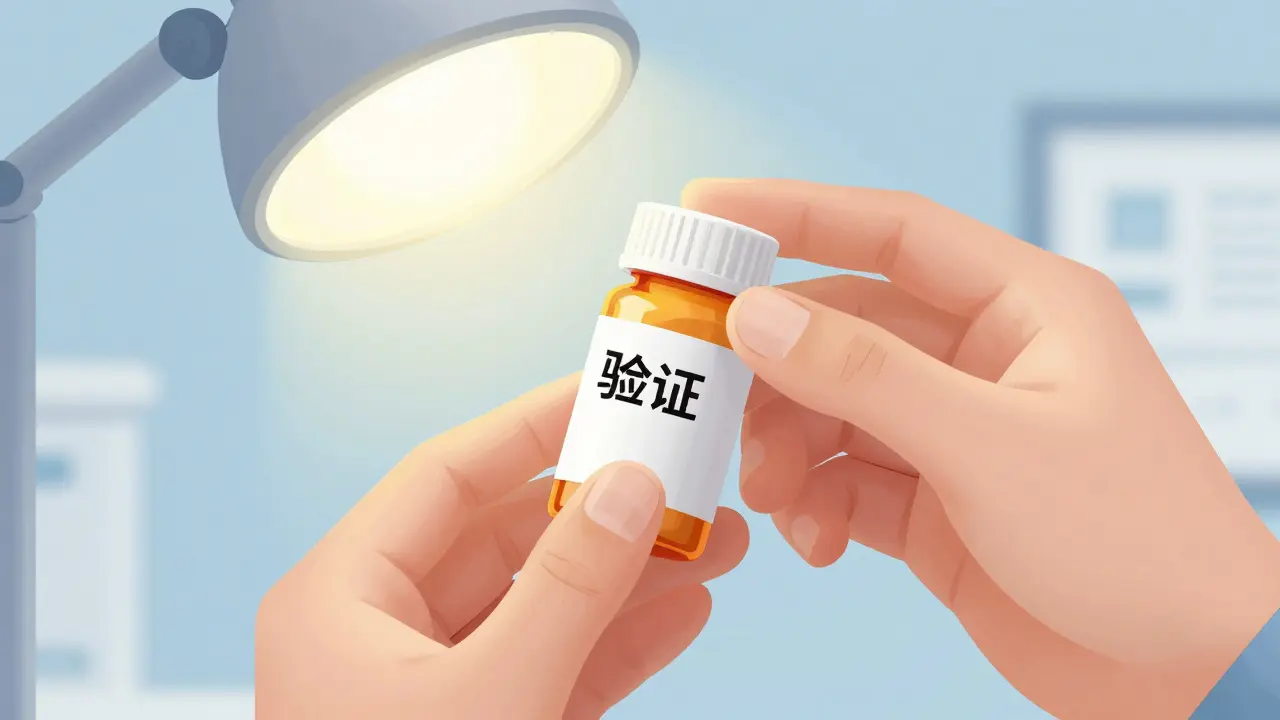
- Optimize Your Environment: Don't check your meds in a dim hallway. Hold the bottle at eye level under bright light. Experts suggest a minimum of 500 lux-basically, a well-lit kitchen or pharmacy counter-to ensure you don't miss small print.
- Confirm Your Identity: Check that your full legal name is spelled correctly. If you use a middle initial or a hyphenated name, make sure it matches exactly. This prevents "wrong patient" errors, which account for about 15% of labeling mistakes.
- Match the Medication: Compare the name on the bottle to what your doctor told you. If the name looks different (e.g., you expected a brand name but see a generic), don't panic-just ask the pharmacist to confirm they are the same drug.
- Verify the Strength: This is where the most dangerous errors occur. A typo turning "5 mg" into "50 mg" is a massive difference. Explicitly look at the number and the unit (mg, mcg, ml) to ensure it matches your prescription.
- Audit the Directions: Read the "Take one tablet twice daily" section. Does this align with your doctor's instructions? If the label says "every 4 hours" but your doctor said "once a day," stop and ask for a correction immediately.
- Check Legibility: Ensure the pharmacy's phone number and the expiration date are clear. If the ink is smeared or the font is too small to read, request a reprint.
| Error Type | What to Look For | Risk Level |
|---|---|---|
| Wrong Strength | Numbers that look similar (e.g., 5mg vs 50mg) | High |
| Wrong Medication | Names that look alike (Look-Alike/Sound-Alike drugs) | High |
| Patient Mismatch | Similar last names or incorrect initials | Medium |
| Incorrect Dosage | Frequency changes (e.g., "daily" vs "twice daily") | Medium |
Overcoming Common Verification Challenges
For many, the hardest part of this process is the physical act of reading. Many pharmacies use small fonts that are a nightmare for people with visual impairments. If you struggle with small print, you aren't alone-nearly 13% of adults over 40 deal with some form of visual impairment that makes these labels hard to read.
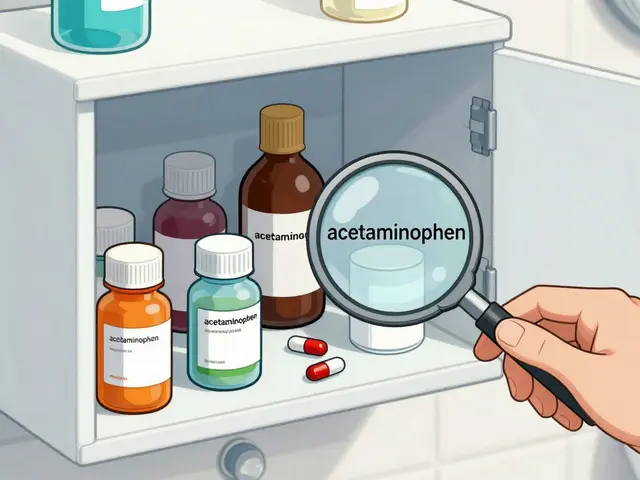
If you have low vision, don't rely on squinting. Carry a pocket magnifier with at least 2x magnification. Alternatively, use the magnification tool built into your smartphone; almost every phone made after 2018 has a high-quality camera and zoom feature that can turn a tiny label into a clear, readable image. You can also ask your pharmacist for large-print labels, a service that makes a huge difference in confidence for adults over 50.
Then there is the "medical language" barrier. Pharmaceutical names are often complex and confusing. If you aren't sure if a generic name is the same as the brand name you're used to, ask the pharmacist to explain the relationship. A quick question like "Is this the generic version of [Brand Name]?" can clear up confusion in seconds.
Digital Tools vs. Manual Verification
In recent years, apps like Medisafe and GoodRx have introduced label scanning. These tools are great for tracking when to take your meds and can help double-check information, but they aren't a replacement for your own eyes. Technology can glitch, and a scanner might misread a character on a crinkled label.
Manual verification remains the gold standard because it happens at the point of service. When you verify the label while still standing at the pharmacy counter, you can fix a mistake instantly. If you rely solely on an app at home, you've already left the safety net of the pharmacy's professional staff.
Looking forward, we're seeing a shift toward more intuitive designs. The FDA is pushing for standardized label formats that place the patient's name in a large, 24-point font at the top to make it impossible to miss. Some pharmacies are even beginning to use QR codes that link to video instructions, making the process accessible to those who struggle with reading or speak different languages.
When to Be Concerned: Red Flags to Watch For
Most mistakes are simple typos, but some are critical. You should immediately stop and alert the pharmacist if you notice any of the following:
- The pills in the bottle look different (color, shape, or size) than your previous refill, even if the label looks correct.
- The label is for a medication you've never heard of or weren't prescribed.
- The dosage instructions contradict what is written on your official doctor's visit summary.
- The quantity is significantly different than what you usually receive.
One real-world example involves a patient who noticed their blood thinner was labeled as 10mg instead of the prescribed 5mg. Because they checked the label against their doctor's notes before the first dose, they prevented a potentially life-threatening hemorrhage. This is why the 30-second check is so vital.
What should I do if the name on the label is misspelled?
Even a small misspelling can be a red flag. It might be a simple typo, or it could indicate that the pharmacy has mixed up your profile with another patient with a similar name. Always ask the pharmacist to verify your date of birth and address against the system to ensure the medication is truly yours before leaving the store.
Is it normal for the medication name to be different from what my doctor said?
Yes, this is very common. Doctors often prescribe a brand-name drug, but pharmacies dispense the generic equivalent to save you money. The generic version has the same active ingredients and works the same way. However, you should still ask the pharmacist to confirm that the generic name on the label is the correct equivalent for the brand name you expected.
Can I trust a label if the pills look the same as my last refill?
No. While visual consistency is a good sign, it's not a guarantee. Different medications can look identical (white round tablets are very common), and pharmacies sometimes change manufacturers for the same drug, which can change the pill's appearance. Always rely on the written label and the NDC number rather than visual appearance alone.
What is the NDC number, and why does it matter?
The National Drug Code (NDC) is a unique 10- or 11-digit number assigned to every drug product. It identifies the manufacturer, the specific drug, and the package size. If you are ever unsure about a medication, the NDC number is the most accurate way for a healthcare provider to identify exactly what is in the bottle.
What if I can't read the label because the print is too small?
You have several options. You can use a magnifying glass or a smartphone magnification app. More importantly, you can request that your pharmacy provide "large print" labels. Many pharmacies are equipped to do this, and it is a recommended safety practice for seniors or those with visual impairments.
Next Steps for Your Medication Safety
To make this a permanent habit, consider these three simple actions:
- Create a Med List: Keep a printed list of your current medications, strengths, and purposes in your wallet or on your phone. Compare the pharmacy label to this list every time you pick up a script.
- Use a Pill Organizer: Once you've verified the label, transfer your meds into a weekly organizer. This helps you spot if a pill looks "off" compared to others in the same slot.
- Ask for a Final Review: When you get to the pharmacy counter, don't just pay and leave. Tell the technician, "I'm just going to double-check my name and dose real quick," and do your 30-second audit right there.