
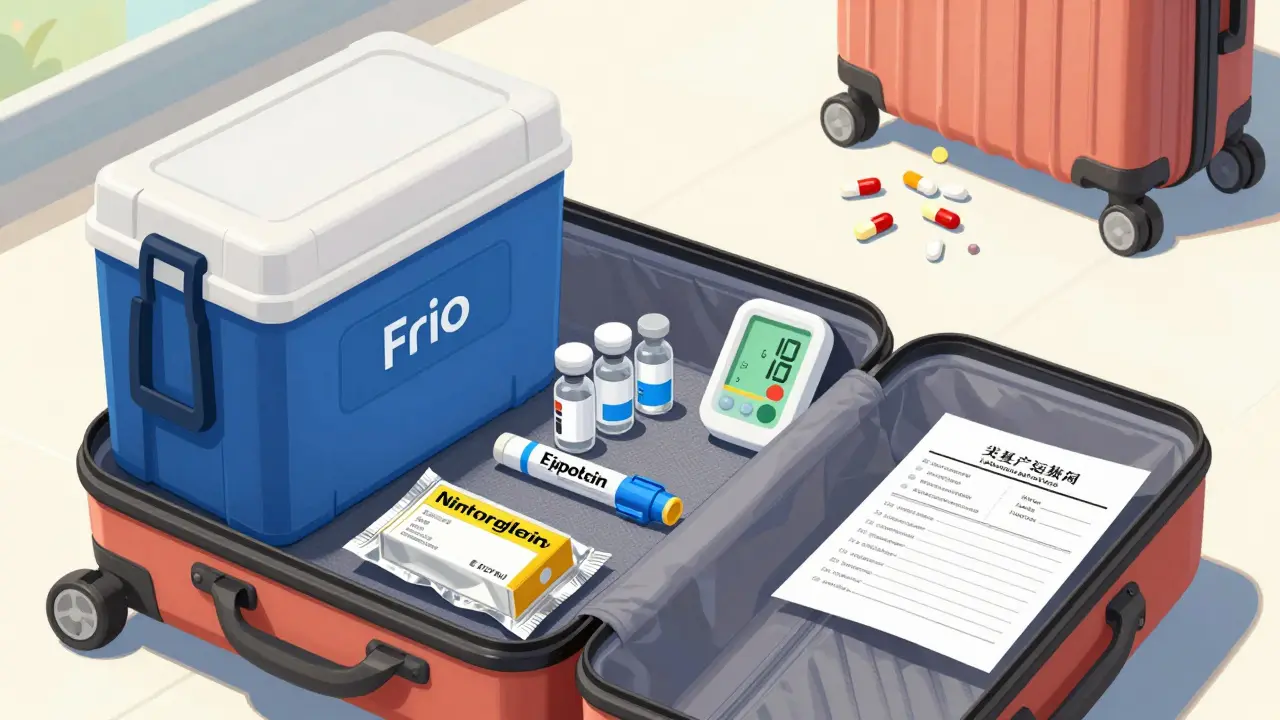
Why Your Medications Can Go Bad on the Road
It’s easy to forget that your pills, injections, and inhalers aren’t just sitting on a shelf at home-they’re riding in hot cars, bouncing in luggage, and getting zapped by airport X-rays. Heat, cold, sunlight, and moisture don’t just make your meds uncomfortable-they can make them useless. A 2021 study in the Journal of Pharmaceutical Sciences found that just 30 minutes outside the right temperature range can drop a medication’s effectiveness by up to 25%. For someone relying on insulin, an EpiPen, or heart medication, that’s not a minor inconvenience-it’s a health risk.
Most people assume if the bottle says "room temperature," it’s fine anywhere. But "room temperature" doesn’t mean your car dashboard at noon in Arizona. The official range for most medications is 68°F to 77°F (20°C to 25°C), with short excursions allowed down to 59°F and up to 86°F. But here’s the catch: not all meds handle that the same way.
Which Medications Need Special Care?
Not all medications are created equal when it comes to travel. About 78% of prescriptions can handle normal travel conditions. But the other 22%? They’re fragile.
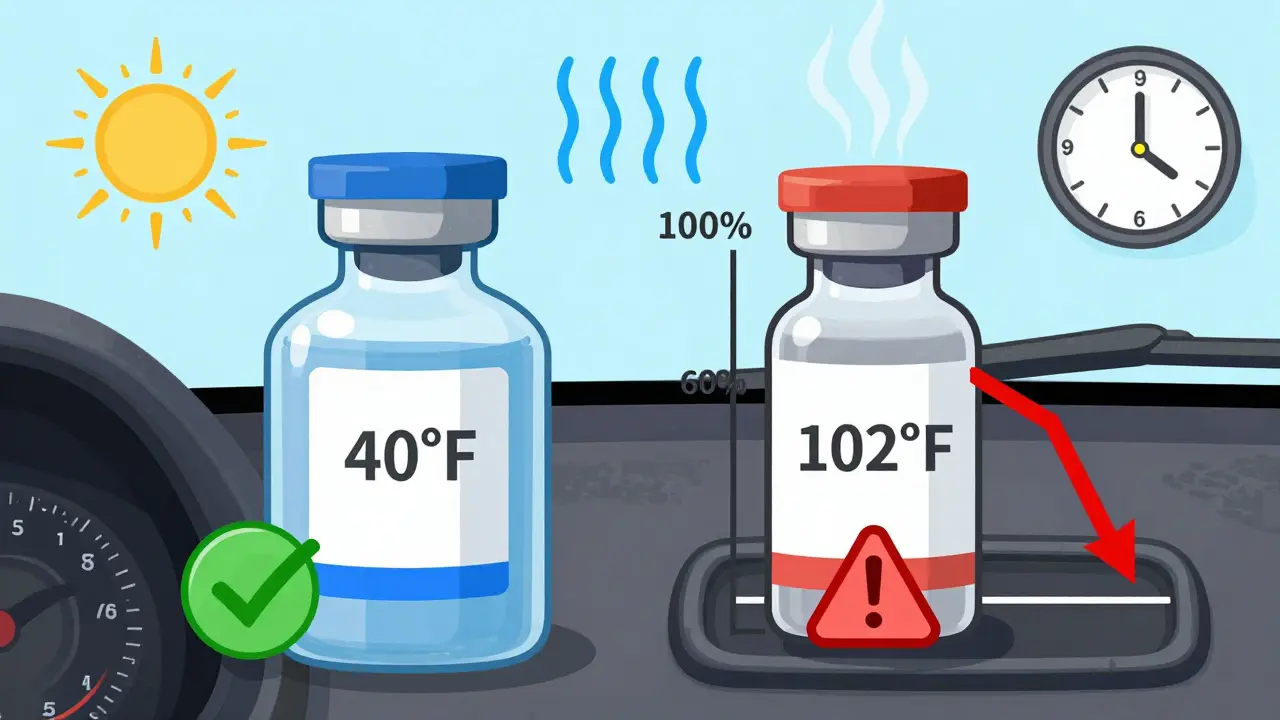
- Refrigerated meds (12% of prescriptions): Insulin, EpiPens, certain biologics like adalimumab, and some antibiotics must stay between 36°F and 46°F. Leave them in a hot car for 90 minutes at 102°F, and you could lose up to 40% potency-confirmed by real-world tests at CVS pharmacies.
- Light-sensitive drugs: Epinephrine, nitroglycerin, and some migraine meds degrade fast in sunlight. Just 15 minutes of direct sun can cut epinephrine levels by 18%.
- Freezer-stable drugs (5% of specialty meds): Some rare biologics need to stay frozen between -4°F and 5°F. These are usually handled by medical teams, but if you’re traveling with one, you need professional-grade gear.
- Moisture-sensitive pills: Aspirin turns into vinegar and salicylic acid when damp. That’s not just ineffective-it can irritate your stomach.
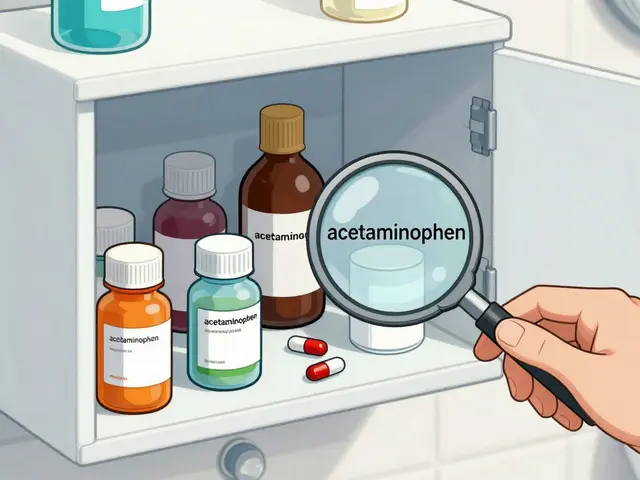
Compare this: Acetaminophen tablets hold up fine for 72 hours at 95°F. But Humalog insulin? It loses 1.2% potency per hour at 77°F. That’s why you can’t treat all meds the same.
The Right Gear for the Job
Not all coolers are created equal. A regular insulated lunch bag might keep your sandwich cold for a few hours-but it won’t save your insulin.
- Medical-grade coolers (like Frio, Bocapharmacy, or PharmaPort): These use evaporative cooling gel packs activated by water. They maintain 38°F-42°F for 48-72 hours-even in 95°F heat. One traveler on Reddit used a Frio wallet for 14 days across Southeast Asia with zero issues.
- Gel packs vs. ice packs: Ice melts, drips, and can freeze your meds. Gel packs stay within the safe range without freezing. TSA’s 2022 testing showed gel packs are 37% more consistent than ice.
- Temperature monitors: Devices like TempTraq or 3M’s new TempTrend labels change color if your meds overheat. A 2023 study found they catch 99.2% of dangerous excursions.
- Light-blocking cases: Use opaque containers or wrap meds in aluminum foil. Don’t store epinephrine in a clear ziplock on your sunlit beach towel.
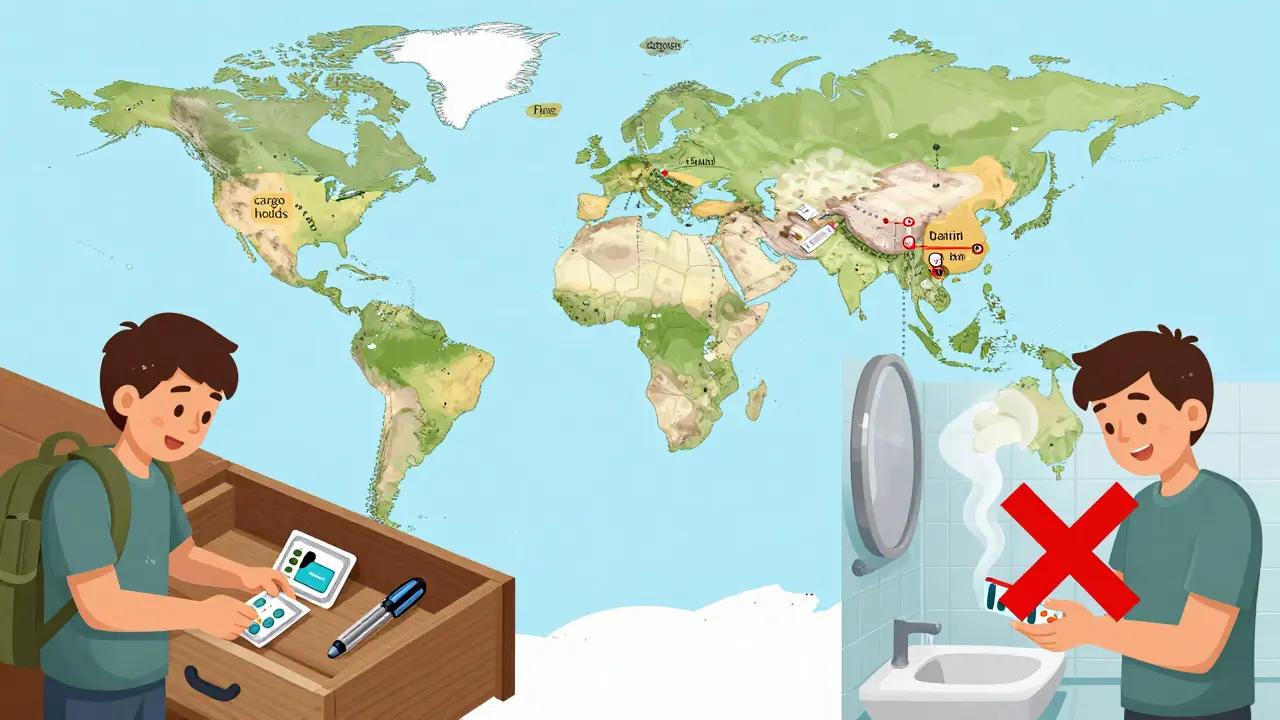
Pro tip: Never put meds in checked luggage. The cargo hold can drop below freezing or soar past 120°F. Always carry them in your carry-on.
How to Pack Like a Pro
Packing isn’t just about throwing pills in a bag. There’s a method.
- Keep them in original bottles: This isn’t just for safety-it’s the law. In Thailand, a traveler had all their meds confiscated because they were in a pill organizer. Customs officials need to see the prescription label.
- Bring a doctor’s note: Especially for injectables or controlled substances. TSA and international customs may ask for proof.
- Use a dedicated travel kit: A small, labeled container with your meds, gel packs, thermometer, and backup supplies. Keep it in your daypack, not your suitcase.
- Double up on critical meds: If you’re on insulin or an EpiPen, bring at least 50% more than you think you’ll need. And store them separately-don’t put both in the same cooler.
- Plan for delays: Flight cancellations happen. Your cooler might sit on a tarmac for 6 hours. Choose gear rated for 72+ hours of stability.
And don’t store meds in the bathroom. Humidity from showers degrades tablets and capsules. A hotel bedroom drawer is safer than a medicine cabinet.
What to Do Before You Leave
You wouldn’t leave for a 3-week trip without checking your car’s oil. Do the same for your meds.
- Ask your pharmacist: When you pick up a new prescription, ask: "How long can this stay out of the fridge?" and "Is there a travel-friendly version?" Some insulin now comes in pre-filled pens that stay stable at room temp for 28 days.
- Check expiration dates: Don’t bring meds that expire during your trip. Even if they look fine, potency drops after expiration.
- Get a backup supply: If you’re flying internationally, send a backup set ahead to your hotel or a trusted contact. Customs can delay your bag.
- Set phone alarms: A 2023 study of 1,247 travelers found that 92% who used dose reminders avoided missed medications during jet lag or schedule chaos.
Start planning 14-21 days before departure. That’s the window pharmacists recommend to get custom advice, order special gear, and test your setup.
What Happens When Things Go Wrong
Even with the best plans, things can fail.
If your insulin gets too hot and you’re far from help:
- Don’t use it if it looks cloudy, clumpy, or discolored.
- Use your backup pen immediately.
- If you have no backup, contact a local pharmacy. Many countries stock U.S.-approved insulin.
If your EpiPen was left in a hot car:
- Don’t assume it still works-even if it looks normal.
- Use a new one if you have one.
- Seek emergency care immediately if you have a reaction.
For any medication that’s been exposed to extreme temps, the rule is simple: when in doubt, replace it. The cost of a new pill is nothing compared to the cost of a hospital visit.
The Future Is Here-And It’s Easier
Good news: the industry is catching up. In May 2023, the FDA approved the first temperature-indicating labels that change color if meds overheat. By 2026, 85% of temperature-sensitive drugs are expected to have travel-stable versions that don’t need coolers at all.
Companies like Softbox Systems now make containers that last 120 hours-more than five days-without power. And major airlines are starting to require documentation for refrigerated meds, pushing travelers to be better prepared.
But until then, the responsibility is yours. No one else will check your insulin’s temperature. No one else will know if your EpiPen still works. You’re the only one who can make sure your meds survive the trip.
Final Checklist Before You Go
- ☐ All meds in original containers with labels
- ☐ Refrigerated meds in medical-grade cooler with gel packs
- ☐ Light-sensitive meds in opaque case or wrapped in foil
- ☐ Temperature monitor placed next to meds
- ☐ Backup supply of critical meds (50% extra)
- ☐ Doctor’s note for injectables or controlled substances
- ☐ Phone alarms set for dosing times
- ☐ No meds stored in bathroom or checked luggage
- ☐ Expired meds removed from pack
Traveling with meds isn’t about being paranoid. It’s about being prepared. The difference between a smooth trip and a medical emergency often comes down to a few smart choices-and the right gear.


8 Comments
Sheila Garfield
I used a Frio wallet on my 3-week trip to Thailand last year and it saved my insulin. Just soak it in water, slap it in your bag, and forget about it. No ice, no mess, no panic. Best $40 I ever spent.
Also, never store meds in the bathroom. I learned that the hard way after my aspirin turned into vinegar. Yuck.
Shawn Peck
If you’re not using a medical cooler, you’re just gambling with your life. I saw a guy on a flight last year with his EpiPen in his pocket. He didn’t even know it could melt. Dude, it’s not a candy bar. Get your shit together.
Jason Xin
Honestly, most people overthink this. If you’re on insulin or something critical, just bring the Frio and a backup. The rest? Acetaminophen’s fine in your suitcase. But yeah, don’t leave your nitroglycerin in a hot car. That’s just dumb.
Also, TSA doesn’t care about your doctor’s note unless you’re carrying opioids. Don’t stress it.
Amy Insalaco
The author’s entire premise is fundamentally flawed by conflating pharmacokinetic stability with regulatory compliance. While it’s true that excursions beyond the nominal temperature range induce degradation kinetics, the 25% potency loss cited is derived from accelerated stability studies under non-physiological conditions-i.e., controlled lab environments that bear no resemblance to real-world thermal variance during transit.
Moreover, the FDA’s 2021 guidance on photodegradation of epinephrine explicitly permits brief, non-continuous exposure to ambient light during transport. The author’s alarmist tone ignores the robustness of modern pharmaceutical formulations, many of which now incorporate stabilizing excipients like polysorbate 80 and EDTA. To suggest that aluminum foil is necessary for epinephrine is not just hyperbolic-it’s pharmacologically naive.
kate jones
I’m a nurse who travels internationally for work, and this is spot-on. One thing I’d add: always carry a printed copy of your prescriptions in English AND the local language if possible. I once had to explain insulin to a customs officer in Vietnam using Google Translate and a drawing of a syringe. He thought it was a weapon.
Also, don’t forget to check your airline’s policy on medical coolers-they’re allowed in carry-ons, but some staff don’t know that. Be polite, show them the label, and you’re golden.
Kimberly Reker
This post made me feel so much better about my upcoming trip to Mexico. I was freaking out about my EpiPen, but now I’m getting a Frio wallet and a backup pen. Also, I’m putting my pills in a little ziplock with a silica gel packet-no more damp bathroom drawer for me!
Pro tip: set a daily alarm labeled ‘Med Check’ so you don’t forget to open your cooler and peek inside. I do it every morning with my coffee. It’s my little self-care ritual now.
Eliana Botelho
Okay but why are we treating meds like they’re fragile glass sculptures? I’ve flown with insulin for 10 years and never used a fancy cooler. I just keep it in my purse and it’s fine. I even left it in my car in Phoenix for 4 hours once and didn’t die.
Also, why are we all so scared of the TSA? They don’t care what’s in your bag unless you’re carrying liquid morphine. And if you’re worried about heat, just carry it next to your body. Your armpit is basically a 98.6°F incubator. Science.
Rob Webber
This is why people die on vacation. You don’t just ‘hope’ your meds work. You don’t ‘maybe’ bring a backup. You don’t ‘think’ your insulin is fine because it looks okay. If you’re not prepared, you’re not just irresponsible-you’re a danger to yourself and others. I’ve seen people collapse because they thought ‘it’ll be fine.’ It’s not fine. It’s never fine.