
Metformin & Alcohol Risk Calculator
Assess Your Risk
This calculator estimates your risk of lactic acidosis when taking metformin with alcohol based on your drinking habits and health factors.
When you're managing type 2 diabetes with metformin, the last thing you want is a silent, life-threatening reaction hiding in something as common as a glass of wine or a weekend beer. The truth? Metformin and alcohol don’t mix safely - not because of a hangover, but because of a rare but deadly condition called lactic acidosis.
What Is Lactic Acidosis? And Why Should You Care?
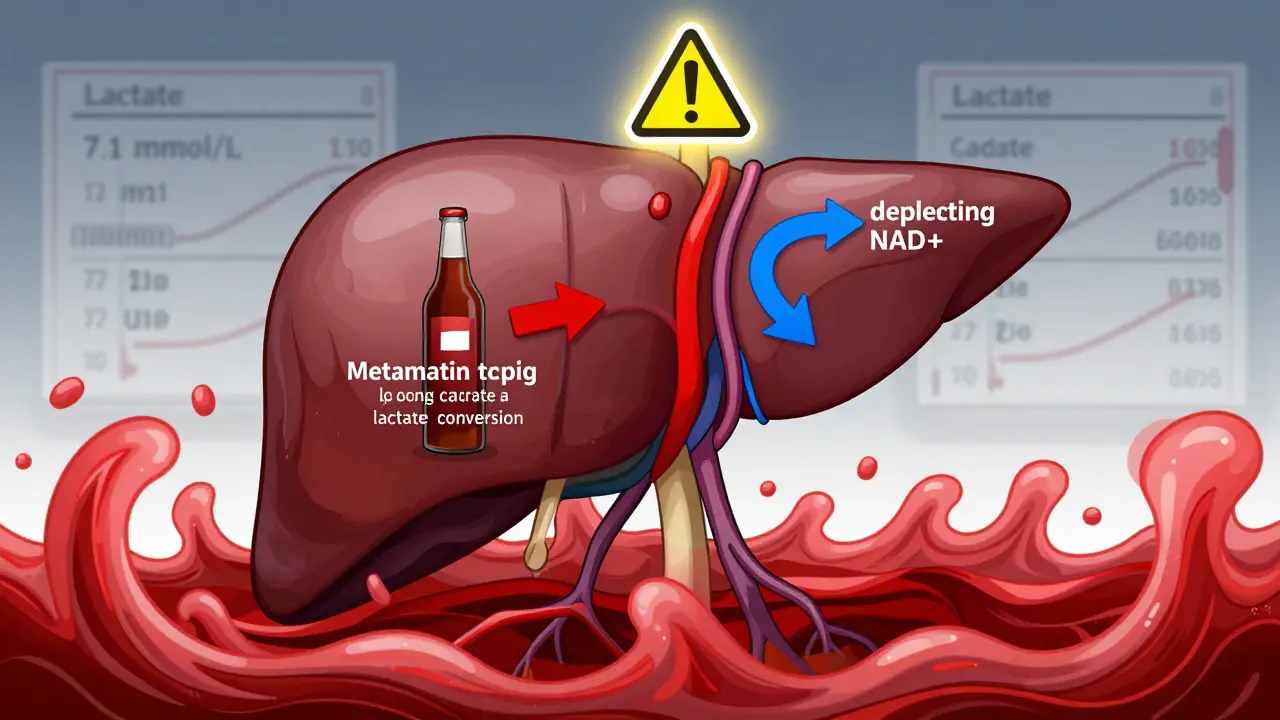
Lactic acidosis isn’t just a fancy medical term. It’s when your blood turns too acidic because too much lactic acid builds up. Your body normally makes small amounts of lactate during exercise or digestion, and your liver and kidneys clear it out. But when that system gets overwhelmed, your pH drops, your organs start to shut down, and you can die within hours if it’s not treated. With metformin, this risk is real. The drug works by slowing down how your liver makes sugar. But that same mechanism also increases lactate production. Alcohol? It shuts down your liver’s ability to clear lactate. Together? They create a perfect storm. The numbers don’t lie. Studies show metformin alone causes lactic acidosis in about 0.03 cases per 1,000 people each year. That’s rare. But when alcohol is added - especially binge drinking - the risk spikes. A 2024 case study in PMC documented a 65-year-old man with normal kidney function who developed lactic acidosis after drinking 10 shots in one night. His blood lactate hit 7.1 mmol/L. Normal is under 2. Normal levels above 5 mean you’re in critical danger.How Metformin and Alcohol Work Together to Cause Trouble
Metformin doesn’t just sit there. It blocks a key liver enzyme that helps convert lactate into energy. That means lactate builds up. Alcohol does the same thing - but even worse. When you drink, your liver uses up NAD+ (a vital molecule) to break down ethanol. Without enough NAD+, lactate can’t be processed. So both drugs are essentially clogging the same exit route. Your kidneys handle 90% of metformin clearance. That’s why doctors check your kidney function before prescribing it. But here’s the catch: you don’t need bad kidneys to get lactic acidosis. People with perfectly normal kidney tests have died from this interaction. Alcohol doesn’t care about your lab results. It bypasses the usual safeguards. And it’s not just about how much you drink. It’s about how often. Chronic heavy drinking? Even if you’re not bingeing, your liver gets tired. It stops clearing lactate efficiently. A 2023 study found that patients who drank more than three times a week had a 3.7 times higher risk of developing symptoms like muscle pain and breathing trouble - even without obvious kidney issues.The FDA’s Black Box Warning: What It Really Means
The FDA doesn’t issue black box warnings lightly. Only the most dangerous drug interactions get this label. Metformin has one. And it specifically says: "Avoid excessive alcohol intake." But here’s the problem - "excessive" isn’t defined. Is it two drinks? Five? A weekly binge? No one’s studied it enough to say. So doctors give generic advice: "Don’t drink heavily." But that’s not helpful. Real-world data shows patients are confused. A 2023 survey by GoodRx found 78% of metformin users cut back on alcohol because they were scared of lactic acidosis. Yet 42% said they didn’t know what "excessive" meant. One patient told Healthline: "My doctor said one drink is fine. So I had one every night. Then I got sick after a party. I thought it was just a bad hangover." That’s the danger. The early signs - nausea, muscle cramps, fatigue, rapid heartbeat - look like a hangover. Or indigestion. Or just being tired. By the time you realize something’s wrong, it might be too late.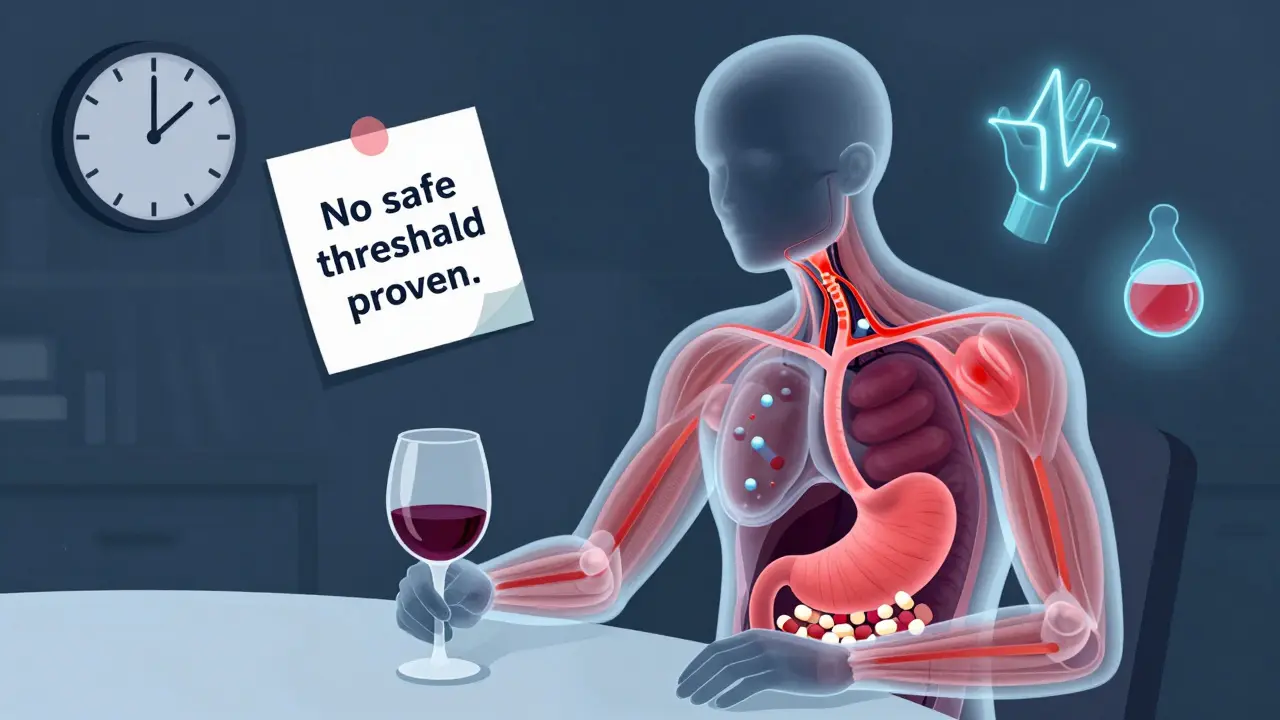
What Are the Real Symptoms? Don’t Wait for the Emergency Room
Lactic acidosis doesn’t start with a scream. It starts with a whisper. - Unusual muscle pain or weakness - not from working out, but from sitting still - Trouble breathing - even when you’re not exerting yourself - Stomach pain, nausea, vomiting - worse than normal metformin side effects - Dizziness, confusion, cold or blue extremities - Fast or irregular heartbeat A 2023 analysis from Medical News Today found that 68% of patients with confirmed lactic acidosis initially dismissed their symptoms as "just a hangover." One man waited 18 hours before going to the ER. His lactate level was 8.4 mmol/L. He didn’t survive. If you’re on metformin and you drink, and then you feel any of these symptoms - even mildly - don’t wait. Don’t take an antacid. Don’t sleep it off. Go to the ER. Tell them you’re on metformin and had alcohol. Time is everything.What About Moderate Drinking? Is One Glass of Wine Okay?
This is the question most people ask. And the answer? We don’t have a clear answer. The American Diabetes Association says avoid "excessive" alcohol. The European Medicines Agency warns against "acute intoxication." The FDA says "excessive" - but gives no number. Some doctors say one drink a day for women, two for men is okay - if your kidneys are fine and you’re not bingeing. But there’s no clinical trial proving this is safe. It’s guesswork. A 2024 study in the Journal of Diabetes Science and Technology reviewed 127 cases of metformin-related lactic acidosis. Of those, 41% happened in people who drank less than two drinks per day. The common thread? They didn’t eat. They drank on an empty stomach. Or they drank after a long fast. Or they had a recent illness. So here’s what we know for sure:- Drinking on an empty stomach? Higher risk.
- Binge drinking (4+ drinks in 2 hours for women, 5+ for men)? Dangerous.
- Drinking while sick, dehydrated, or after surgery? High risk.
- Drinking daily, even in small amounts? May slowly wear down your liver’s ability to clear lactate.
Other Hidden Risks: B12 Deficiency and Nerve Damage
Metformin and alcohol don’t just team up for lactic acidosis. They also team up to rob your body of vitamin B12. Long-term metformin users have a 7-10% chance per year of developing B12 deficiency. Alcohol makes it worse. It blocks B12 absorption in the gut. Low B12 leads to nerve damage, memory problems, tingling in hands and feet - and it can be permanent. One 2022 study in Diabetes Care found that metformin users who drank regularly had B12 levels 32% lower than those who didn’t. That’s not just fatigue. That’s potential neurological damage you can’t reverse. If you drink and take metformin, ask your doctor for a B12 blood test. Every year. Don’t wait for symptoms.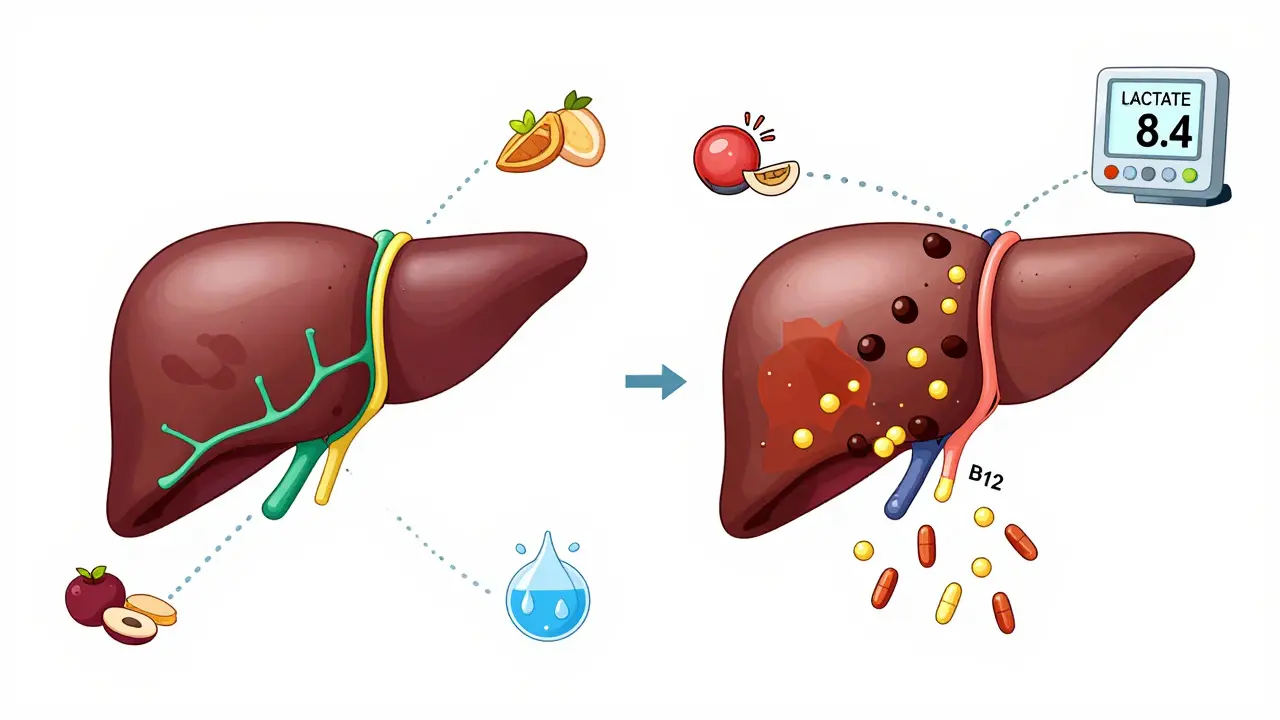
How This Compares to Other Diabetes Drugs
You might be thinking: "But I’ve heard about newer drugs like Ozempic. Are they safer?" Yes - and no. GLP-1 agonists like semaglutide or SGLT2 inhibitors like empagliflozin don’t carry lactic acidosis risk. But they have their own problems: nausea, vomiting, urinary infections, and - in rare cases - diabetic ketoacidosis. Metformin’s advantage? It’s cheap. It helps with weight loss. It lowers heart disease risk. It’s been used for over 60 years. And its lactic acidosis risk? It’s about 100 times lower than phenformin, the old drug that got pulled from the market in 1978. So metformin isn’t going away. But the alcohol interaction? That’s unique to it. No other common diabetes drug has this exact danger.What Should You Do? Practical Steps
Here’s what to do right now - whether you’ve been on metformin for a week or ten years:- Don’t drink on an empty stomach. Always eat before alcohol.
- Avoid binge drinking. Even one episode can trigger lactic acidosis.
- Never drink if you’re sick. Infection, vomiting, diarrhea, or fever? Skip the alcohol.
- Get your kidney function checked annually. Even if you feel fine.
- Ask for a B12 blood test every year. Especially if you drink.
- Know the symptoms. Muscle pain, trouble breathing, nausea? Go to the ER - don’t wait.
- Don’t rely on "moderate" labels. There’s no proven safe level for metformin users.
What’s Next? Research and Hope
There’s a study underway right now - the MALA-Prevention Study (NCT04892345) - tracking 5,000 metformin users to find out exactly how much alcohol is too much. Results won’t come until late 2025. Until then, we’re left with warnings, not numbers. That’s frustrating. But it’s also why you need to be your own advocate. Metformin saves lives. Alcohol, in excess, doesn’t. The choice isn’t about giving up joy - it’s about protecting your body from a threat you can’t see until it’s too late.Can I have one glass of wine with dinner while taking metformin?
There’s no guaranteed safe amount. Some doctors may say one glass is acceptable if you have normal kidney function and don’t binge. But research doesn’t confirm this. The FDA’s warning says "avoid excessive alcohol," but doesn’t define it. The safest approach is to avoid alcohol entirely. If you choose to drink, have no more than one drink occasionally, always with food, and never if you’re sick or dehydrated.
Does alcohol make metformin side effects worse?
Yes. Alcohol can worsen common metformin side effects like nausea, vomiting, and diarrhea. More importantly, it increases your risk of lactic acidosis - a rare but deadly condition. Even if you don’t feel sick, the combination can silently overload your body’s ability to clear lactic acid, leading to organ failure.
How do I know if I’m having lactic acidosis?
Symptoms include unusual muscle pain, trouble breathing, stomach discomfort, dizziness, rapid heartbeat, or feeling cold. These can feel like a hangover or food poisoning. If you’re on metformin and experience any of these after drinking, go to the emergency room immediately. Don’t wait. Blood lactate levels above 5 mmol/L confirm the condition, and treatment must begin within hours.
Is lactic acidosis from metformin and alcohol common?
It’s rare - about 0.03 cases per 1,000 patient-years with metformin alone. But alcohol increases that risk significantly. Most cases occur in people who binge drink or have other risk factors like kidney problems, illness, or fasting. While rare, the mortality rate is 30-50%, making it one of the most dangerous drug-alcohol interactions in diabetes care.
Should I stop metformin if I want to drink alcohol?
No. Stopping metformin without medical advice can cause dangerous spikes in blood sugar. Instead, avoid alcohol entirely or limit it to rare, small amounts with food. Talk to your doctor about your drinking habits. They can help you weigh risks and may suggest alternatives if alcohol use is frequent or heavy.
Do I need to avoid all alcohol if I have kidney problems?
Yes. If you have reduced kidney function, alcohol and metformin together are extremely dangerous. Your kidneys already struggle to clear metformin. Alcohol adds more stress on your liver and further reduces lactate clearance. Most doctors will advise complete alcohol avoidance in this case. Always get your kidney function tested annually if you’re on metformin.
Can I drink alcohol if I take extended-release metformin?
Yes, but the risk doesn’t change. Extended-release metformin may reduce stomach upset, but it doesn’t lower the risk of lactic acidosis. The same mechanisms apply. Alcohol still blocks lactate clearance. The FDA’s black box warning applies to all forms of metformin. So the advice remains: avoid binge drinking, never drink on an empty stomach, and monitor for symptoms.


8 Comments
Oana Iordachescu
While I appreciate the thoroughness of this article, I must emphasize that the FDA’s vague warning about "excessive alcohol" is not merely insufficient-it is a deliberate obfuscation. Pharmaceutical companies have long suppressed granular data on drug-alcohol interactions, and this is no exception. The fact that 41% of lactic acidosis cases occurred in those drinking less than two drinks daily suggests a systemic cover-up. I urge all metformin users to demand full disclosure of clinical trial datasets, not just summaries. Your life may depend on it. 🚨
Michaela Jorstad
This is such an important, life-saving post. Thank you for laying out the facts so clearly. I’ve been on metformin for 6 years, and I never realized how sneaky this interaction could be. I’ve cut out alcohol entirely since reading this-and I feel better than I have in years. If you’re on metformin, please don’t wait until you’re in the ER to make a change. Your body is telling you something. Listen. 💛
madison winter
So... we’re supposed to live in fear of a 0.03% risk? I mean, sure, it’s scary. But so is getting hit by lightning. Or eating raw oysters. Or driving to the grocery store. We’re told to avoid "excessive" alcohol, but nobody defines it. So we’re left with guilt, confusion, and a whole lot of self-policing. Meanwhile, Big Pharma is selling us GLP-1 agonists at $1,000/month. Coincidence? I think not. I’ll have my wine. And I’ll take my chances. 😐
Maddi Barnes
As someone who’s lived in four countries and studied metabolic health across cultures, I find it fascinating how Western medicine pathologizes pleasure. In Italy, people drink one glass of red wine with dinner daily-and their diabetes rates are lower than ours. In Japan, sake is part of social healing. But here? We turn a glass of wine into a death sentence. Is it the alcohol… or is it the fear we’ve been conditioned to feel? Maybe the real issue isn’t metformin + alcohol. Maybe it’s the way we’ve been taught to distrust our own bodies. 🌍🍷
Benjamin Fox
Y’all are overreacting. I drink two beers after work, take metformin, and I’m fine. My glucose is better than my cousin’s who’s on Ozempic. The FDA didn’t pull metformin. That means it’s safe. If you’re scared, maybe you shouldn’t be on it. Also, B12? Take a pill. Done. 🇺🇸💪
aine power
Metformin. Alcohol. Lactic acidosis. Three words. One truth: avoid the combo. No nuance needed. 🤷♀️
Irish Council
Been on metformin since 2018. Drank a pint every Friday. Never had a problem. My GP said "one drink is fine." Now this article says "maybe not." Who do I trust? The man who wrote this or the guy who’s been prescribing my meds for 6 years? I’m not scared. I’m confused. And I’m not alone. 🇮🇪
Laura B
I just wanted to say thank you to Irish Council. Your comment really resonated. I’ve been in the same boat. My doctor never mentioned the alcohol risk until I asked. I think a lot of us are just trying to live normal lives while managing a chronic condition. Maybe the real solution isn’t fear-it’s better education, clearer guidelines, and more honest conversations between patients and providers. We deserve that.