
Nasal steroid spray isn’t just another allergy remedy-it’s the most effective tool most people don’t use correctly. If you’ve tried antihistamines and decongestants but still wake up with a stuffed nose, itchy eyes, or constant sneezing, you’re not alone. Millions of people struggle with allergic rhinitis every year, and the solution isn’t stronger pills-it’s targeted, daily use of a nasal steroid spray. These aren’t magic wands. They don’t work overnight. But if you stick with them, they quiet the inflammation that’s been making your nose feel like a storm drain.
How Nasal Steroid Sprays Actually Work
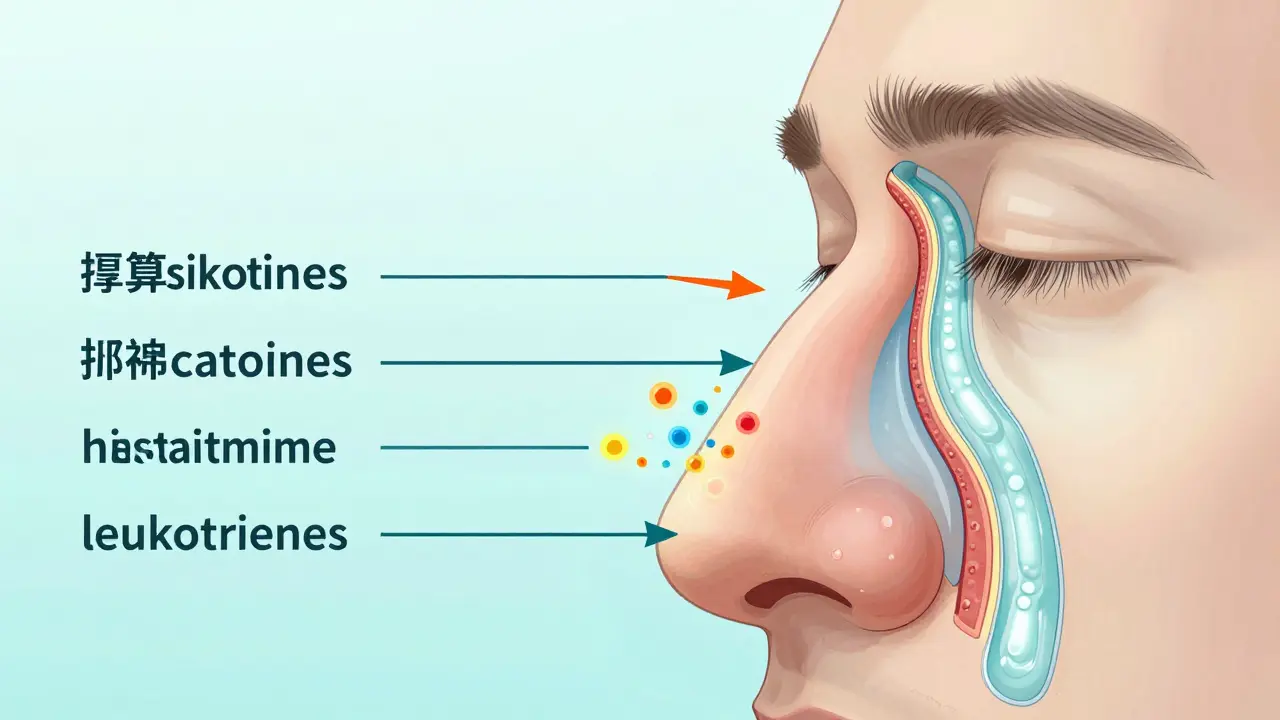
Nasal steroid sprays, also called intranasal corticosteroids (INS), don’t just numb your symptoms. They go after the root cause: inflammation. When you breathe in pollen, dust, or pet dander, your immune system overreacts. It releases histamine, cytokines, leukotrienes, and other chemicals that swell your nasal lining, flood it with mucus, and trigger sneezing. Antihistamines block just one part of that chain-histamine. But nasal steroids? They shut down nearly all of it. These sprays deliver a low-dose steroid directly to the inside of your nose. The medicine doesn’t travel far-it stays right where it’s needed. That’s why they’re so safe for long-term use. Unlike oral steroids, which can affect your whole body, nasal sprays work locally. Studies show they’re more effective than oral antihistamines, nasal antihistamine sprays, and even leukotriene blockers like montelukast. The American Academy of Otolaryngic Allergy calls them first-line therapy for a reason.What Symptoms Do They Actually Help?
Not all allergy treatments do everything. Antihistamines help with sneezing and runny nose. Decongestants shrink swelling fast-but they can backfire after a few days. Nasal steroid sprays are the only over-the-counter option that reliably tackles all four major symptoms of allergic rhinitis:- Nasal congestion (stuffy nose)
- Runny nose (rhinorrhea)
- Nasal itching
- Sneezing
Why You Need to Use Them Daily (Even When You Feel Fine)
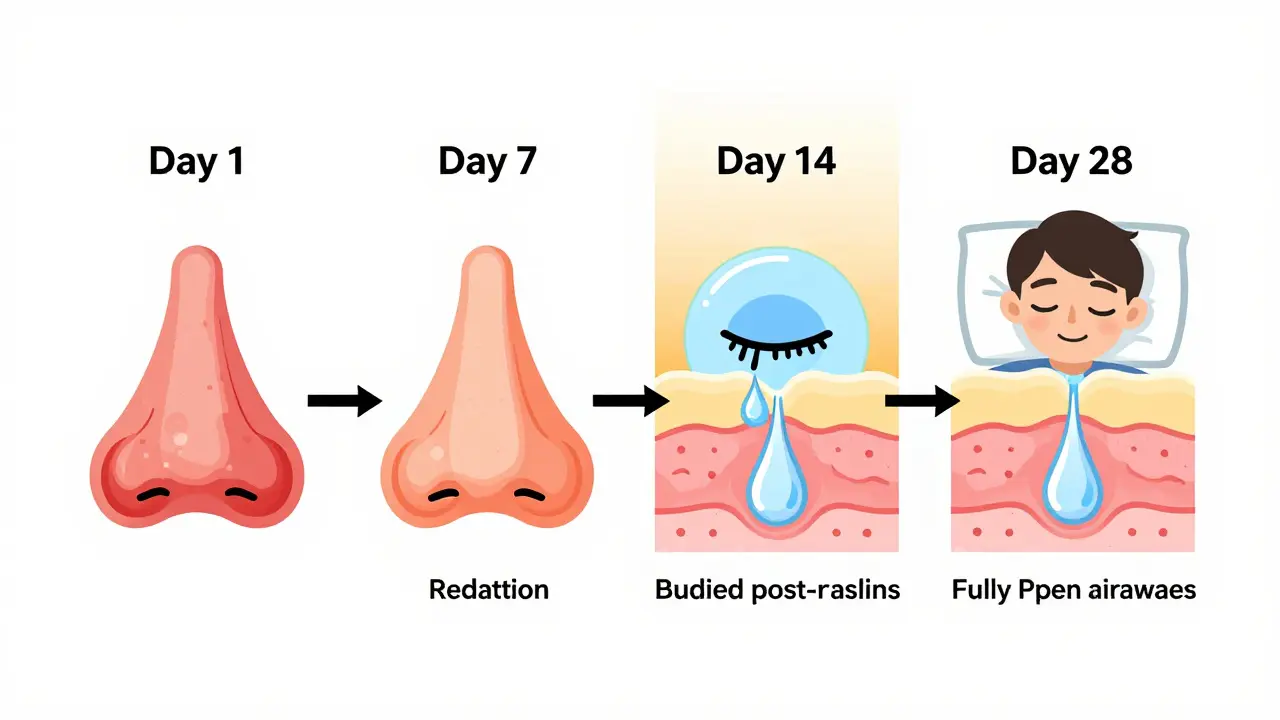
This is where most people fail. They use the spray when they feel bad-and stop when they feel better. That’s like turning off your car’s brakes after one hill. Nasal steroid sprays don’t work like antihistamines. They don’t give you instant relief. It takes 3 to 7 days to start feeling better. Full effect? That can take 2 to 4 weeks. If you only use it when your nose is blocked, you’re missing the point. These sprays prevent inflammation from building up. Think of them like brushing your teeth-you don’t wait until your gums bleed to do it. The same logic applies here. Daily use keeps the allergic response under control. The U.S. Pharmacist confirms: as-needed use is less effective than consistent daily use.How to Use Them Right (So They Work and Don’t Hurt)
Using a nasal spray wrong is worse than not using it at all. Pointing it straight back toward your septum (the wall between your nostrils) is the #1 mistake. That’s how people get nosebleeds-or worse, a perforation. Here’s how to do it right:- Shake the bottle.
- Blow your nose gently to clear out mucus.
- Tilt your head slightly forward-not back.
- Insert the nozzle into one nostril, pointing it toward the outer wall of your nose (toward your ear), not straight up or toward the middle.
- Breathe in gently through your nose as you press the spray.
- Don’t sniff hard. Don’t sneeze right after.
- Repeat on the other side.
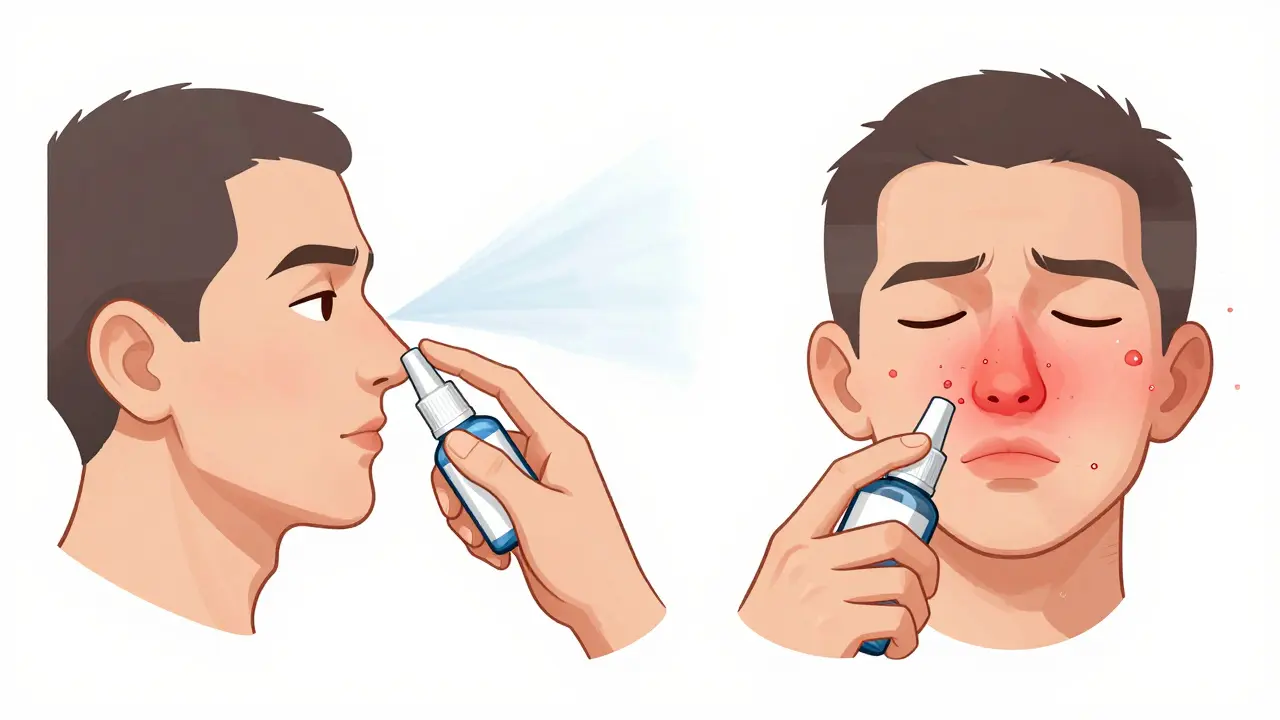
Side Effects: What to Expect (and What to Worry About)
Most people tolerate nasal steroid sprays well. The most common side effects are mild:- Dryness or irritation inside the nose
- Minor burning or stinging
- Occasional nosebleeds (epistaxis)
Over-the-Counter vs. Prescription: What’s the Difference?
You don’t need a prescription for most nasal steroid sprays anymore. Flonase (fluticasone propionate), Nasacort (triamcinolone acetonide), and others are available over the counter. They’re the same strength as the prescription versions-just marketed differently. The only real difference? Price. Brand-name versions can cost $30-$40 a bottle. Generic versions (like fluticasone or triamcinolone) often cost under $15 with a coupon. Some pharmacies even sell them for $10 or less. If you’re using one of these sprays for more than 6 months, your doctor might suggest switching to a different formulation to avoid local irritation. Options include:- Fluticasone furoate (Veramyst)
- Mometasone furoate (Nasonex)
- Budesonide (Rhinocort)
Who Shouldn’t Use Them?
Nasal steroid sprays are safe for most people over age 2. But talk to your doctor before using them if you:- Have a recent nasal injury or surgery
- Have an untreated nasal infection
- Have tuberculosis or other chronic infections
- Are pregnant or breastfeeding (they’re generally considered safe, but check with your provider)
How They Compare to Other Allergy Treatments
Here’s how nasal steroid sprays stack up against other options:| Treatment | Speed of Relief | Best For | Drawbacks |
|---|---|---|---|
| Nasal Steroid Spray | 2-4 weeks | All symptoms, especially congestion | Slow start, needs daily use |
| Oral Antihistamine | 1-2 hours | Sneezing, itching, runny nose | Drowsiness, doesn’t help congestion |
| Nasal Antihistamine Spray | 15-30 minutes | Runny nose, sneezing | Less effective for congestion, bitter taste |
| Decongestant Spray | 10 minutes | Quick congestion relief | Rebound congestion after 3+ days |
| Leukotriene Inhibitor (e.g., Singulair) | Days to weeks | Asthma + allergies | Lower efficacy than steroids for nasal symptoms |




8 Comments
Milla Masliy
Just wanted to say this post nailed it. I used to be one of those people who thought nasal sprays were a scam until I gave them 3 weeks. Now I can actually sleep without my head feeling like a balloon. No more 3am sneezing fits. Life changed. Seriously.
Scottie Baker
Ugh I tried this for 5 days and quit because my nose felt like sandpaper. Now I see I was doing it wrong. Pointing it toward my ear? I was aiming straight back like an idiot. No wonder I got nosebleeds. Thanks for the tip - gonna restart tomorrow. Wish I’d read this sooner.
Pankaj Singh
Let’s be real - this is just pharmaceutical propaganda. Steroids are steroids. You think your body doesn’t absorb this? You’re delusional if you believe it’s ‘local only.’ The FDA’s data shows systemic absorption in 12% of users over 6 months. And don’t get me started on the marketing push to make these OTC. Big Pharma’s latest cash cow.
Gregory Parschauer
Oh, so now we’re supposed to believe that a $10 spray is the holy grail of allergies? You know what actually works? Moving to a desert. Or just living in a bubble. The fact that people think this is ‘first-line therapy’ is laughable. You’re not treating the cause - you’re just chemically suppressing your immune system like a coward. And don’t even get me started on the ‘daily use’ cult mentality. It’s just another form of medical obedience.
My uncle had a perforated septum from this crap. You think that’s rare? It’s not. It’s just not reported because nobody wants to admit Big Pharma lied to them. Wake up.
Alan Lin
While I appreciate the clinical accuracy of this post, I must respectfully challenge the framing of nasal steroid sprays as a panacea. The data is compelling, yes - but the psychological dimension is often overlooked. Many patients abandon treatment not due to ineffectiveness, but because they perceive their symptoms as ‘manageable’ until they become unbearable. This is a classic case of delayed gratification failure in chronic disease management. The solution is not merely education, but behavioral architecture: reminders, habit stacking, and integration into existing routines - such as brushing teeth or morning coffee. Without this, even the most scientifically sound intervention will fail in practice.
Furthermore, the cultural normalization of ‘quick fixes’ undermines long-term health outcomes. We must reframe nasal steroid use not as a medical chore, but as a ritual of self-care - akin to meditation or hydration. The body responds not only to chemistry, but to intention.
Anny Kaettano
Thank you for this. As someone who’s been dealing with chronic allergic rhinitis since college, I cried reading this. I thought I was just ‘allergic to life.’ Turns out I just needed to use the spray correctly. I’ve been doing it wrong for 8 years. I was aiming it at my septum like a maniac. Now I aim toward my ear, use it after my shower, and honestly? My eyes don’t water anymore. I’m not exaggerating - I haven’t needed eye drops in 3 weeks. To anyone still doubting: give it 21 days. Your future self will thank you.
Angel Tiestos lopez
bro i tried this for 2 days and thought it was fake 😭 then i saw the post about aiming toward the ear and i was like… wait i was pointing it like a gun at my brain?? 🤦♂️ now i’m on day 14 and i can actually smell my coffee again. like… i forgot what fresh air tasted like. thank you. 🙏✨
Robin Williams
Life’s too short to breathe like a blocked drain. This isn’t magic - it’s just science you ignored. Start today. Don’t wait until you’re sobbing into a tissue at 3am again. You deserve to sleep. You deserve to breathe. You’ve been given the tool. Now use it. No excuses. 🚀