Pharmacist Responsibility: What They Must Do to Keep You Safe
When you pick up a prescription, you're trusting a pharmacist responsibility, the legal and ethical duty of licensed pharmacists to ensure medications are safe, accurate, and appropriate for each patient. Also known as medication safety oversight, it’s not just about counting pills—it’s about stopping errors before they hurt someone. This isn’t theoretical. Every day, pharmacists catch wrong doses, dangerous drug combinations, and allergies that doctors missed. A single missed interaction between blood thinners and common painkillers can land someone in the ER. That’s why pharmacist responsibility isn’t optional—it’s the last line of defense.
That responsibility includes checking drug interactions, how one medication affects another in the body, potentially causing harm or reducing effectiveness—like when PDE5 inhibitors clash with nitrates and drop blood pressure to deadly levels. It means understanding narrow therapeutic index drugs, medications where tiny differences in dosage can cause toxicity or treatment failure, and why bioequivalence rules for generics matter so much. It means knowing when a patient is on ten different pills and one of them is likely causing their dizziness or confusion. Pharmacists don’t just hand out meds—they analyze them, question them, and sometimes refuse to fill them if something doesn’t add up.
They also verify prescription accuracy, the correctness of dosage, frequency, duration, and patient-specific factors like kidney function or pregnancy status. A typo in a doctor’s note, a misread handwriting, or an outdated allergy list can all be fixed by a pharmacist before the patient leaves the counter. Automated dispensing cabinets help, but they don’t replace human judgment. Studies show over 80% of medication errors are caught by pharmacists—not doctors or nurses—because they’re the only ones trained to see the full picture of what a patient is taking.
And it’s not just about pills. Pharmacists review supplements, over-the-counter meds, and even herbal products that patients forget to mention. A patient on chemotherapy might take turmeric for inflammation, not realizing it interferes with their treatment. A woman on blood thinners might start taking a new pain cream with bemzocaine and bleed internally. These aren’t edge cases—they happen weekly. That’s why pharmacist responsibility includes asking the right questions, listening to patients, and speaking up when something feels off.
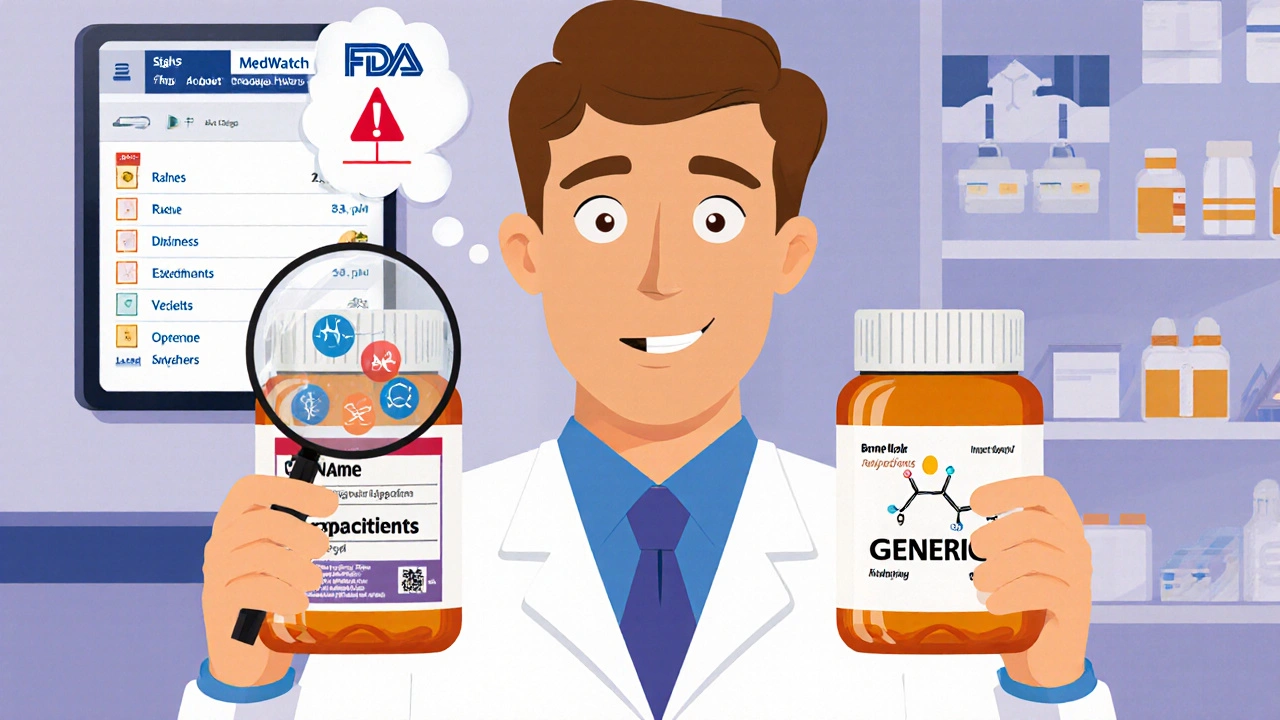
When you walk into a pharmacy, you’re not just buying medicine. You’re walking into a safety checkpoint. The pharmacist’s job isn’t to be a silent order-taker—it’s to be your protector. And that means knowing when a drug label changes, like a new boxed warning from the FDA, or when a generic version needs extra scrutiny because of its narrow therapeutic index. It means understanding how torsemide kicks in faster than furosemide, or why apixaban needs special handling before surgery. These aren’t textbook details—they’re life-or-death decisions made in real time.
Below, you’ll find real-world examples of how pharmacist responsibility plays out—from catching deadly interactions to ensuring generics are truly safe. These aren’t hypotheticals. They’re stories of mistakes avoided, lives saved, and the quiet, critical work that keeps millions of people safe every day.