
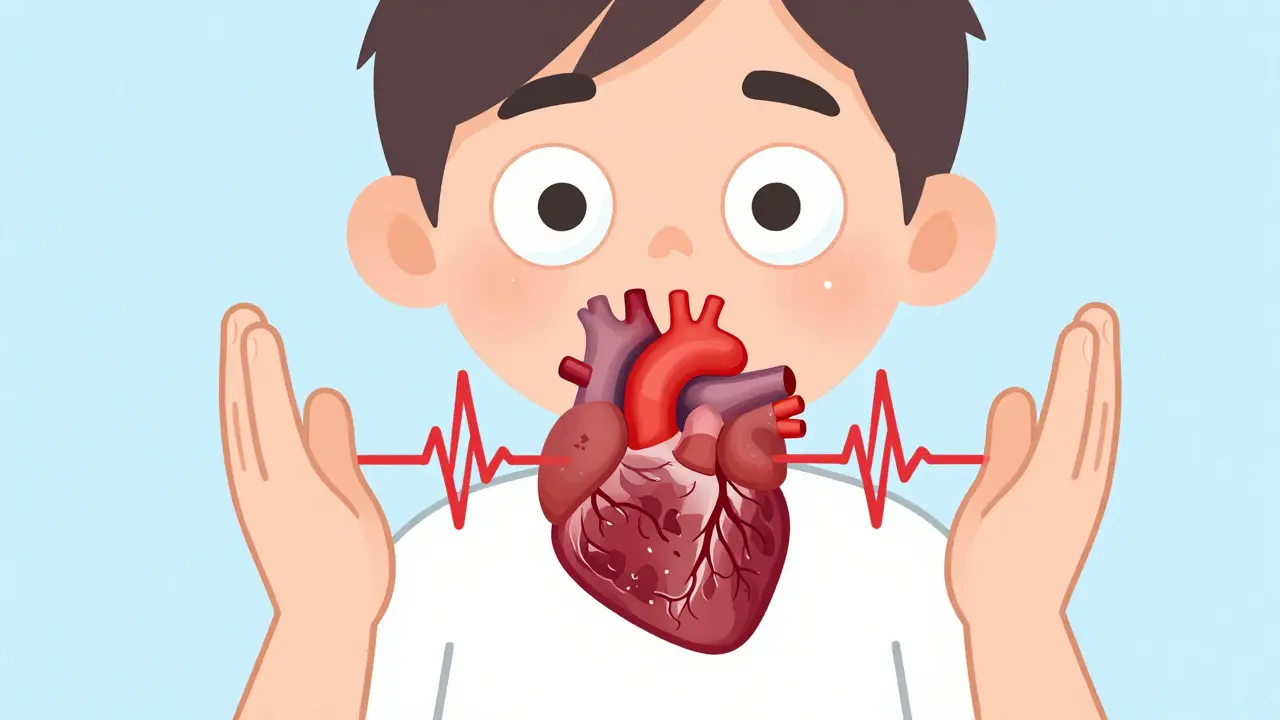
Graves' Disease is an autoimmune disorder where the immune system mistakenly attacks the thyroid gland, causing it to overproduce hormones. First documented by Robert James Graves in 1835, it affects about 1-2% of people worldwide and is the most common cause of hyperthyroidism. Women are seven times more likely to develop it than men, with symptoms typically appearing between ages 30 and 50.
Recognizing Symptoms: What to Watch For
Graves' disease symptoms affect multiple body systems. Younger patients often feel anxious, have trouble sleeping, and experience heart palpitations. About 85-90% report nervousness, 75-80% struggle with insomnia, and 65-70% notice frequent bowel movements. Heat intolerance is common too-80-85% feel excessively sweaty even in cool temperatures. Weight loss despite increased appetite happens in 60-65% of cases. Muscle weakness, especially in shoulders and hips, affects nearly half of patients. Hand tremors and rapid heartbeat (over 100 beats per minute in 80% of untreated cases) are also classic signs.
Eye complications occur in about one-third of patients. Bulging eyes (exophthalmos), eye irritation, excessive tearing, and double vision are typical. In severe cases, vision loss can happen in 5-10% of those with eye involvement. Older patients (over 60) often show subtler symptoms like irregular heartbeat, chest pain, memory issues, and generalized weakness. Physical exams usually reveal an enlarged thyroid gland (goiter) in 90-95% of cases and fast heart rate.
How Doctors Diagnose Graves' Disease
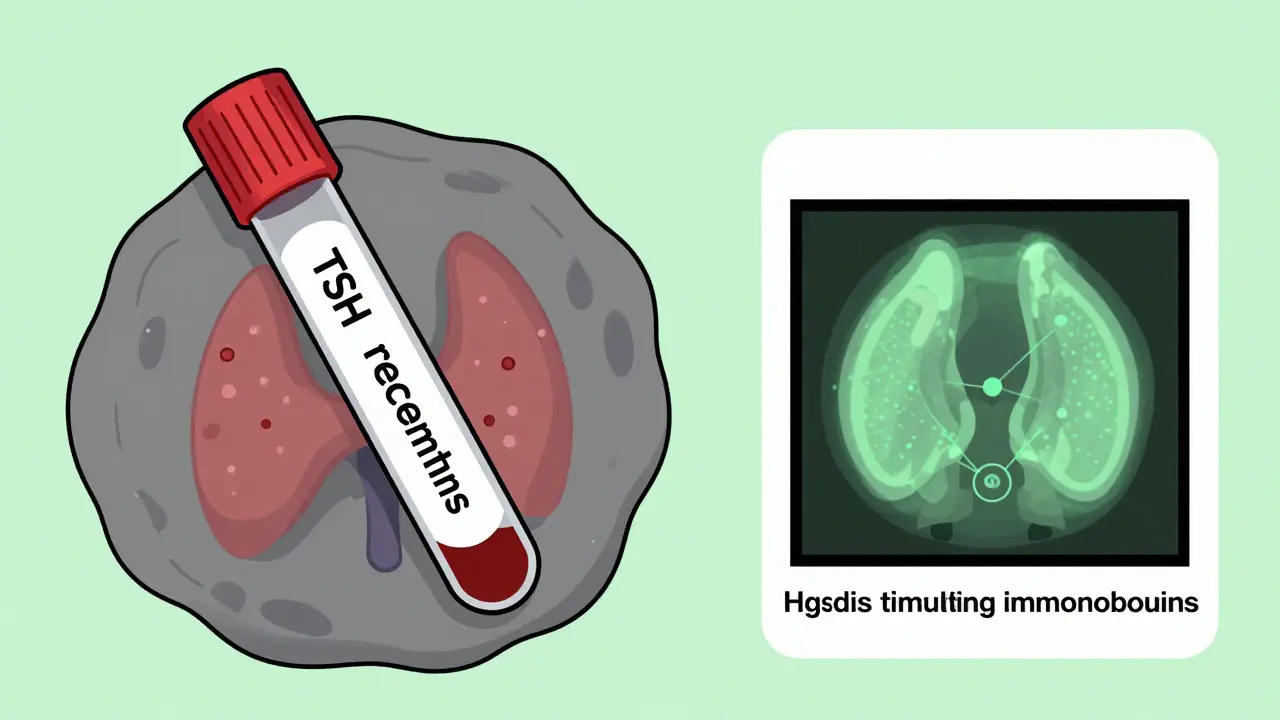
Diagnosis starts with a detailed medical history. Doctors ask about family history of autoimmune disorders (present in 25-30% of cases), recent stress, pregnancy history (which triples risk), and smoking status (smokers have 2-3 times higher risk of severe eye disease). Blood tests are critical: suppressed TSH levels below 0.4 mIU/L, elevated free T4 above 1.8 ng/dL, and high T3 levels above 180 ng/dL confirm hyperthyroidism. Antibody testing provides definitive proof-thyroid-stimulating immunoglobulins (TSI) appear in 85-90% of Graves' cases, and TSH receptor antibodies (TRAb) in 90-95%.
When antibody tests aren't available, radioactive iodine uptake scans show diffusely increased uptake (>40-50% at 24 hours), distinguishing Graves' from other thyroid issues. Ultrasound measuring thyroid blood flow is also highly accurate, with over 90% sensitivity and specificity according to recent studies.
Treatment Options Explained
Treatment Type
How It Works
Effectiveness
Common Side Effects
Long-term Considerations
Methimazole
Blocks thyroid hormone production
60-80% symptom control
Headache, rash, rare liver issues
30-50% remission after 12-18 months; requires lifelong monitoring
Radioactive iodine therapy
Destroys overactive thyroid cells
80-90% achieve hypothyroidism within 6-12 months
Neck tenderness, temporary worsening of eye symptoms
Lifelong thyroid hormone replacement needed
Thyroidectomy
Surgical removal of thyroid gland
Over 95% success rate
Hoarseness, low calcium, infection risk
Lifelong hormone replacement; 1-2% risk of parathyroid damage
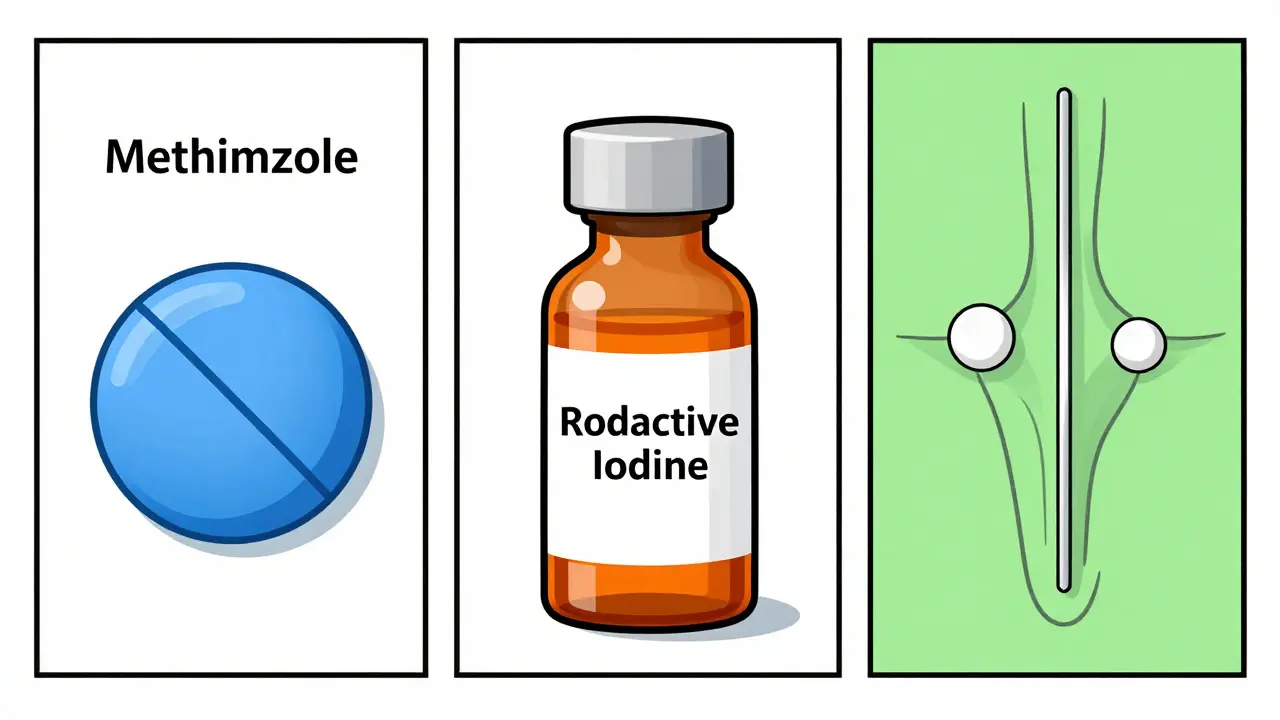
Methimazole is usually the first choice for most patients. Doctors start with 10-40 mg daily, adjusting based on thyroid levels. It works by blocking hormone production but has a 30-50% remission rate after 12-18 months of treatment. Propylthiouracil is less common due to higher liver toxicity risks (0.3% vs. 0.1% for methimazole). Radioactive iodine therapy delivers targeted radiation to shrink the thyroid. It's effective but almost always leads to permanent hypothyroidism, requiring daily levothyroxine. Surgery is reserved for large goiters causing breathing issues, severe eye disease, or when other treatments fail. It carries risks like nerve damage but offers a quick solution.
Managing Eye Complications
Graves' ophthalmopathy affects 30% of patients, though only 5% develop moderate-to-severe inflammation. Mild cases respond well to selenium supplements (100 mcg twice daily for 6 months), reducing eye swelling in 60% of cases. For more severe inflammation, doctors use intravenous methylprednisolone-500 mg weekly for 6 weeks, then 250 mg weekly for another 6 weeks. This achieves clinical improvement in 60-70% of patients. Smoking cessation is crucial; current smokers face 7-8 times higher risk of severe eye disease than non-smokers. Emerging treatments like teprotumumab (a monoclonal antibody) show promise, with 75-80% of patients experiencing reduced eye bulging in clinical trials.
Living with Graves' Disease: Patient Insights
Real-world experiences highlight both challenges and successes. On HealthUnlocked's thyroid community, 68% of 1,247 patients reported significant quality-of-life improvement within 3 months of stabilizing thyroid levels. One user shared, "After getting my methimazole dosage right at 15mg daily, my heart palpitations disappeared within 2 weeks." However, 42% of 3,512 surveyed on MyThyroidTeam struggled with medication side effects, particularly rare but serious agranulocytosis (1 in 500 patients), requiring monthly blood checks.
Eye complications remain the most distressing aspect. A Reddit user with severe proptosis (22mm eye protrusion) described, "Orbital decompression surgery at Massachusetts Eye and Ear finally gave me back my vision after 18 months of double vision." About 55% of patients surveyed on EndoOnline regretted their initial treatment choice, often due to inadequate counseling about lifelong hormone replacement after radioactive iodine therapy. This underscores the importance of thorough discussions before choosing a treatment path.
Frequently Asked Questions
Can Graves' disease be cured?
There's no permanent cure, but treatments effectively manage symptoms. Antithyroid medications like methimazole lead to remission in 30-50% of patients after 12-18 months. Radioactive iodine therapy and surgery typically cause permanent hypothyroidism, requiring lifelong thyroid hormone replacement. Early treatment improves long-term outcomes significantly.
Why do women develop Graves' disease more often than men?
The exact reason isn't fully understood, but hormonal differences play a key role. Estrogen may influence immune system activity, making women more susceptible to autoimmune conditions like Graves'. Pregnancy and postpartum periods also increase risk, with women having 3-5 times higher chance of developing the disease after childbirth. Genetic factors combined with hormonal triggers create this gender disparity.
What are the risks of radioactive iodine therapy?
Radioactive iodine is generally safe but has specific risks. It almost always causes permanent hypothyroidism, requiring daily thyroid hormone pills. It can temporarily worsen eye symptoms in Graves' ophthalmopathy patients. There's also a small chance of thyroid tissue swelling causing neck discomfort. Unlike surgery, it doesn't carry risks like nerve damage or low calcium levels. Most patients tolerate it well with proper monitoring.
How long does treatment take to work?
Antithyroid medications like methimazole usually control symptoms within 4-6 weeks, but full stabilization takes 3-6 months. Radioactive iodine therapy takes 6-12 weeks to reduce thyroid activity significantly, with full effects visible in 3-6 months. Surgery provides immediate results, but hormone replacement therapy adjustments continue for several months afterward. Regular blood tests guide dosage changes throughout treatment.
Can lifestyle changes help manage Graves' disease?
Yes. Quitting smoking is critical-it cuts the risk of severe eye complications by 70-80%. Stress management through yoga or meditation helps since stress can trigger flare-ups. Eating a balanced diet rich in selenium (found in Brazil nuts and fish) supports thyroid health. Avoiding excessive iodine intake (from seaweed or supplements) prevents worsening hyperthyroidism. These changes complement medical treatment but don't replace it.

10 Comments
lance black
Graves' disease is manageable with proper treatment. Stay positive!
Cole Streeper
Big Pharma created Graves' disease to sell drugs. 5G radiation is the real cause. Government is hiding this. Stop taking meds.
Tehya Wilson
The data presented lacks empirical validation
Thyroid studies are methodologically flawed
Environmental factors are overlooked
Lisa Scott
TSH suppression is secondary manifestation not primary cause
TRAb antibodies are the definitive marker for Graves' disease
Pharmaceutical companies manipulate data to promote methimazole
Radioactive iodine therapy has higher success rates but causes hypothyroidism
Thyroidectomy is underutilized due to surgical risks
Current guidelines overlook environmental triggers like iodine intake
Emerging research shows selenium supplementation reduces eye complications
Studies on Teprotumumab show promising results for severe ophthalmopathy
Smoking cessation is critical for eye disease prevention
Many patients are misdiagnosed due to inadequate antibody testing
Healthcare systems prioritize cost over personalized care
Real-world data shows 55% regret initial treatment choice
More research is needed on genetic factors
Current treatment protocols are outdated
Patients deserve better education on all options
Pamela Power
Lisa's 'analysis' is laughably simplistic. Real experts know the nuances. Your data is cherry-picked. Trustworthy sources don't support your claims. This is why medical misinformation spreads.
Gregory Rodriguez
Methimazole works for many when dosed correctly. It's not perfect but better than nothing. Yeah, sure. 😏
Elliot Alejo
US treatments are good but not the only option. Radioactive iodine works globally. Need to consider individual cases. Let's work together on this.
Johanna Pan
I've heard herbal remedies help thyroid issues in some cultures. Stay positive! Its important to stay hopeful. Its not just meds.
Jenna Elliott
US healthcare is best for Graves' disease. Other countries use outdated methods. Don't trust foreign medicine. America knows best.
Katharine Meiler
TRAb antibodies are key diagnostic markers. However, TSI testing has limitations in certain populations. Personalized approach essential. Global collaboration needed.