
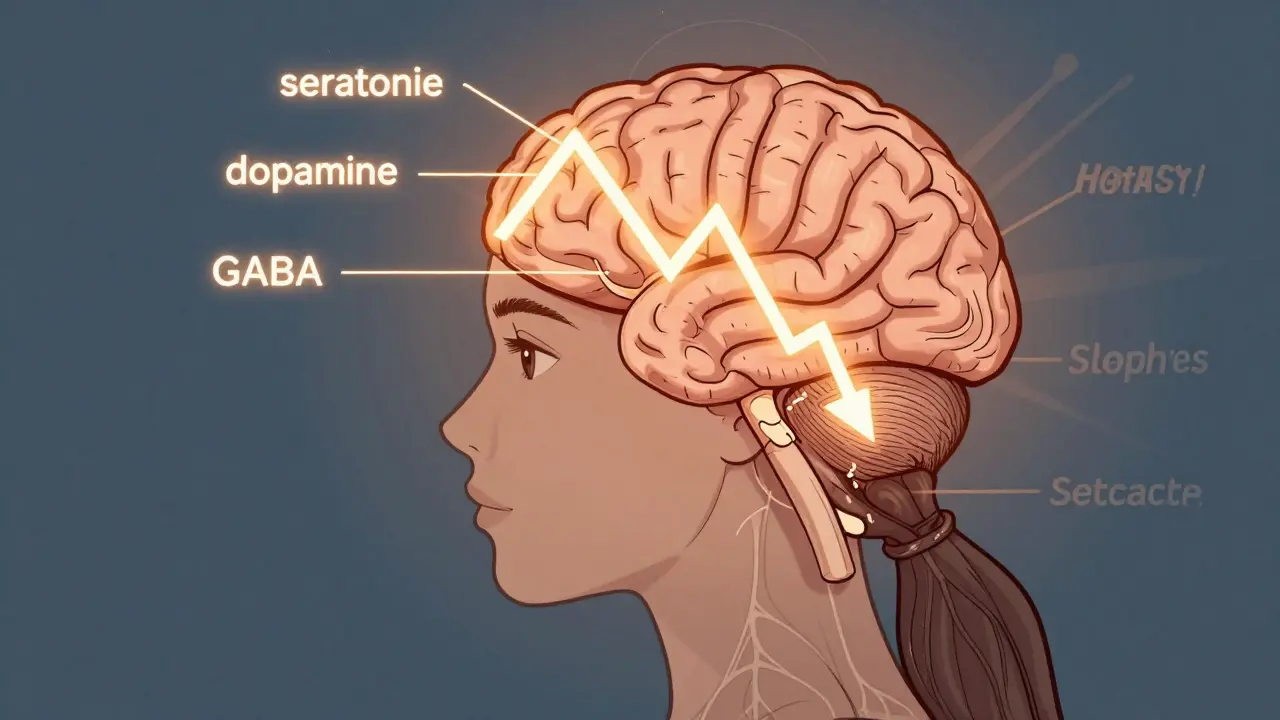
When your emotions start feeling out of control-irritability out of nowhere, crying over small things, or sudden rage at a minor inconvenience-it’s easy to blame stress, sleep deprivation, or even your personality. But for many women in their 40s and early 50s, these mood shifts aren’t just in their head. They’re wired into their biology. Perimenopause is the bridge between reproductive years and menopause, and it’s not just about hot flashes or irregular periods. It’s a time when hormones dance unpredictably, and the brain feels every step. Estrogen doesn’t just regulate your cycle. It talks directly to serotonin, dopamine, and GABA-the brain’s natural mood stabilizers. When estrogen drops 50% or more in a single week, as studies from Ohio State University show, your brain chemistry shifts. Progesterone, which helps calm the nervous system, also plummets. The result? A brain that’s less able to handle stress, less resilient to emotional triggers, and more prone to anxiety and depression. This isn’t rare. About 10% to 20% of women experience clinically significant mood disturbances during perimenopause, according to Harvard Health Publishing. For many, it’s not depression in the classic sense. It’s a slow erosion of emotional control. One woman on Reddit described it as, "I used to laugh at my kids’ jokes. Now I snap at them for asking for toast." Another said, "I feel like a stranger in my own skin." The tricky part? These symptoms don’t follow a pattern. Unlike premenstrual dysphoric disorder (PMDD), which comes like clockwork before your period, perimenopausal mood changes are chaotic. One week you’re fine. The next, you’re overwhelmed by sadness or anger with no clear trigger. And because the changes are gradual-lasting 4 to 8 years on average-it’s easy to dismiss them as "just part of aging." But they’re not. They’re biological. Sleep disruption makes it worse. Around 63% of perimenopausal women report poor sleep due to night sweats or racing thoughts. Lack of sleep doesn’t just make you tired. It lowers your threshold for emotional reactions. A study from the Cleveland Clinic found that women with chronic sleep issues during perimenopause were twice as likely to report severe mood swings. It’s a cycle: hormones disrupt sleep, poor sleep worsens mood, and bad mood makes sleep harder. Then there’s the stigma. Too often, women are told they’re "being dramatic" or "just stressed." Some are misdiagnosed with clinical depression and put on SSRIs without addressing the root cause. Research from the American Journal of Psychiatry shows that perimenopausal depression is 3.2 times more likely to resist standard antidepressants than depression with no hormonal link. That’s not a failure of the medication-it’s a failure to recognize the trigger. So what actually helps? Hormone therapy isn’t a magic fix for everyone, but for those with clear hormonal triggers, it can be life-changing. Estrogen therapy-especially low-dose patches or gels-has been shown to improve mood in 45% to 55% of women, according to My Menopause Centre. It doesn’t just ease hot flashes. It stabilizes brain chemistry. But it’s not for everyone. Women with a history of breast cancer, blood clots, or stroke should avoid it. That’s why working with a specialist matters. Selective serotonin reuptake inhibitors (SSRIs) like sertraline or escitalopram help about half of women with mood symptoms, even if they don’t have clinical depression. The benefit? They work faster than hormones-often within 3 to 4 weeks. But they don’t touch hot flashes or sleep issues. That’s why many clinicians now recommend combining them with low-dose estrogen for women who need both. There’s also a newer option: the FDA-approved digital therapy app "MenoMood." Launched in June 2023, it uses cognitive behavioral therapy (CBT) techniques tailored to perimenopause. In clinical trials, it reduced mood symptoms by 35% over 12 weeks. It’s not a replacement for medical care, but for women who can’t access specialists or want a non-pharmaceutical option, it’s a real tool. Lifestyle changes aren’t optional-they’re essential. Exercise isn’t just good for your heart. It boosts endorphins and helps regulate cortisol, the stress hormone. Even 30 minutes of brisk walking five times a week can reduce mood swings. Omega-3s from fatty fish or supplements help reduce inflammation in the brain, which is linked to depression. Magnesium, often overlooked, supports GABA function and can ease anxiety. And don’t underestimate alcohol. It may help you relax at first, but it worsens sleep and lowers serotonin over time. Tracking your symptoms is critical. Most women don’t realize how much their mood changes correlate with their cycle. ACOG recommends tracking mood, sleep, and physical symptoms for at least 90 days. Apps like Wild AI or even a simple notebook can reveal patterns. Maybe your worst days always come after a bad night’s sleep. Or maybe your anger spikes right after your period ends. That data gives your doctor real evidence-not guesses. The biggest mistake? Waiting too long. Women often suffer for months or even years before seeking help. The average time to find effective treatment is 6 to 9 months, according to My Menopause Centre. And that delay can lead to relationship strain, job performance issues, or even thoughts of hopelessness. If you’re feeling off, don’t wait until you’re in crisis. Talk to your OB/GYN or a certified menopause practitioner. There are about 2,300 in the U.S. alone. Insurance is still a hurdle. Only 38% of HRT prescriptions are fully covered, and many providers don’t accept telehealth for menopause care. But things are changing. In 2023, 54% of OB/GYNs routinely screen for mood symptoms-up from 29% in 2018. More medical schools are teaching menopause care. And with $47 million in NIH funding for brain research, we’re closer than ever to personalized treatments. You’re not broken. You’re not overreacting. Your body is going through a major transition, and your brain is feeling it. The good news? This phase doesn’t have to be a battle. With the right understanding and support, you can navigate it without losing yourself. If you’ve been told it’s "just stress," ask for more. If you’ve been on antidepressants with no improvement, ask if hormones could be involved. If you’re tired of feeling like a stranger in your own life-there’s help. And you deserve it.
What Treatments Actually Work for Perimenopausal Mood Swings?
There’s no one-size-fits-all solution, but evidence points to a few clear paths. The most effective approach is often layered. - Low-dose estrogen therapy: Especially transdermal (patch or gel), it’s the most direct way to stabilize brain chemistry. Studies show it improves mood in 45%-55% of women. Best for those with hot flashes, sleep issues, and mood changes all together. - SSRIs or SNRIs: Medications like sertraline, escitalopram, or venlafaxine. They help 50%-60% of women with mood symptoms, even without a depression diagnosis. They work faster than hormones but don’t fix physical symptoms. - Combination therapy: Estrogen + low-dose SSRI. This is now recommended by the North American Menopause Society for women with moderate-to-severe mood symptoms. It addresses both biology and neurochemistry. - Digital CBT apps: "MenoMood" is the first FDA-approved app for perimenopause. It reduces mood symptoms by 35% in 3 months. Good for mild cases or as a supplement. - Lifestyle changes: Regular exercise, omega-3s, magnesium, and cutting back on alcohol and caffeine. These don’t cure anything, but they lower the baseline of emotional reactivity.Why Some Women Struggle More Than Others
Not all women experience mood swings during perimenopause. Why? Genetics, life stress, and medical history play big roles. Women with a history of depression are five times more likely to have severe mood symptoms during perimenopause, according to the North American Menopause Society. If you’ve had depression before, your brain may be more sensitive to hormonal shifts. Life stress matters too. Dr. Ellen Freeman from the University of Pennsylvania found that about 35% of mood symptoms in perimenopause come from external stressors-caring for aging parents, job pressure, divorce, or loneliness. Hormones may lower your emotional buffer, but life events push you over the edge. Sleep quality is another factor. Women with chronic insomnia are twice as likely to report severe mood swings. It’s not just about quantity-it’s about rest. If you’re waking up 3-4 times a night from night sweats, your brain never gets deep restorative sleep. And then there’s access. Women without health insurance, or those in areas without menopause specialists, often go untreated. The number of reproductive endocrinologists has dropped 30% since 2015. That’s why primary care providers are now being trained to step in.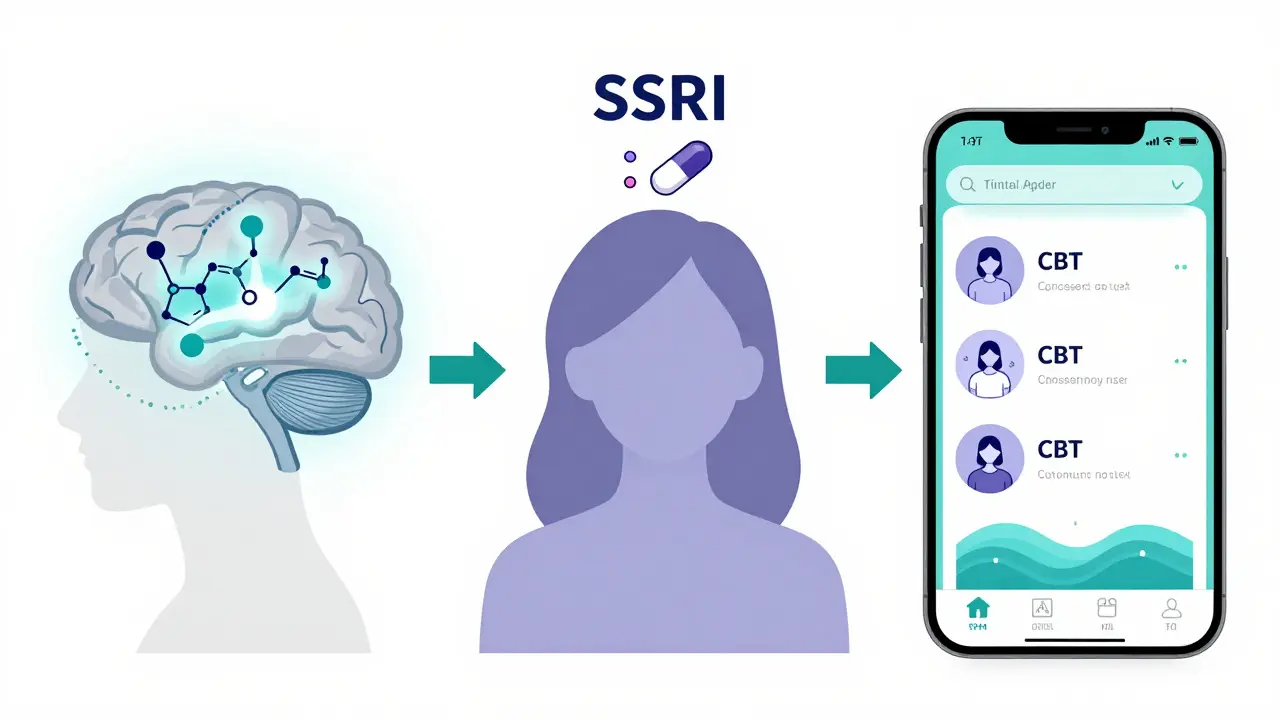
What Doesn’t Work-and Why
Many women try things that sound logical but don’t help-or make things worse. - Herbal supplements like black cohosh or soy isoflavones: These are popular, but clinical trials show inconsistent results. Some women feel better, others don’t. And because they’re not regulated, dosage and purity vary wildly. - Just waiting it out: Waiting 2-5 years for symptoms to "go away" on their own is dangerous. Unmanaged mood changes can lead to long-term depression, strained relationships, and job loss. - Only using SSRIs without checking hormones: If your mood swings are tied to estrogen drops, an SSRI alone may not be enough. You’re treating the symptom, not the cause. - Ignoring sleep: No supplement, pill, or therapy will work if you’re running on 4 hours of broken sleep every night.How to Talk to Your Doctor About Mood Changes
Many women feel dismissed when they bring up mood issues. Here’s how to get the care you need. - Track your symptoms for 90 days. Note mood, sleep, hot flashes, and menstrual patterns. - Bring the data. Say: "I’ve noticed my mood dips every time my period gets late, and I’ve had three episodes of unexplained crying in the last month." - Ask: "Could this be related to perimenopause?" - Request a hormone panel (estradiol, FSH, progesterone) if your doctor is open to it. - Ask if they’ve been trained in menopause care. If not, ask for a referral to a certified practitioner. - If they say "it’s just stress" or "you’re depressed," ask: "Could we try a low-dose estrogen patch for 3 months and see if my mood improves?" Most doctors aren’t trained to connect hormones and mood. But you can lead the conversation.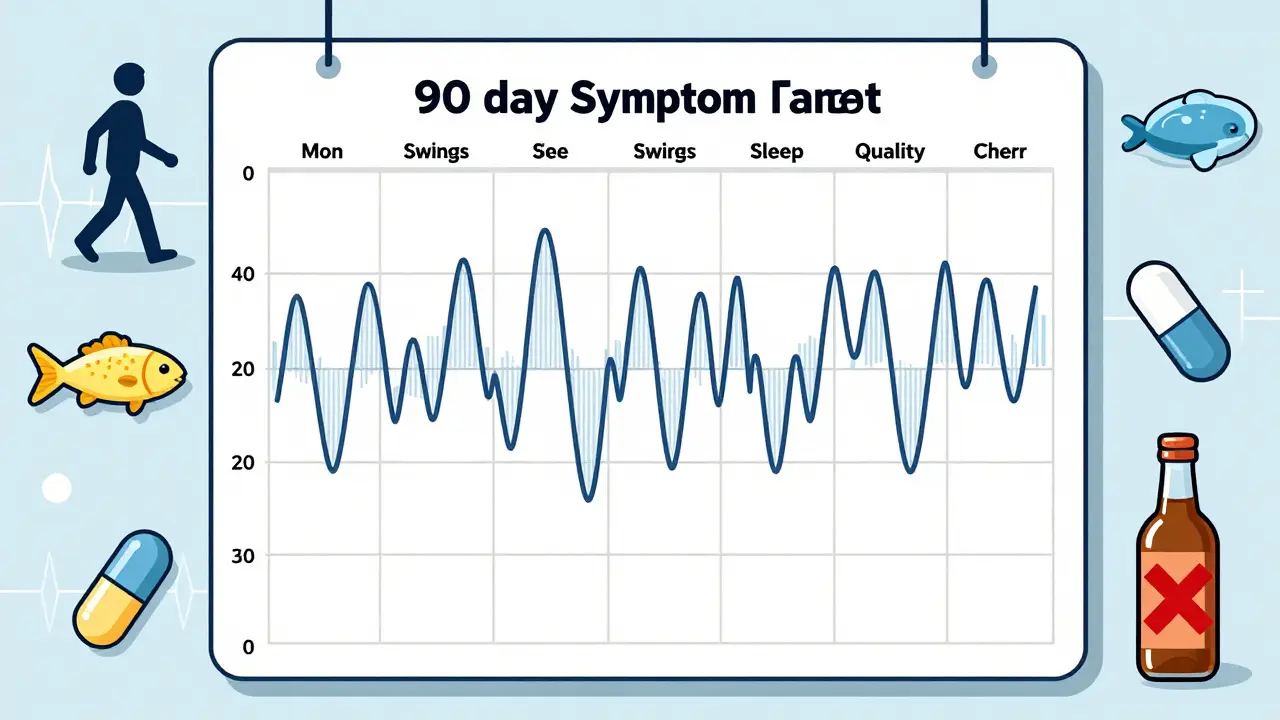
What’s Coming Next
The science is moving fast. By 2026-2028, we may have genetic tests to predict who’s at risk for severe mood swings during perimenopause. Clinical trials are already testing gut microbiome therapies-because the bacteria in your gut help metabolize estrogen. And with $47 million in NIH funding for brain imaging studies, we’re closer than ever to identifying biological markers for hormonally triggered mood disorders. Right now, the goal is simple: stop treating perimenopausal mood changes as a normal part of aging. They’re a medical condition. And they’re treatable.Quick Takeaways
- Perimenopause mood swings are real, biological, and not "just stress."
- Estrogen drops directly affect serotonin, dopamine, and GABA in the brain.
- Low-dose estrogen therapy helps 45%-55% of women with mood symptoms.
- SSRIs work for about half, but combining them with estrogen often gives better results.
- Tracking symptoms for 90 days helps you and your doctor find the right treatment.
- Don’t wait until you’re overwhelmed-early intervention prevents long-term damage.
10 Comments
Kenzie Goode
I swear, this article read like it was written for me. I was crying over spilled coffee last week and thought I was losing it. Turns out, my estrogen levels are doing the cha-cha and my brain just gave up trying to keep up. 🤯 No more guilt. Just science. And honestly? Relief.
Dominic Punch
As a guy, I didn’t get it until my wife went through this. One day she was fine, next day she was yelling at the toaster. I thought it was me. Turns out, it was her brain. I read this article and finally understood. No more "just be patient" nonsense. This is MEDICAL. If you’re a man reading this - listen. Don’t dismiss it. Support her. Or at least shut up and hand her the chocolate.
Valerie Letourneau
Thank you for this comprehensive and compassionate overview. As a Canadian woman who has navigated this transition while managing a full-time career and aging parents, I can attest to the cumulative toll. The intersection of biological change and psychosocial stress is profound. I particularly appreciate the emphasis on data tracking - it transforms anecdotal experience into actionable clinical insight. A necessary paradigm shift in women’s health care.
Khaya Street
Look, I’m not a doctor, but I’ve seen this in my sister. She tried every herbal thing under the sun - black cohosh, moon tea, yin yang capsules. Nothing. Then she got on a low-dose patch. Boom. Back to human. Why are we still treating this like a lifestyle choice? It’s neurochemistry. Fix the chemistry. Stop selling supplements like they’re magic beans.
Christina VanOsdol
OMG YES. I tracked my moods for 90 days and it was like a horror movie: rage on day 12, weeping over a cat video on day 27, zero energy on day 44. I showed it to my doc. She said, "Ohhh, that’s perimenopause." Like I was a puzzle she’d finally solved. I cried. Again. But this time because I felt seen. Also - NO. MORE. ALCOHOL. It’s the silent saboteur. 🥴💔
Brooke Exley
You’re not broken. You’re not crazy. You’re not too much. You’re a woman whose body is doing the hardest, most invisible work of her life - and society still tells her to smile through it. I’m here to say: your feelings are valid. Your hormones are real. Your pain is legitimate. And you deserve care that doesn’t make you feel like a burden. You got this. And if you need someone to yell with you? I’m here. 💪❤️
Alfred Noble
I read this and thought about my mom. She never said anything. Just got quieter. More tired. We thought she was depressed. Turns out she was in perimenopause and no one asked. I’m gonna print this out and give it to her. And maybe my doctor. Because seriously - why isn’t this taught in med school? And why do we still act like hot flashes are the only thing that matters?
Matthew Brooker
The combo of estrogen + SSRI is the real MVP. I tried SSRIs alone for 4 months. Felt like a zombie. Added the patch. Within 3 weeks, I slept. Laughed. Felt like me again. My doc said "it’s not always this clear" - but it was for me. Don’t give up. Try layered solutions. And track. Track. Track. Your brain will thank you
Emily Wolff
This is overblown. Most women don’t need hormone therapy. They need therapy - for their thoughts, not their ovaries. SSRIs are overprescribed. Lifestyle changes are free. And digital apps? Please. It’s just CBT with a fancy UI. Stop medicalizing normal aging.
Lou Suito
Actually the NIH funding is misleading - $47M sounds big but it’s less than 0.1% of total mental health research. And "MenoMood"? Phase 2 trial. 120 participants. No long-term data. Also - estrogen patches aren’t "life-changing" for 50% of women - that’s a cherry-picked stat from one 2021 study. And who tracks symptoms for 90 days? I have a job. Kids. A dog that eats socks. This reads like a pharmaceutical ad disguised as science.