Bedding Hygiene: Clean Sheets, Better Sleep, and Health Risks You Can't Ignore
When you think about bedding hygiene, the daily practices that keep your sheets, pillows, and blankets free from harmful buildup. Also known as sleep environment cleanliness, it's not about luxury—it's about stopping invisible threats that attack your skin, lungs, and immune system every night. Most people change their sheets once a week and call it good. But if you're waking up itchy, congested, or tired, your bedding might be the real culprit.
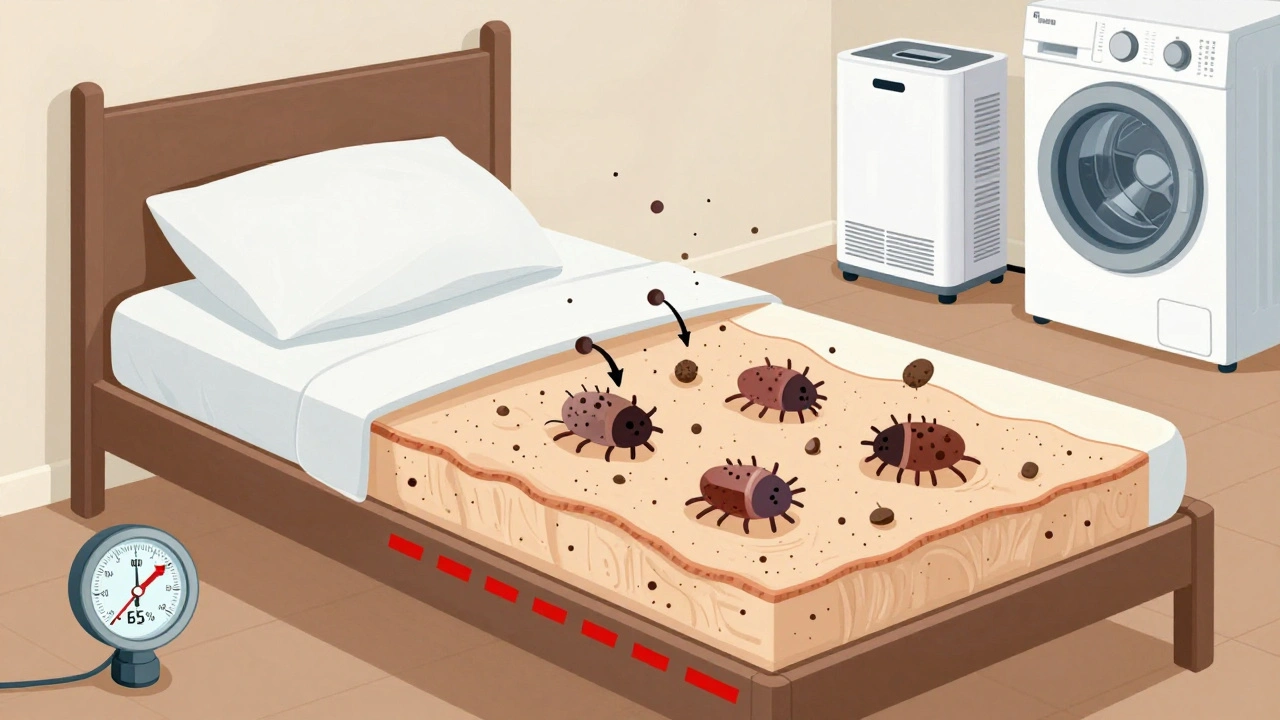
Dust mites, microscopic bugs that feed on dead skin cells and thrive in warm, humid bedding are everywhere. They don’t bite, but their droppings trigger allergies, asthma, and eczema flare-ups. A single used pillow can hold up to 10% of its weight in dead mites and feces. And fungi and bacteria, including staph and E. coli, that grow in sweat, oils, and moisture trapped in fabric? They multiply fast—especially if you sleep in the same clothes you wore all day or never wash your pillowcases.
Bedding hygiene isn’t just about washing sheets. It’s about temperature, material, and routine. Cotton and linen breathe better than synthetic blends. Hot water (at least 130°F) kills mites and removes allergens. Drying on high heat finishes the job. But if you skip drying or use fabric softener, you’re trapping moisture—and feeding the problem. Even your mattress needs attention: vacuum it monthly, use a hypoallergenic cover, and replace it every 7–10 years. People who wash their bedding weekly but still feel awful? They’re probably not washing their pillowcases daily—or using the wrong detergent.
This isn’t about being obsessive. It’s about recognizing that your bed is a breeding ground for things that make you sick. Studies show people with poor bedding hygiene report more nighttime coughing, skin rashes, and disrupted sleep. And if you have kids, pets, or allergies, the stakes are even higher. You don’t need fancy gadgets. Just consistency: wash sheets weekly, pillowcases every 2–3 days, and dry everything on high heat. Change your bedding after being sick. Don’t let your bed become a petri dish.
What you’ll find below are real, practical guides on how to clean your bedding right, how allergens sneak in, and what happens when you ignore it. From how often to replace your pillow to the one laundry mistake 90% of people make—these posts cut through the noise. No fluff. Just what works.