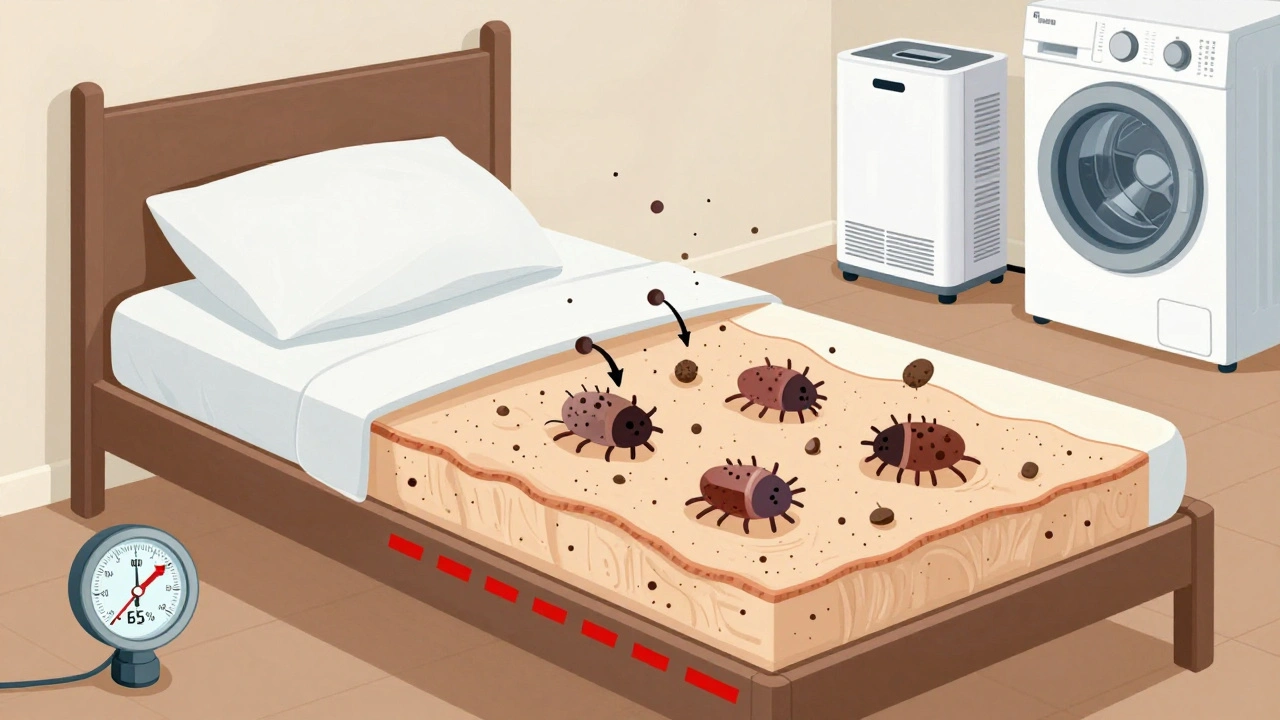
Dust Mite Control: How to Reduce Allergens in Your Home
When you think of allergens, you might picture pollen or pet dander—but dust mite control, the practice of reducing microscopic mites that live in household dust and trigger allergies is often the real culprit behind sneezing, itchy eyes, and asthma flare-ups. These tiny bugs don’t bite or spread disease, but they thrive in warm, humid places like your mattress, pillows, and carpets. Their waste is what most people react to, not the mites themselves. And if you’ve tried antihistamines without real relief, it might not be the medicine—it’s the environment.
Bedding hygiene, a key part of dust mite control, involves washing sheets weekly in hot water (at least 130°F) to kill mites and remove their droppings. Many people skip this, thinking a quick spin in the dryer is enough—but it’s not. Dryers alone don’t kill mites unless the heat is high and sustained. Also, consider using allergen-proof covers on mattresses and pillows. They’re not fancy or expensive, and they physically block mites from getting in or out. Another big factor is home allergen reduction, which means cutting down on clutter, replacing heavy curtains with washable blinds, and choosing hard floors over wall-to-wall carpeting. Carpet traps mites like a sponge traps water. Even if you vacuum often, most vacuums just kick the dust back into the air unless they have a true HEPA filter.
Humidity is another silent player. Dust mites need moisture to survive. If your home stays above 50% humidity, you’re basically running a five-star resort for them. A simple dehumidifier in the bedroom or basement can cut their population by half in weeks. Air conditioning helps too—especially in summer. Don’t forget to clean HVAC filters monthly. And while it sounds extreme, freezing stuffed animals or small items for 24 hours kills mites, which is why it’s recommended for kids’ toys. You don’t need to throw everything out. Just be smart about what stays in your breathing space.
There’s no magic spray or gadget that wipes out dust mites overnight. But if you combine a few proven steps—washing bedding, lowering humidity, sealing mattresses, and reducing fabric clutter—you’ll see a real difference in how you feel when you wake up. No more morning congestion. Fewer coughing fits at night. Less reliance on meds that just mask symptoms. The posts below cover everything from how to choose the right mattress cover to what cleaning products actually work (and which ones are just marketing). You’ll find real-world tips from people who’ve fought this battle and won—not just theory, but what works in a real house, with real kids, real pets, and real allergies.