FDA Drug Label: What It Is, Why It Matters, and How to Use It
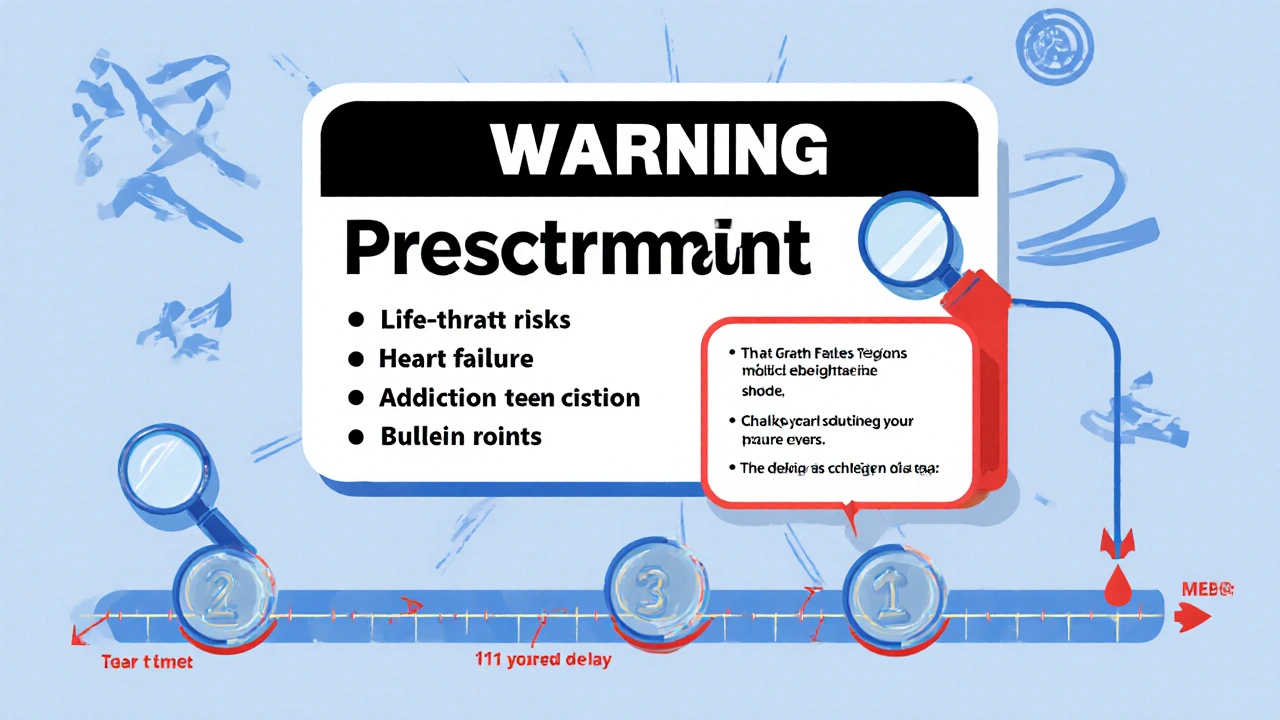
When you pick up a prescription, the FDA drug label, the official document approved by the U.S. Food and Drug Administration that details how a medication should be used, its risks, and its benefits. Also known as the prescribing information, it’s not just paperwork—it’s your safety guide. This label isn’t written by marketers or pharmacists. It’s created by the drug maker under strict FDA rules, then reviewed and approved by scientists who check every claim, warning, and dosage recommendation. If a drug’s label says it can cause liver damage when mixed with alcohol, that’s not a guess—it’s based on real clinical data. And if it says to avoid grapefruit, that’s because studies showed grapefruit juice can spike blood levels of the drug to dangerous levels.
The FDA drug label, the official document approved by the U.S. Food and Drug Administration that details how a medication should be used, its risks, and its benefits. Also known as prescribing information, it’s not just paperwork—it’s your safety guide. isn’t just for doctors. Patients who read it can spot red flags: drug interactions listed under "Warnings," side effects buried in "Adverse Reactions," or contraindications like "Do not use if you have kidney disease." For example, if you’re on apixaban and your doctor suggests a procedure, the label will tell you exactly when to stop the drug to avoid bleeding. Same with warfarin—its label warns about foods high in vitamin K, something your pharmacist might forget to mention. The label also includes details on how the drug works in the body (pharmacokinetics), which helps explain why some meds need to be taken with food and others on an empty stomach.
Related entities like bioequivalence studies, clinical tests that prove generic drugs perform the same as brand-name versions in the body and drug interactions, harmful or reduced effects when two or more medications are taken together are directly tied to the label’s accuracy. A generic version of Lamictal must match the brand in absorption rate—this is proven through bioequivalence studies, and the results are summarized in the label. If a label says a drug interacts with nitrates, that’s because someone tested it and found it caused life-threatening drops in blood pressure. The FDA doesn’t approve drugs without this evidence.
You’ll find these labels referenced in posts about chemotherapy safety, blood thinner emergencies, and even weight loss drugs like semaglutide. Why? Because every time someone asks, "Is this safe with my other meds?" or "Why can’t I drink alcohol on this?"—the answer starts with the FDA drug label. It’s the one document that ties together every warning, dosage, and interaction you need to know. And yet, most people never look at it. Reading it doesn’t require a medical degree—just a few minutes and the right questions. What’s the black box warning? What drugs should I avoid? What side effects are serious enough to call my doctor? These are the questions the label answers. The posts below dive into real cases where ignoring the label led to danger—and how reading it could have prevented it.