Liver Disease Food Plan: What to Eat and Avoid for Better Liver Health
When your liver, a vital organ that filters toxins, processes nutrients, and produces bile. Also known as the body's chemical factory, it gets damaged by disease, your liver disease food plan, a targeted eating strategy designed to reduce stress on the liver and support healing becomes just as important as any medication. Whether you’re dealing with fatty liver, cirrhosis, hepatitis, or early-stage liver damage, what you eat directly affects how well your liver can repair itself—or how fast it declines.
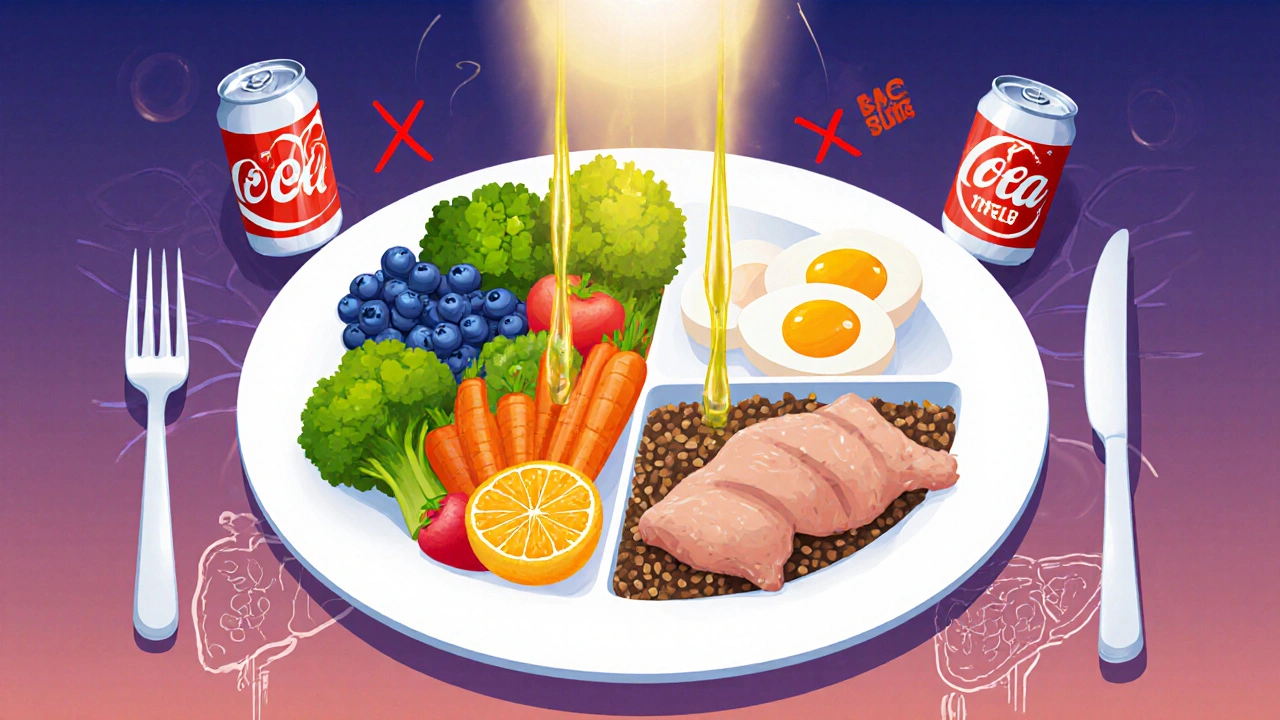
A good liver disease food plan isn’t about starvation or extreme restrictions. It’s about smart swaps. Cut back on sugar, especially high-fructose corn syrup found in sodas and packaged snacks—this is a major driver of fat buildup in the liver. Skip fried foods and processed meats; they add inflammation and make your liver work harder. Instead, focus on vegetables like broccoli, spinach, and Brussels sprouts—they’re packed with antioxidants that help protect liver cells. Lean proteins like chicken, fish, tofu, and legumes give your body the building blocks it needs without overloading your liver. Whole grains like oats and brown rice are better than white bread or rice because they digest slower and don’t spike blood sugar. And don’t forget water. Staying hydrated helps your liver flush out toxins more efficiently.
Some people with liver disease also need to watch their sodium intake. Too much salt leads to fluid retention, which can cause swelling in the belly and legs—a common problem in advanced liver disease. Avoid canned soups, pickles, and frozen meals loaded with salt. Choose fresh or frozen veggies without added sauces. If you’re dealing with cirrhosis, your doctor might also recommend limiting protein if your liver can’t process it well—but that’s not true for everyone. That’s why a personalized plan matters. You’ll also want to avoid alcohol completely. No exceptions. Even small amounts can keep damaging your liver, no matter how early the disease is.
Supplements? Be careful. Many herbal products—like kava, green tea extract, or certain weight-loss pills—can harm your liver. Just because something is "natural" doesn’t mean it’s safe. Always check with your doctor before taking anything new. And if you’re on medication for liver disease, some foods can interfere. For example, grapefruit can change how your body processes certain drugs, making them too strong or too weak. That’s why knowing your food-drug interactions is part of the plan too.
What you’ll find in the posts below are real, practical guides that connect diet to liver health. You’ll see how people with fatty liver reversed damage through food changes, what foods to avoid if you’re on diuretics like furosemide, and how chelation therapy for Wilson’s disease ties into what you eat. There’s also advice on managing fluid retention, dealing with appetite loss, and choosing supplements that won’t hurt more than help. This isn’t theory—it’s what people are using every day to take back control of their liver health.