Liver-Healthy Diet: What to Eat and Avoid for Better Liver Function
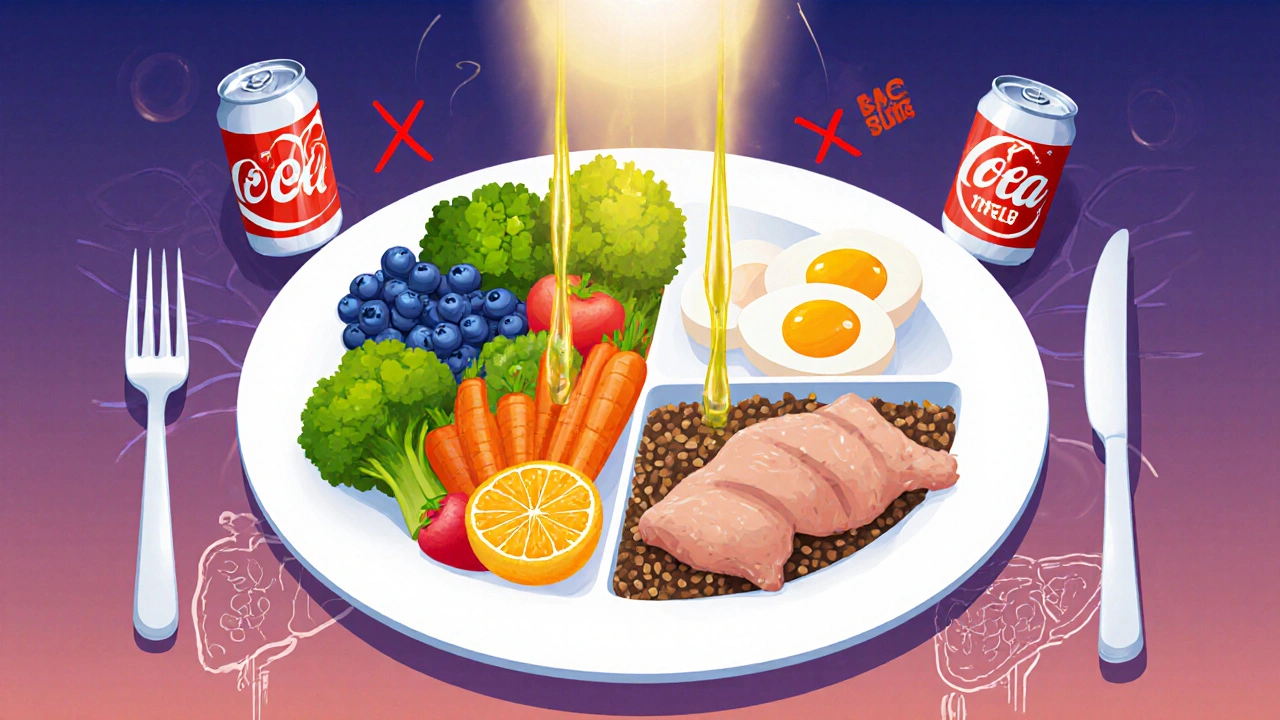
When you think about your liver-healthy diet, a pattern of eating that supports liver function by reducing fat, toxins, and inflammation. Also known as a liver support diet, it’s not about quick cleanses or extreme restrictions—it’s about daily choices that help your liver do its job without extra stress. Your liver processes everything you eat, drink, and even breathe. If it’s overloaded with sugar, alcohol, or processed fats, it starts storing fat instead of filtering toxins. That’s how fatty liver develops—even in people who aren’t overweight.
A fatty liver, a condition where excess fat builds up in liver cells, often without symptoms until damage is advanced is one of the most common liver problems today, and diet plays the biggest role. You don’t need special supplements or expensive superfoods. Simple swaps work better: swap soda for water, white bread for whole grains, fried chicken for grilled fish. Foods rich in fiber—like oats, beans, and leafy greens—help flush out toxins. Omega-3s from salmon, walnuts, and flaxseeds reduce liver inflammation. Coffee? Studies show two cups a day may lower liver enzyme levels and protect against scarring.
On the flip side, some things are clear red flags. Added sugars—especially high-fructose corn syrup in sodas and packaged snacks—are a major driver of liver fat. Alcohol, even in moderate amounts, can cause damage over time. Processed meats, fried foods, and refined carbs spike insulin and push fat into the liver. And while people talk about "liver detox" teas and powders, your liver doesn’t need help detoxing—it’s built for that. What it needs is less junk and more real food.
People with diabetes, high cholesterol, or obesity often have fatty liver without knowing it. That’s why a liver-healthy diet isn’t just for people with diagnosed conditions—it’s for anyone who eats modern food. Small, consistent changes matter more than drastic ones. Start by cutting out one sugary drink a day. Add a serving of vegetables to lunch. Choose nuts over chips. These aren’t just "good habits"—they’re direct actions that reduce liver fat and improve how your body handles energy.
And it’s not just about what you eat. A liver-healthy diet works best when paired with regular movement. You don’t need to run marathons. Walking 30 minutes a day helps your liver burn fat more efficiently. Sleep matters too—poor sleep messes with hunger hormones and increases cravings for the very foods that harm your liver.
Below, you’ll find real, practical posts that break down exactly what works: which foods lower liver enzymes, how to read labels to avoid hidden sugars, why some "healthy" snacks are actually bad for your liver, and what science says about popular trends like intermittent fasting and keto for liver health. No fluff. No marketing. Just clear, tested advice from people who’ve studied how food affects the liver.