NAFLD Diet: What to Eat and Avoid for Fatty Liver Health
When you hear NAFLD, non-alcoholic fatty liver disease, a condition where fat builds up in the liver without alcohol use. It's not just about being overweight—it's about how your body handles sugar, fat, and insulin. This isn’t a disease you can treat with a pill. The real fix? Your plate. The NAFLD diet, a food plan designed to reduce liver fat and improve insulin sensitivity isn’t about starving or cutting out entire food groups. It’s about swapping out the worst offenders and focusing on what actually heals your liver.
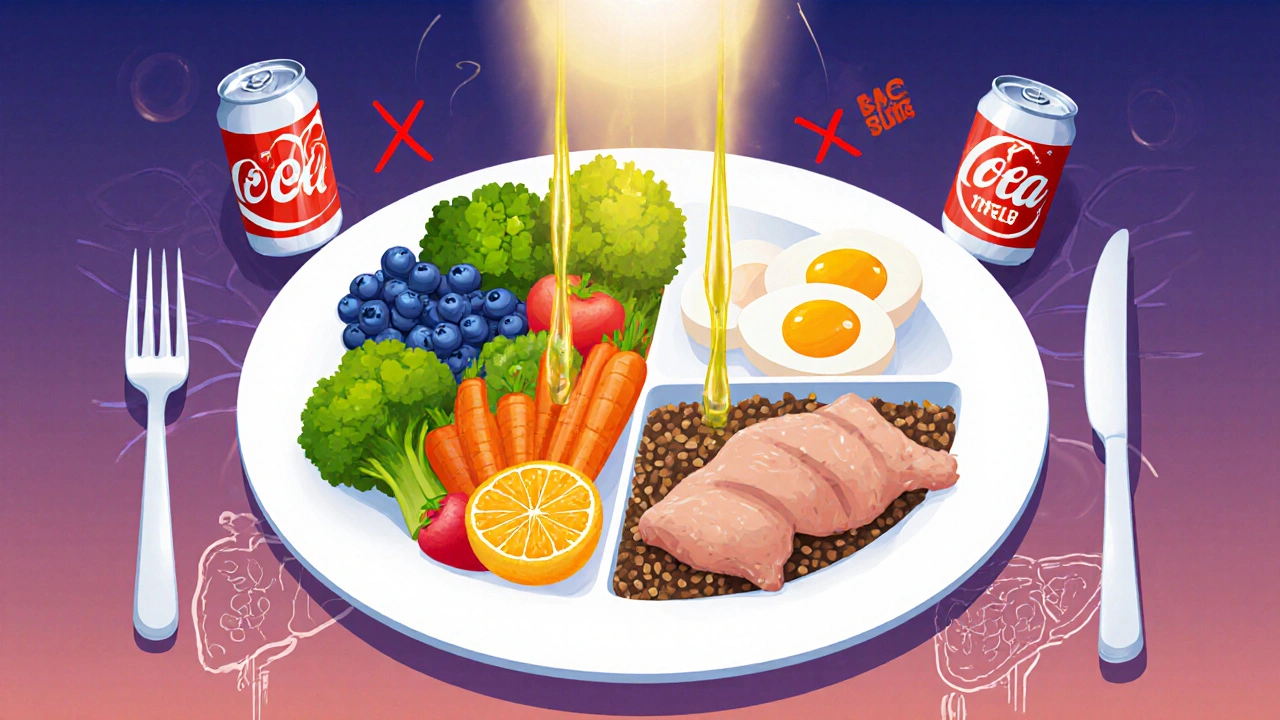
At the heart of NAFLD is insulin resistance, when your body stops responding well to insulin, causing blood sugar to spike and fat to pile up in the liver. That’s why foods that spike blood sugar—white bread, soda, candy, even fruit juice—are the biggest problem. Studies show that cutting added sugar, especially fructose from high-fructose corn syrup, can shrink liver fat in weeks. You don’t need to go keto. You just need to stop drinking your calories and eat more whole foods. Protein from eggs, chicken, fish, and legumes helps. Healthy fats from avocados, nuts, and olive oil protect your liver. Fiber from vegetables, beans, and whole grains slows sugar absorption and keeps your gut healthy, which directly affects liver function.
There’s no magic supplement or miracle drink. The science is clear: people who follow a simple, consistent diet see real improvements. One 2023 study found that people who replaced sugary drinks with water and ate at least five servings of vegetables daily cut their liver fat by over 30% in six months. That’s not a miracle—it’s basic nutrition. And it works even if you don’t lose much weight. Your liver doesn’t care about the number on the scale. It cares about what you put in your mouth.
What you avoid matters just as much as what you eat. Processed snacks, fried foods, and refined carbs feed the fire. Alcohol? Even small amounts can make NAFLD worse. And while you might think a low-fat diet helps, it often means more sugar—and that’s worse. The best approach? Real food. Simple meals. Less processing. Consistency over perfection.
Below, you’ll find real, practical advice from posts that dig into how diet changes affect liver health, what foods to prioritize, and how to make this sustainable without feeling deprived. No fluff. No fads. Just what works.