Oncology Medications: What You Need to Know About Cancer Treatments
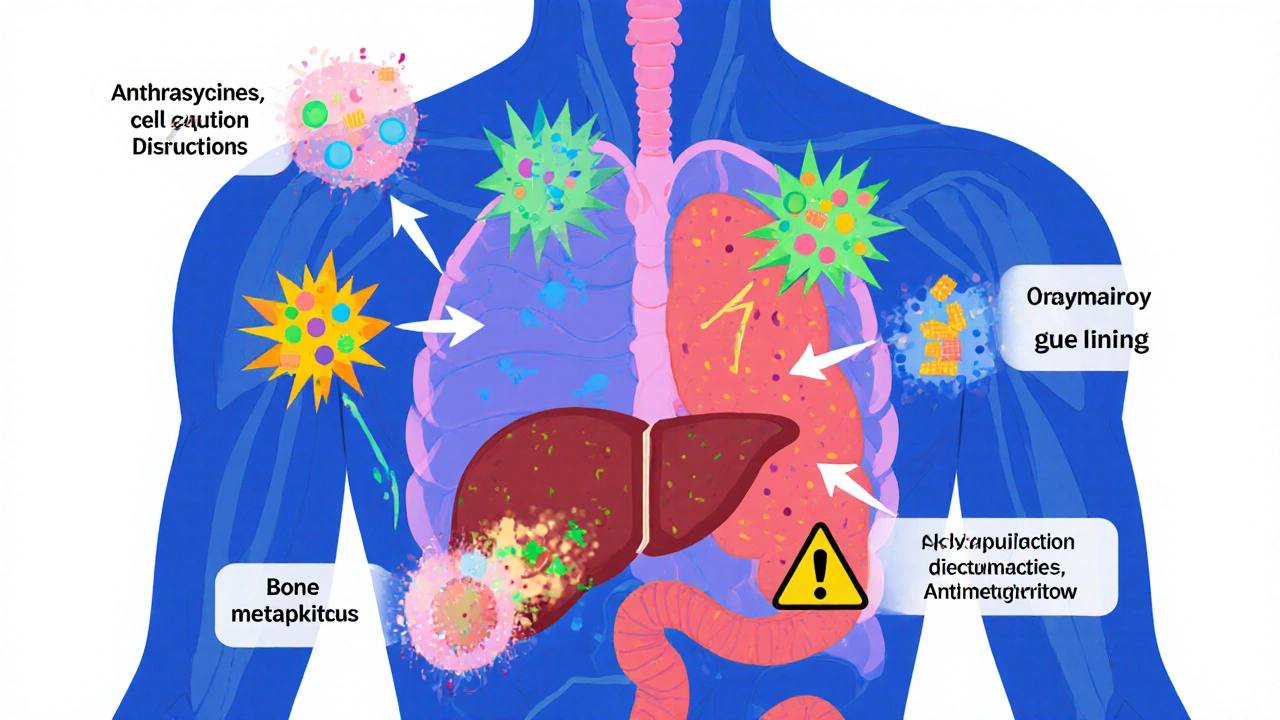
When you hear oncology medications, drugs designed to treat cancer by targeting abnormal cells. Also known as chemotherapy drugs, they’re one of the most powerful tools doctors have against cancer—but they don’t work the same for everyone. These medications can be given as pills, injections, or IV drips, and they attack fast-growing cells, whether they’re cancerous or not. That’s why side effects like hair loss, fatigue, and nausea happen: healthy cells in your gut, skin, and bone marrow get caught in the crossfire.
Not all oncology medications are the same. Some are chemotherapy, traditional drugs that kill rapidly dividing cells, while others are targeted therapies or immunotherapies that go after specific cancer markers. For example, drugs like chemotherapy drug interactions, how cancer meds react with other substances in the body can turn dangerous if you take grapefruit juice, certain supplements, or even common painkillers. One wrong combo can lower your treatment’s effectiveness or raise your risk of organ damage. That’s why patients on oral chemo are often told to keep a full list of everything they’re taking—down to the herbal tea.
What most people don’t realize is that oncology medications aren’t just about killing cancer. They’re also about managing symptoms, slowing spread, and helping you live longer with fewer complications. That’s why safety matters just as much as effectiveness. Things like cancer medication safety, the practices and precautions that reduce risks during treatment include monitoring blood counts, avoiding live vaccines, and knowing when to call your doctor about fever or unusual bleeding. A simple mistake—like skipping a dose or taking a supplement without asking—can throw off your whole treatment plan.
You’ll find posts here that break down real-world issues: how chemo interacts with supplements, why some drugs need special handling, and what to do when side effects get worse. We cover what the FDA says about label changes, how to spot dangerous drug combos, and why some patients need to avoid certain foods. This isn’t theory—it’s what people actually deal with while fighting cancer. Whether you’re a patient, caregiver, or just trying to understand the science behind treatment, these articles give you the facts without the jargon.