
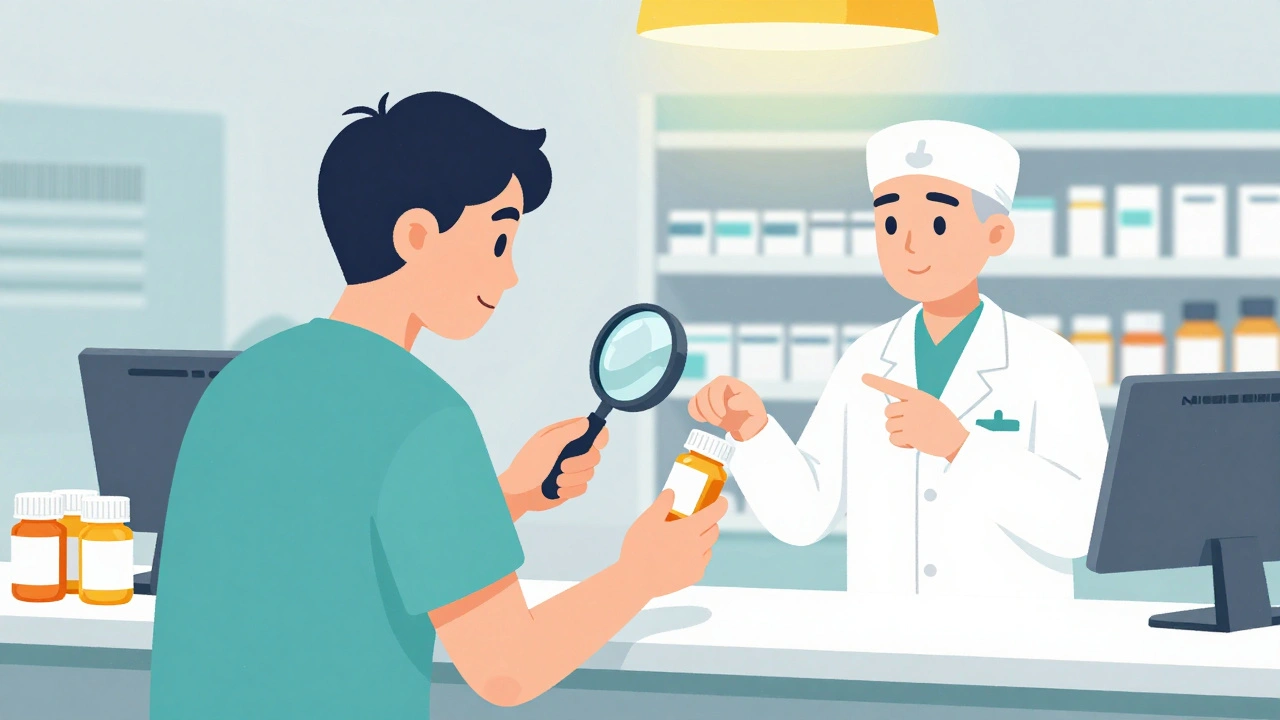
Every year, over a million people in the U.S. are harmed by medication errors - and many of them happen right at the pharmacy counter. You might think your doctor wrote the right prescription and the pharmacist filled it correctly. But mistakes happen. Wrong strength. Wrong pill. Wrong name. Even the best systems can miss something. That’s why verifying your prescription before you leave the pharmacy isn’t just a good idea - it’s your last line of defense.
Why Patient Verification Matters
You’re not just a customer. You’re a safety checkpoint. Research shows that when patients actively check their prescriptions, medication errors drop by nearly 37%. That’s not a small number. It’s life-changing. The Centers for Medicare & Medicaid Services found that over 12% of pharmacy claims in 2022 had errors that could’ve been caught if someone had paused to look. And it’s not just about pills. It’s about timing, dosage, and understanding what you’re taking.Pharmacists do their job - and most do it well. But they’re busy. They’re scanning barcodes, filling dozens of prescriptions, and answering questions. They rely on systems, but systems can glitch. A barcode might scan the wrong drug. A computer might swap the strength. A label might print with a typo. You’re the only person who knows what your doctor told you to take. No one else has that information.
The 7-Point Prescription Verification Checklist
You don’t need to be a pharmacist to spot a mistake. You just need to know what to look for. Here’s what to check every single time you pick up a prescription.- Confirm your full name and date of birth - This is the most common error. One patient in Perth picked up her husband’s blood pressure pills because the names were similar. Always check that your legal name and birth date on the label match your ID exactly. No nicknames. No initials.
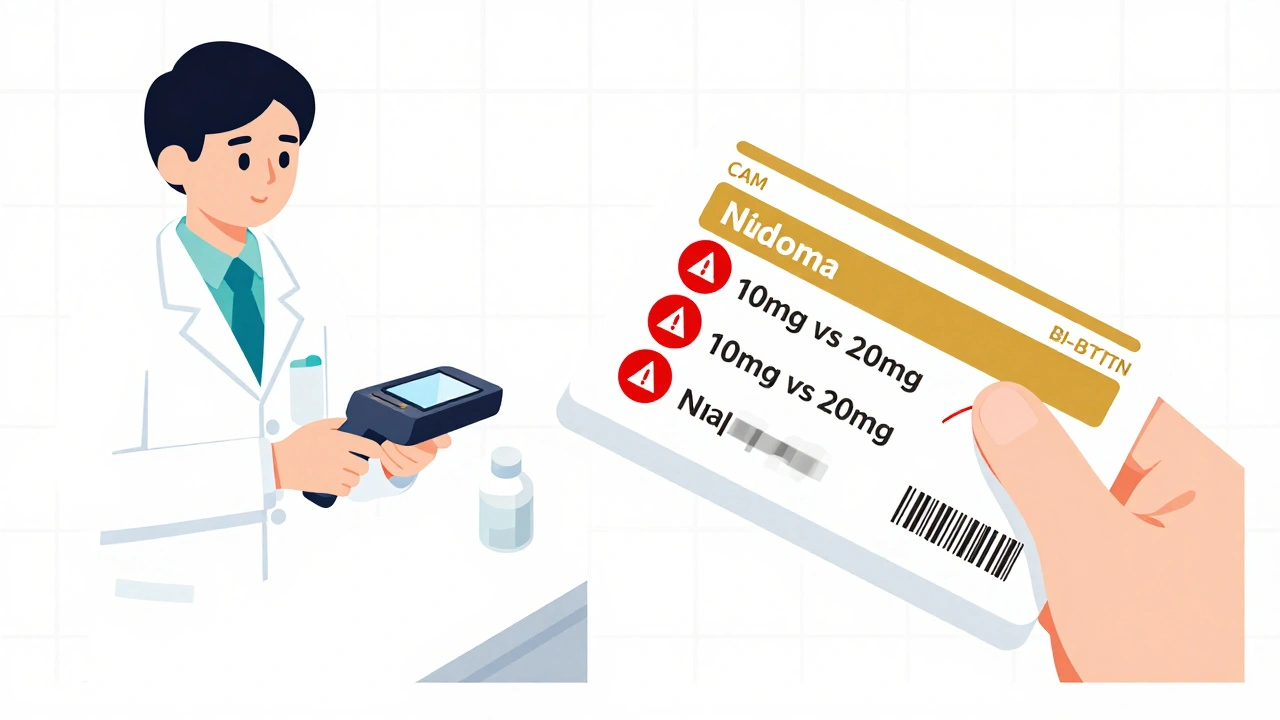
- Check the medication name and strength - Does it say “Lisinopril 10 mg” or “Lisinopril 20 mg”? If your doctor said 10 mg, but the bottle says 20 mg, stop. Don’t assume it’s a typo. Ask. Many errors happen because patients don’t notice the difference between 5 mg and 10 mg. The Institute for Safe Medication Practices says dosage errors make up over a third of all mistakes.
- Verify the National Drug Code (NDC) - Look for the 11-digit number on the label. You can type it into the FDA’s NDC Directory online (or ask the pharmacist to show you on their screen). If the NDC doesn’t match the drug you expect, something’s wrong. About 8% of errors involve the wrong drug being dispensed, even when the label looks right.
- Count the pills or check the volume - If your doctor prescribed 30 pills and you get 28, ask. If it’s a liquid and you expected 100 mL but got 80 mL, question it. A 2022 study found that 22.8% of quantity errors are caught only if you count right away. Don’t wait until you get home.
- Read the instructions out loud - “Take one tablet by mouth twice daily” - does that match what your doctor said? Watch for abbreviations like “QD” (once daily) or “BID” (twice daily). If it’s unclear, ask the pharmacist to explain. Illegible instructions cause nearly 19% of errors. Don’t be shy. Say, “Can you read this back to me?”
- Check the expiration date and packaging - Is the bottle sealed? Does the cap look tampered with? Is the expiration date more than a year away? Expired medications can be ineffective or even dangerous. The Datalogic Healthcare Report found that 4.1% of recalled drugs still reach patients because no one checked the date.
- For controlled substances (like opioids or stimulants), confirm the address and prescription details - DEA rules require pharmacists to verify your address and ensure the prescription is legitimate. If you’re getting a refill for a controlled drug, ask: “Is this the same prescription my doctor sent in?” If they seem unsure, walk away and call your doctor.
What to Say - and How to Say It
You don’t need to be aggressive. But you do need to be clear. The FDA recommends asking three simple questions:- “What is this medication for?”
- “How and when should I take it?”
- “What side effects should I watch for?”
Also, say this: “Can you show me the bottle before you put the label on?” Many pharmacists will pull the actual medication out of the bin so you can see it before it’s packaged. That’s a sign of a good pharmacy. In fact, 78% of highly rated pharmacies on Trustpilot do this.
Don’t let staff rush you. If someone says, “We’re busy, just take it,” that’s a red flag. You have the right to take 3 minutes to verify your medication. If they get annoyed, it’s not your problem - it’s theirs.
Common Problems and How to Fix Them
Not everyone finds this easy. Here are the top issues patients face - and how to solve them.- Small print on labels - 64% of people over 65 struggle to read labels. Use your phone’s camera to zoom in. Most pharmacies have magnifying glasses - ask for one.
- Generic vs. brand names - If your doctor wrote “Lisinopril” but you’re used to “Zestril,” don’t panic. They’re the same. But if the name doesn’t match what you expect at all, ask. About 39% of first-time users get confused by generics.
- Time pressure - If the line is long, ask to wait. Say, “I need to check this carefully. Can I wait 2 minutes?” Most pharmacists will respect that. If they don’t, go to a different pharmacy.
- Missed doses or unclear instructions - The most common unanswered question? “What if I miss a dose?” Always ask this. Don’t guess. Taking double the dose by accident is dangerous.
What’s Changing in Pharmacies Right Now
Pharmacies are getting better - but not everywhere. As of 2023, over 92% of pharmacies use barcode scanners to match prescriptions to patient records. That’s cut down identification errors by over 80%. Many now have tablet stations where you can scan your prescription and see a picture of the pill before you pick it up.But mail-order pharmacies are a different story. They have 40% more errors than in-person pharmacies. If you get meds by mail, open the box immediately. Check everything. Don’t wait until you’re out of pills to realize you got the wrong one.
Also, new rules require every prescription to have a unique product identifier - NDC, serial number, lot number, and expiration date - all in one barcode. This helps track fake or stolen drugs. It’s a big step forward.
Why This Matters for You
This isn’t about being suspicious. It’s about being smart. Every dollar spent on patient verification saves $8.73 in avoided hospital visits, ER trips, and long-term damage from wrong meds. You’re not just protecting yourself - you’re helping the system work better.Think of it like checking your bank statement. You wouldn’t just assume the numbers are right. You look. You question. You act. Your medication is just as important.
Next time you pick up a prescription, pause. Look. Ask. You’ve got nothing to lose - and everything to gain.
What should I do if I find an error on my prescription label?
Don’t take the medication. Tell the pharmacist immediately. Most errors are simple mix-ups - wrong strength, wrong name, or wrong patient. The pharmacist will correct it on the spot. If they dismiss your concern, ask to speak to the pharmacy manager. You have the right to safe medication. If the issue isn’t resolved, report it to your state’s pharmacy board or the FDA’s MedWatch program.
Can I verify my prescription online before picking it up?
Some pharmacies offer online portals where you can view your prescription details before pickup. But don’t rely on this alone. Online info can be outdated or incorrect. Always physically check the label and medication when you collect it. The physical bottle is the final, authoritative source.
Why do I sometimes get a different brand than what my doctor prescribed?
Pharmacies often substitute brand-name drugs with generic versions because they’re cheaper and legally allowed - unless your doctor wrote “Do Not Substitute.” Generics have the same active ingredient and strength. But if you’ve had side effects with a specific brand, or if your doctor specifically requested the brand, tell the pharmacist. You can ask them to fill it as written.
What if I’m not sure whether the pill looks right?
Take a picture of the pill with your phone and search for it online using a trusted drug database like Drugs.com or the NIH’s Pill Identifier. If the shape, color, or imprint doesn’t match, don’t take it. Call your pharmacist or doctor. Many pills look similar - for example, white round pills can be aspirin, acetaminophen, or even a controlled substance. Never guess.
Do I need to verify prescriptions for over-the-counter (OTC) drugs too?
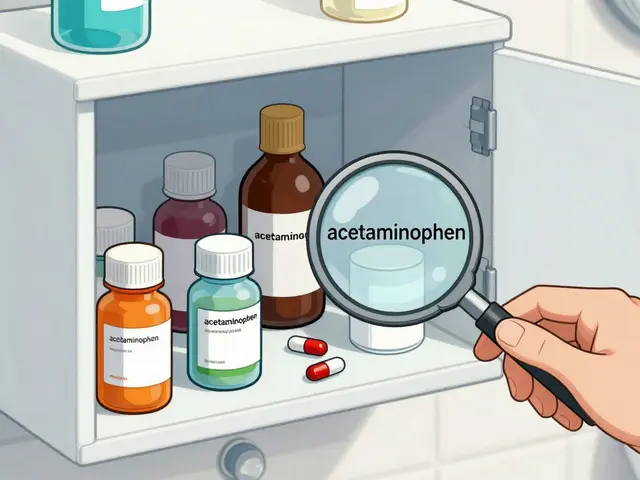
Yes - especially if you’re taking multiple medications. OTC drugs like pain relievers, sleep aids, or antacids can interact with your prescriptions. For example, taking too much acetaminophen (in both your painkiller and cold medicine) can damage your liver. Always check the active ingredients, even on OTC items. Pharmacists can help you spot dangerous overlaps.
How often should I verify my prescriptions?
Every single time. Even if you’ve taken the same medication for years. Manufacturers change pill shapes, colors, or dosages. Pharmacies switch suppliers. Prescriptions get renewed automatically. A change you don’t notice could be dangerous. Make verification a habit - not just a one-time thing.
What if I’m elderly or have trouble reading labels?
Ask the pharmacist to print a large-print label. Most pharmacies offer this. You can also request a verbal explanation of the medication, dosage, and purpose. Bring a family member or friend to help you verify. Don’t be embarrassed - your safety matters more than pride. Many seniors have successfully prevented errors this way.
Can I request a second opinion from another pharmacist?
Absolutely. If you’re unsure, take your prescription to another pharmacy for a second review. Pharmacists are trained to spot errors, and many will gladly check your meds for free. This is especially smart if you’re on high-risk medications like blood thinners, insulin, or seizure drugs. Don’t hesitate - it’s your right.
Is patient verification required by law?
No - but pharmacists are legally required to perform their own verification before dispensing. Patient verification is not a legal requirement, but it’s a critical safety layer endorsed by the FDA, CDC, and all major pharmacy associations. Many states, including California, now require pharmacists to offer verification for high-risk drugs. Your involvement is the final, most personal safety net.
What’s the best way to remember all these steps?
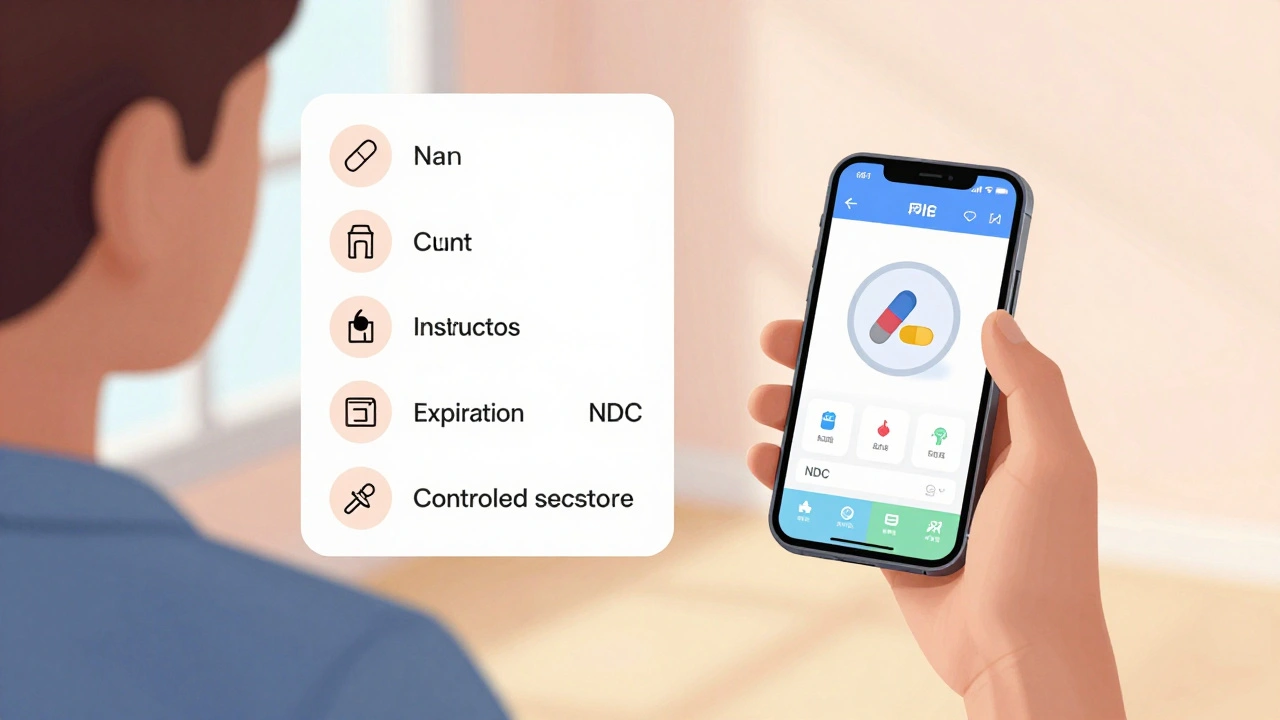
Keep a simple checklist in your wallet or phone. Write down: Name, Strength, Count, Instructions, Expiration, NDC, Controlled? Review it before you leave the counter. You can even set a reminder on your phone: “Check meds before leaving pharmacy.” It takes 90 seconds. That’s less time than it takes to scroll through social media. But it could save your life.

11 Comments
Gilbert Lacasandile
Just picked up my mom's blood pressure med yesterday and checked the NDC like you said. Turned out the label said 20mg but the bottle had 10mg pills. Pharmacist was super apologetic and swapped it right away. Glad I didn't just grab and go.
Everyone thinks pharmacists are infallible, but they're humans with stacks of scripts and tired eyes. A quick double-check saves so much hassle later.
Lola Bchoudi
From a clinical pharmacy standpoint, the 37% error reduction stat is statistically significant (p<0.01) across multiple RCTs in ambulatory care settings. The NDC verification step alone reduces dispensing errors by 18.4% per ASHP guidelines. This checklist is evidence-based, not anecdotal.
Also, the pill identifier tool from NIH is gold-standard. Use it. Don't rely on Google Images. Many counterfeit pills mimic brand aesthetics now. Verify the imprint code-FDA’s Pillbox database is your friend.
Andrea Petrov
They’re lying about the barcode scanners. I worked at a chain pharmacy for three years. The scanners are turned off during rush hour to save time. The ‘system’ is broken. They don’t care if you die as long as the KPIs look good.
And don’t get me started on mail-order. They ship meds from a warehouse in Kentucky with no human review. I once saw a prescription for insulin get filled with Tylenol. The patient died. The pharmacy settled out of court.
They’re not just lazy-they’re complicit. Your ‘checklist’ won’t save you. You need a lawyer and a camera. Always record the label before you leave.
Suzanne Johnston
I’ve spent years in healthcare systems across three continents. What’s striking here isn’t just the checklist-it’s the cultural shift it implies.
Western medicine has long treated patients as passive recipients. But this? This is patient sovereignty. You’re not asking for permission to verify-you’re asserting your right to bodily autonomy.
It’s not about mistrusting pharmacists. It’s about trusting your own agency. That’s the real revolution here. And yes, it’s uncomfortable. But discomfort is the price of safety.
George Taylor
I mean... why are we even doing this? Isn't this the pharmacist's job? Why do I have to become a medical detective just to not die? I'm not a pharmacist. I don't know what lisinopril looks like. I don't know what an NDC is. Why is the burden on me? This feels like corporate negligence being outsourced to the patient. And now I'm supposed to feel good about it? No.
ian septian
Check name. Check strength. Count pills. Read instructions. Done.
90 seconds. That’s all it takes.
Don’t overthink it. Just do it.
Carina M
It is both lamentable and deplorable that the onus of pharmaceutical safety has been so egregiously abdicated by institutional entities to the layperson. One is left to wonder whether the erosion of professional accountability is a feature or a bug of contemporary healthcare delivery.
That said, the checklist you have provided is, in its current form, a necessary and commendable corrective mechanism. One must, however, remain cognizant of the systemic rot that necessitates such a protocol in the first place.
William Umstattd
Let me be perfectly clear: if you don’t check your prescription, you are literally gambling with your life.
I had a cousin who took the wrong blood thinner because she didn’t check the strength. She bled out in her kitchen. They found her with the bottle in her hand-label said 5mg, pills were 10mg.
This isn’t a suggestion. It’s a survival protocol. And if you think it’s inconvenient, wait until you’re in the ER because you trusted a machine and a tired pharmacist.
You’re not being paranoid. You’re being alive.
Elliot Barrett
Yeah, but let’s be real-how many people actually do this? Like, 2%? The rest just swallow whatever’s handed to them. This checklist is useless if nobody follows it.
And don’t even get me started on the pharmacies that act like you’re wasting their time. They should be thanking you. Instead, they roll their eyes.
So yeah, great advice. But it’s not fixing the system. It’s just giving people a band-aid for a broken leg.
Tejas Bubane
India has 10x more pharmacy errors than US but no one talks about it. Here, you get fake meds from roadside shops and no one checks anything. People die from fake insulin, fake antibiotics. You think your checklist is a big deal? In Delhi, people just pray before swallowing.
At least you have NDCs. We have WhatsApp groups where we send pill photos to strangers asking if it's real.
Ajit Kumar Singh
My uncle in Delhi got wrong medicine for diabetes-pills were for high blood pressure. He collapsed. We found out because his friend saw the pill color on Instagram. Now we check every pill online before taking.
But here in US? You have scanners and databases and still you need to check? What’s wrong with your system? I’m shocked. In India we have no system, but we learn to survive. You have tech and still you’re vulnerable? That’s sad.
Still, your checklist is smart. I’ll share it with my cousin in Chicago. She’s on 7 meds. She needs this.